
Teeth Grinding Treatment Options in Cornelius, NC
June 10, 2026
Cosmetic Dentistry Near Me: A Cornelius, NC Smile Guide
June 12, 2026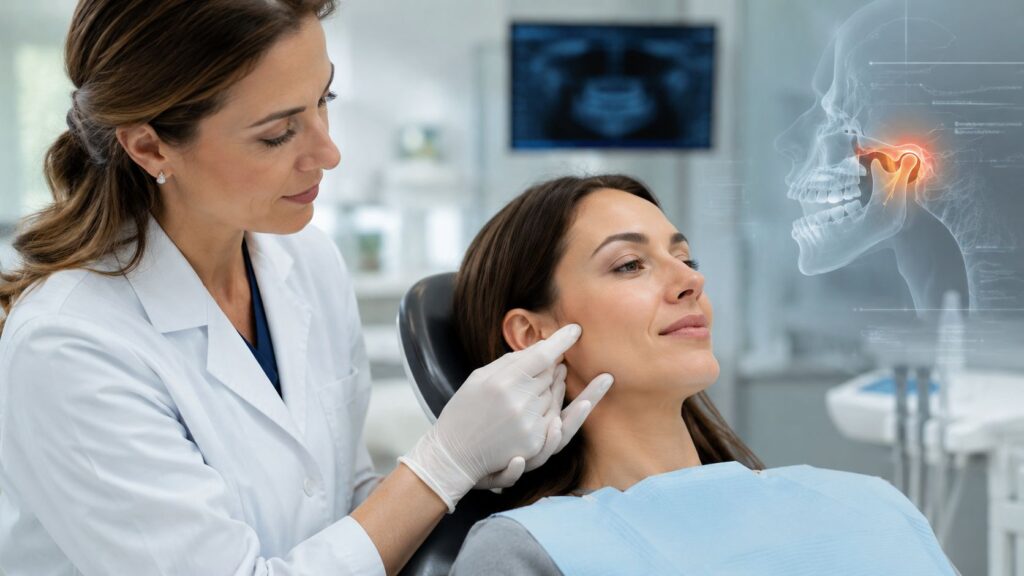
You may be reading this because your jaw clicks every time you chew, or because you wake up with soreness near your ears and wonder if it's stress, grinding, or something more. Many people put these symptoms off for months because they're not sure whether they need a doctor, a dentist, or just more time. That uncertainty is common.
A test for TMJ usually isn't one dramatic test. It's a careful process that starts with what you feel, what your jaw does during movement, and what a dentist sees during an exam. If you live in Cornelius, NC, or nearby communities, getting clear answers often starts with a calm dental evaluation that looks at the whole picture instead of just one symptom.
That Clicking in Your Jaw Isn't Something to Ignore
A common story goes like this. At first, the jaw only clicks once in a while. Then chewing tougher foods starts to feel tiring. Later, there's tenderness near the joint, headaches, or a feeling that the bite is “off.” Because the symptoms come and go, it's easy to think they're minor.
The problem is that jaw symptoms can mean different things. Some come from the joint itself. Others come from overworked muscles, clenching, neck tension, or a bite problem. That's why a quick online self-diagnosis often creates more confusion than reassurance.
The most important thing to know is simple. There is no single standard test for TMJ disorders. The National Institute of Dental and Craniofacial Research explains that diagnosis is usually built from symptoms, a physical exam, and imaging when needed, and it classifies TMDs as a group of more than 30 conditions affecting the jaw joint and muscles (National Institute of Dental and Craniofacial Research on TMD).
Why people get confused
Many patients think a test for TMJ should work like a strep test or an X-ray for a broken bone. Jaw disorders don't work that way. Two people can both say, “My jaw hurts,” while having very different causes behind that pain.
That's why a thorough evaluation matters. A dentist needs to connect several pieces at once:
- Your symptom pattern over time
- How your jaw moves when opening and closing
- Whether muscles or the joint are tender
- Whether imaging is necessary or not
A good TMJ evaluation doesn't rush to label the problem. It narrows the possibilities until the findings make sense together.
For patients in Cornelius, Huntersville, and Davidson, that kind of careful approach helps replace guesswork with a plan. You don't need to know exactly what's wrong before you make the appointment. You just need to know that the clicking, pain, or jaw fatigue is worth checking.
Understanding TMJ Disorders and Their Common Signs
The temporomandibular joints are the joints that connect your lower jaw to your skull. You use them when you talk, chew, yawn, swallow, and even when you shift your jaw slightly while resting. They work more like a combined hinge-and-glide system than a simple door hinge, which helps explain why they can be so sensitive to muscle tension, bite strain, and joint problems.
TMJ is the term many people use casually, but the more accurate term is TMD, short for temporomandibular disorders. These disorders are common. The evidence summary cited in the verified data notes that TMD affects up to 15% of adults, has peak incidence from ages 20 to 40, and that 8% to 15% of women develop symptoms (JOSPT review of temporomandibular disorder testing).
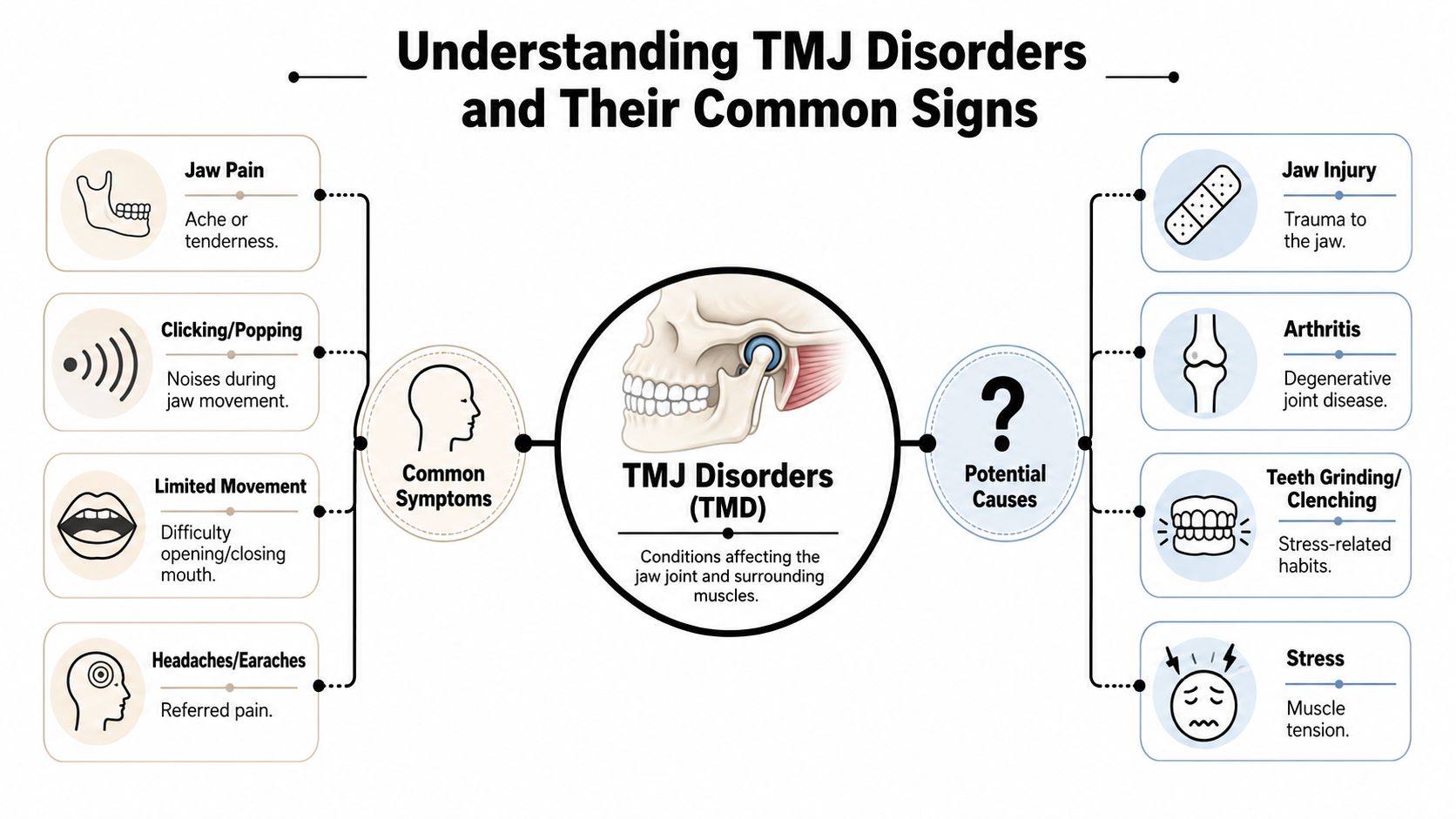
To make the signs easier to recognize, here's a visual overview many patients find helpful.
Common signs patients notice first
Some symptoms are obvious. Others are easy to dismiss because they seem unrelated to the jaw.
- Jaw clicking or popping. Noise by itself doesn't always mean serious damage, but it matters more when it comes with pain, locking, or limited movement.
- Pain near the jaw joint. This often feels like soreness in front of the ear or along the side of the face.
- Difficulty chewing. Some people describe this as jaw fatigue, especially with chewy or crunchy foods.
- Limited opening. The mouth may feel tight, stiff, or like it doesn't open evenly.
- Locking episodes. The jaw may feel stuck open or closed for a moment.
- Headaches or ear-area discomfort. Referred pain can make TMJ problems feel like something else entirely.
A short video can also help you connect the symptoms to how the joint works in daily life.
Signs people often overlook
Patients are often surprised that jaw disorders can show up as tension, asymmetry, or “something feels off” rather than sharp pain.
You may notice:
- Morning tightness if you clench or grind during sleep
- A bite that suddenly feels uneven
- Tender facial muscles
- Pain that spreads into the temple or neck
- Symptoms that flare during stress
Practical rule: If your jaw symptoms keep returning, interfere with chewing, or come with pain or locking, it's worth having a dentist examine them instead of waiting for them to “settle down.”
Your TMJ Evaluation at Our Cornelius Dental Office
When patients ask what a test for TMJ looks like in real life, they usually want to know one thing first. “Is this going to hurt?” In most cases, the exam is gentle and straightforward. It's based on looking, listening, measuring, and feeling for patterns that explain your symptoms.
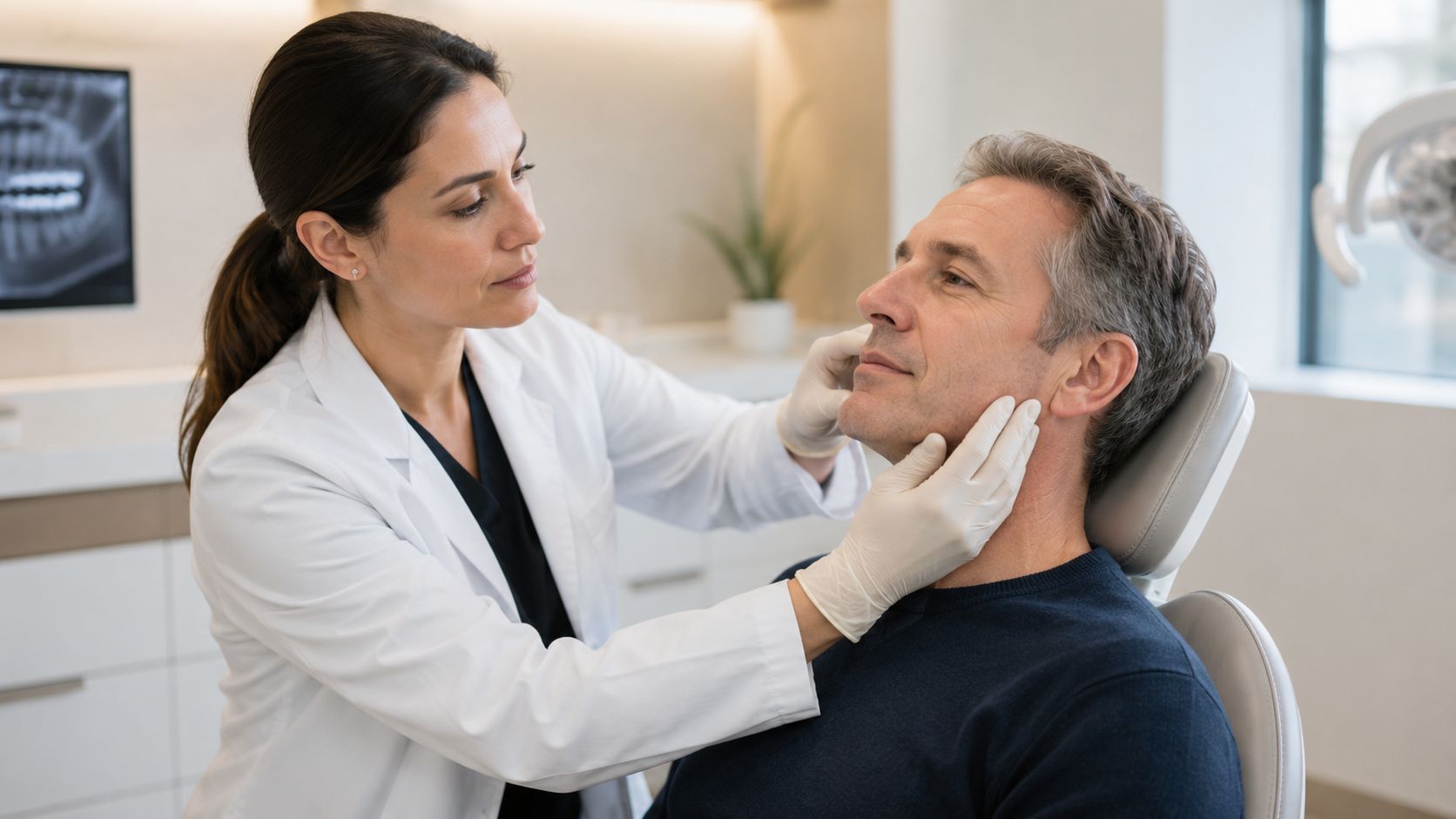
What happens during the exam
The visit usually starts with questions that seem simple but matter a lot. When did the symptoms begin? Is the pain constant or only during chewing? Do you hear clicking? Has the jaw ever locked? Do headaches, clenching, or stress seem to make it worse?
After that, the physical exam begins. Mayo Clinic's general description of TMJ evaluation aligns with what patients typically experience. The clinician listens to and feels the jaw, watches range of motion, and considers imaging if a structural issue is suspected. In a more detailed functional exam, jaw movement is measured in millimeters.
A key benchmark comes from rehabilitation guidance. Normal mouth opening is generally considered to be between 35–50 mm, and measured opening, side-to-side movement, and forward movement help the dentist assess whether the jaw is functioning normally or showing restriction (USC Ostrow TMJ assessment guidance).
The look, listen, and feel approach
Here's what that often includes:
- Watching your opening pattern. Does the jaw open smoothly, or does it shift to one side?
- Listening for joint sounds. Clicking, popping, or grinding can give clues, especially when matched with symptoms.
- Measuring movement. This makes the exam more objective than asking whether it “feels tight.”
- Palpating the muscles. Gentle pressure on the jaw muscles can help separate muscle tenderness from joint tenderness.
- Checking related areas. The neck and surrounding structures may also be part of the picture.
Simple self-checks before your visit
You don't need to diagnose yourself, but a few observations can help you describe the problem clearly.
- Notice timing. Is the discomfort worse in the morning, during meals, or late in the day?
- Track triggers. Gum chewing, stress, wide yawning, and hard foods often reveal patterns.
- Pay attention to sound plus pain. A harmless-sounding click is different from a click that comes with catching, soreness, or limited motion.
If you're trying to find a dentist near me in Cornelius, NC, knowing these details ahead of time can make the appointment more productive and less stressful.
When Are Advanced Diagnostic Images Needed
A lot of patients assume a scan is part of every TMJ workup. Usually, it isn't. Most jaw evaluations begin at chairside with a history, movement assessment, and hands-on exam. Imaging comes in when the findings suggest a structural question that the physical exam alone can't answer well.
That selective approach matters because different imaging tools answer different questions. One test may be useful for bone. Another may be useful for the soft tissue structures inside the joint.
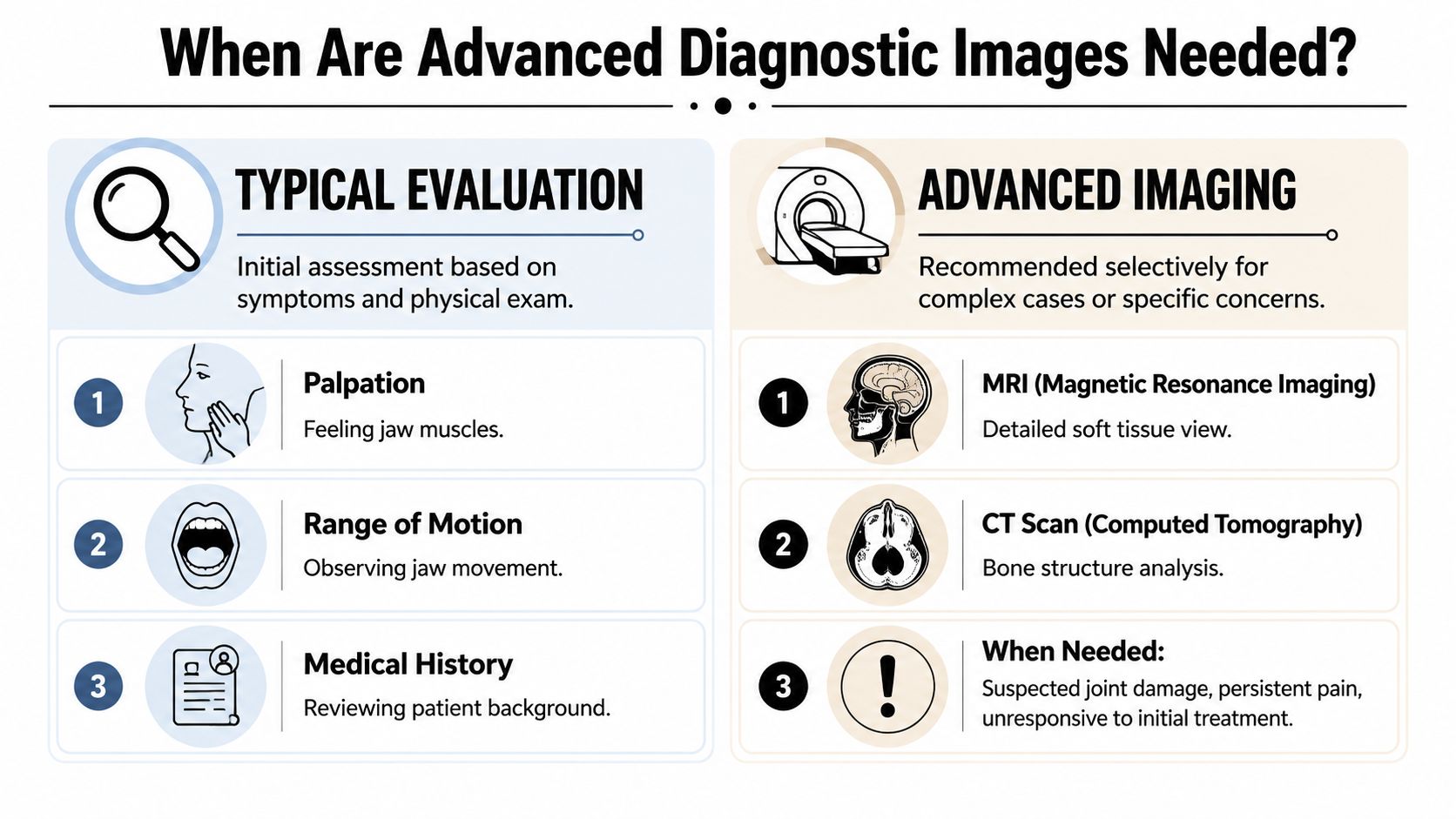
What imaging is trying to confirm
If your symptoms suggest internal derangement, disc issues, trauma, or bone changes, imaging can help narrow the diagnosis. The key is matching the right study to the right clinical question.
The verified clinical imaging guidance is clear on this point. MRI is the reference standard for soft-tissue TMJ pathology, especially disc displacement and related internal derangement, because it shows structures like the articular disc better than CT or plain films. CT is emphasized for osseous assessment, including cortical integrity and condylar shape, so the imaging choice should match the suspected problem (clinical review of TMJ imaging and diagnosis).
When imaging is needed, the question isn't “Which scan is most advanced?” It's “Which scan gives the clearest answer for this specific problem?”
TMJ imaging tests compared
| Imaging Type | What It Shows | When It's Used |
|---|---|---|
| Panoramic X-ray | A broad overview of teeth, jaws, and surrounding structures | Helpful when the dentist wants a general dental and jaw overview or needs to rule out other dental causes of pain |
| CT scan | Detailed bony anatomy of the joint and surrounding structures | Used when bone change, trauma, or structural joint changes are suspected |
| MRI | Soft tissues inside the TMJ, especially the disc and related internal structures | Used when clicking, locking, or symptoms suggest soft-tissue or disc-related dysfunction |
Why not everyone needs a scan
A bedside exam often gives enough information to begin conservative care. If the jaw opens normally, muscle tenderness is the main finding, and there are no signs suggesting structural injury, a dentist may monitor symptoms and start with noninvasive treatment before ordering advanced imaging.
That can be reassuring. It means your care is being customized, not overbuilt.
A few situations make imaging more likely:
- Persistent pain that doesn't match a simple muscle pattern
- Locking or catching that suggests internal joint mechanics may be involved
- History of trauma
- Concern for bony change
- Findings that don't line up clearly on exam
Patients often hear terms like Panorex, CT, CBCT, or MRI and assume they're interchangeable. They're not. The value comes from choosing the test that answers the unresolved question, not from ordering every possible image.
Ruling Out Other Causes of Jaw Pain
One of the most important parts of a TMJ evaluation is something patients rarely see discussed online. A good test for TMJ should also help rule out conditions that only look like TMJ.
Jaw pain can come from several places. A sore chewing muscle can feel like joint pain. A neck problem can refer pain into the face. Even headaches, dizziness, prior trauma, or tenderness near the temple can shift the diagnosis away from a primary joint disorder.
Why this matters
If a clinician focuses only on joint clicking, important clues can get missed. That's why a more complete exam looks beyond the joint itself.
Clinical guidance recommends palpating the masticatory and cervical muscles, checking the temporal artery, and assessing for red flags such as headaches, dizziness, or trauma to help distinguish a primary joint problem from muscular or neurologic causes (NCBI clinical examination guidance for TMJ-related assessment).
What else can mimic TMJ symptoms
A dentist may need to consider possibilities such as:
- Tooth-related pain from a cracked tooth, infection, or bite irritation
- Muscle strain from clenching, grinding, or daytime jaw tension
- Neck involvement that refers pain upward into the jaw or temple
- Sinus or facial pressure that feels like upper jaw discomfort
- Neurologic or inflammatory concerns when symptoms don't fit the usual pattern
The right diagnosis often comes from noticing what doesn't fit a classic TMJ pattern, not just what does.
This part of the process builds confidence. If your jaw hurts, you want more than a label. You want to know that the cause has been considered carefully and that the treatment plan matches the underlying source of the problem.
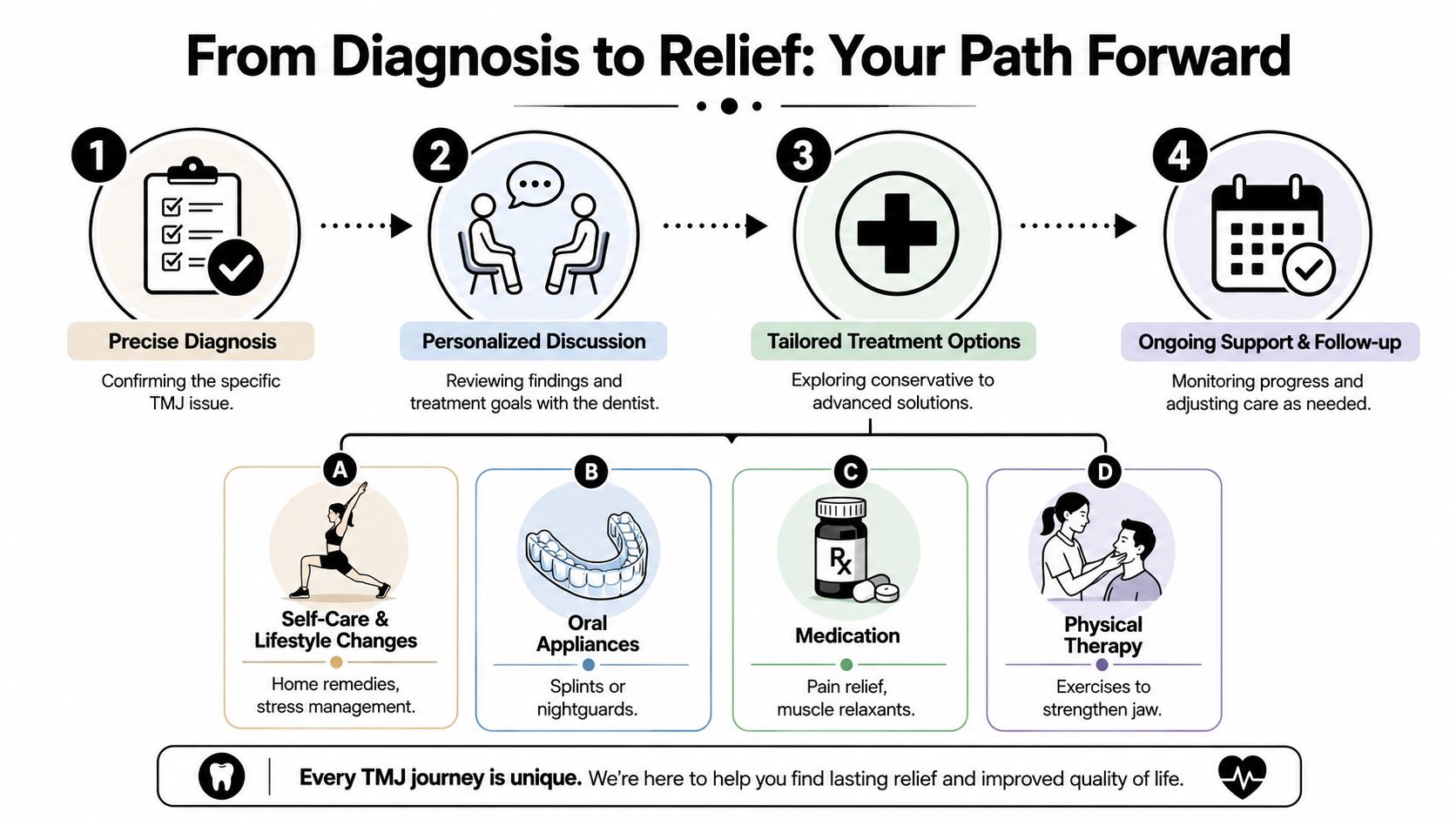
From Diagnosis to Relief Your Path Forward
A clear diagnosis gives your next steps shape. It turns a vague problem like clicking, soreness, or locking into a plan you can understand and follow.
What treatment planning may include
TMJ care often starts with the simplest useful step first. In many cases, that means giving the joint and surrounding muscles a chance to calm down while we reduce the habits or strain that keep irritating them.
Depending on what your exam showed, your plan may include softer food for a short time, changes in chewing habits, ways to reduce clenching during the day, or a custom oral appliance to protect the teeth and ease pressure on the jaw. If muscle tension or neck involvement is playing a bigger role, treatment may also include coordination with another provider so the plan matches the underlying source of the problem.
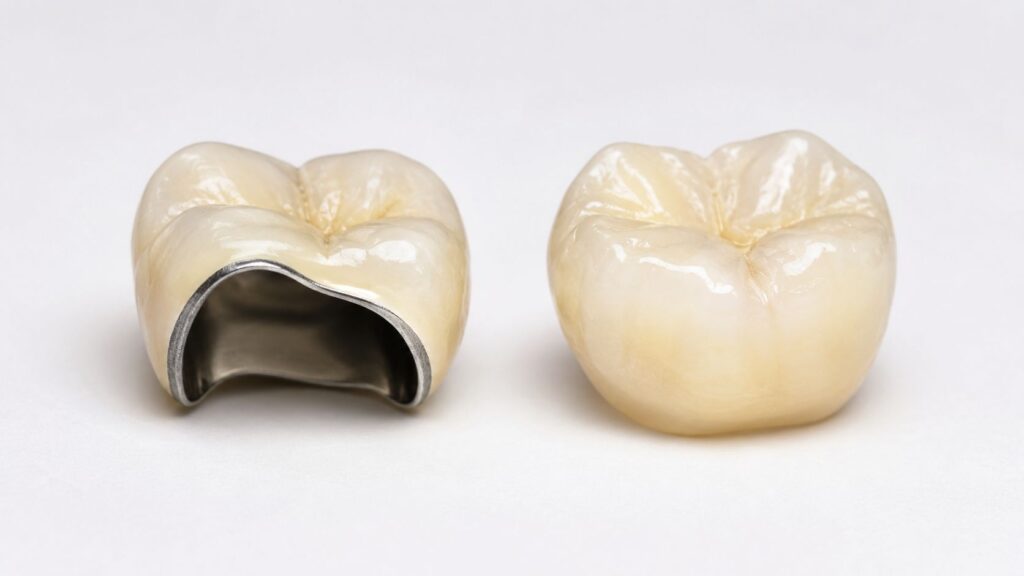
Sometimes the exam points to a larger dental pattern. Worn teeth, an uneven bite, or older dental work can affect how the jaw meets and moves, much like a door that no longer closes evenly because the hinges and frame are under strain. In those cases, restorative treatment, crowns, Invisalign, or careful monitoring of how the teeth fit together may become part of the discussion. Skotzko Family Dental Clinic offers general, restorative, cosmetic, and Invisalign care, which allows that planning to happen in one place when it makes sense for the patient.
What patients usually need most
By this point, many patients are looking for simple, practical answers:
- What is causing the pain or clicking
- Whether the problem looks temporary or more persistent
- What habits may be making it worse
- What can bring relief now
- When follow-up care, imaging, or referral makes sense
That kind of explanation often lowers stress right away. A good TMJ visit should feel less like guesswork and more like getting a clear road map.
If you are ready to discuss your symptoms and what the next step should be, you can contact our Cornelius dental office. For patients in Cornelius, Davidson, and Huntersville, relief often begins with a careful evaluation and a plan that fits what your jaw is doing.
Frequently Asked Questions About TMJ Testing
Do I need a referral for a TMJ evaluation
Usually, no. Many patients start with a dental exam when the symptoms involve jaw movement, chewing discomfort, joint sounds, or bite changes.
Does a test for TMJ hurt
Most of the exam is gentle. You may feel some tenderness when sore muscles or the joint are pressed, but the goal is to identify the source of symptoms, not make you uncomfortable.
Will I automatically need an MRI or CT scan
Not usually. Many people are evaluated first with history, movement testing, and a physical exam. Imaging is used more selectively when the findings suggest a structural question that needs a clearer answer.
What should I track before my appointment
It helps to note when the pain started, what seems to trigger it, whether your jaw clicks or locks, and whether symptoms are worse in the morning or during meals.
Can jaw pain be something other than TMJ
Yes. That's why a complete evaluation matters. Muscle tension, neck involvement, dental problems, and other conditions can sometimes mimic a TMJ disorder.
Will treatment always be complicated
No. Many care plans begin with conservative steps based on what the exam shows. The right plan depends on the cause, not on using the most aggressive option.
If jaw pain, clicking, or locking has been interfering with daily life, the next step is getting a careful evaluation from Skotzko Family Dental Clinic. Patients in Cornelius, NC, and nearby communities can reach out to schedule a visit and get a clearer answer about what their jaw is doing and what may help it feel better.