How Long Does Sensitivity Last After Crown? Your Guide For
June 19, 2026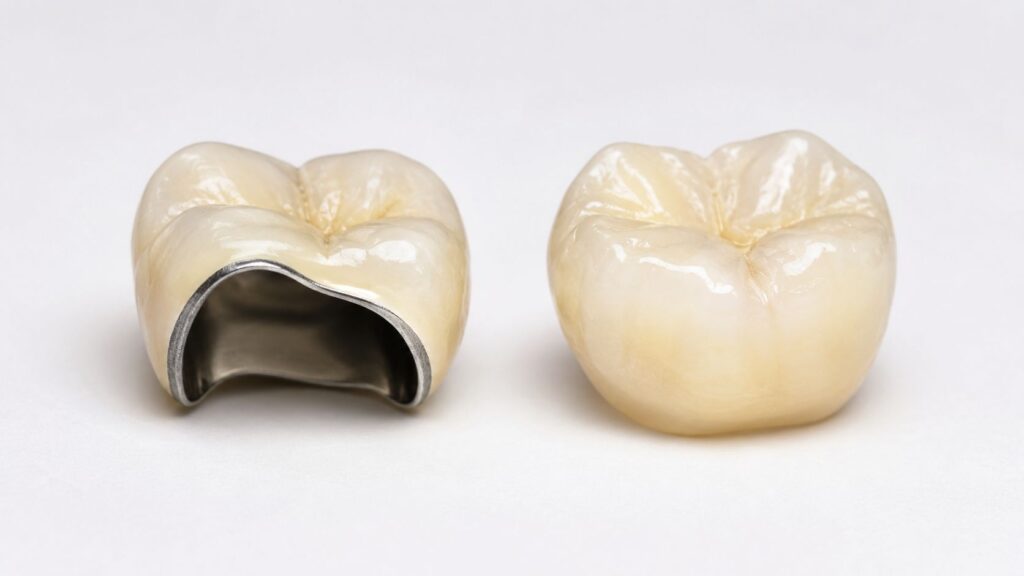
A lot of people start looking into crowns at the same moment. They bite down on something hard, feel a rough edge with their tongue, and then spend the rest of the day wondering if everyone can see the damage when they talk. Others already know a tooth has been weakening for years because an old filling is breaking down, the tooth looks darker than the ones next to it, or chewing on that side has become something they tend to avoid.
If that sounds familiar, you're not overreacting. A damaged tooth can affect comfort, confidence, and the way you eat. For many patients in Cornelius, the question isn't whether to restore the tooth. It's which crown material makes the most sense.
When patients search for a dentist near me in Cornelius, NC, they usually want two things at once. They want a crown that looks natural, and they want something dependable. That's why the conversation around metal porcelain crowns vs porcelain matters. The right answer depends on where the tooth is, how hard you bite, what you want your smile to look like, and how you think about long-term maintenance.
Restoring Your Smile with Confidence in Cornelius
A crown often becomes part of the conversation after a small problem stops being small. A corner of a tooth chips. A large filling starts leaking. A crack causes pain when you chew. Sometimes the tooth isn't hurting much, but it doesn't look right anymore, and that alone is enough to make people self-conscious in close conversations, family photos, or work meetings.
That's especially true for adults who've been putting off treatment because life is busy. Parents in Cornelius are juggling school schedules, work, and family responsibilities. Retirees want to keep eating comfortably without feeling like every dental decision has to be complicated. Younger professionals want a repair that doesn't stand out every time they smile. Different life stages, same basic goal. Keep the tooth. Restore it well. Move on with confidence.
Why crowns are such a common restorative solution
A dental crown is one of the most useful tools in restorative dentistry because it protects a tooth while also rebuilding its shape and appearance. If a tooth is too damaged for a simple filling, a crown can cover and reinforce what remains above the gumline.
That makes crowns a practical option for problems like:
- Large old fillings that leave too little healthy tooth structure behind
- Cracked or fractured teeth that need extra support
- Teeth after root canal treatment that may be more brittle
- Worn or misshapen teeth that need cosmetic and functional improvement
- Discolored teeth that don't respond well to whitening
A good crown doesn't just hide damage. It helps a weakened tooth function more normally again.
What many patients actually want to know
Most patients aren't asking for a materials lecture. They want clear answers to simple questions.
- Will it look natural
- Will it hold up when I chew
- Will I see metal
- Is one option better for front teeth
- If I invest in this, am I making the right choice
Those are reasonable questions. Crown selection shouldn't feel like guesswork. It should feel like a practical decision based on your tooth, your bite, and your priorities.
Understanding Dental Crowns and Why You Might Need One
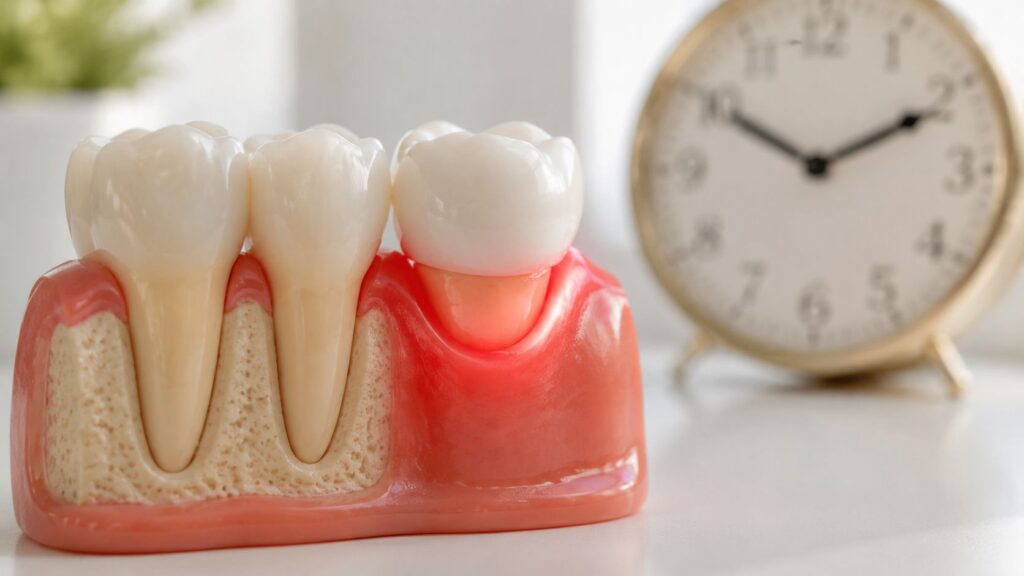
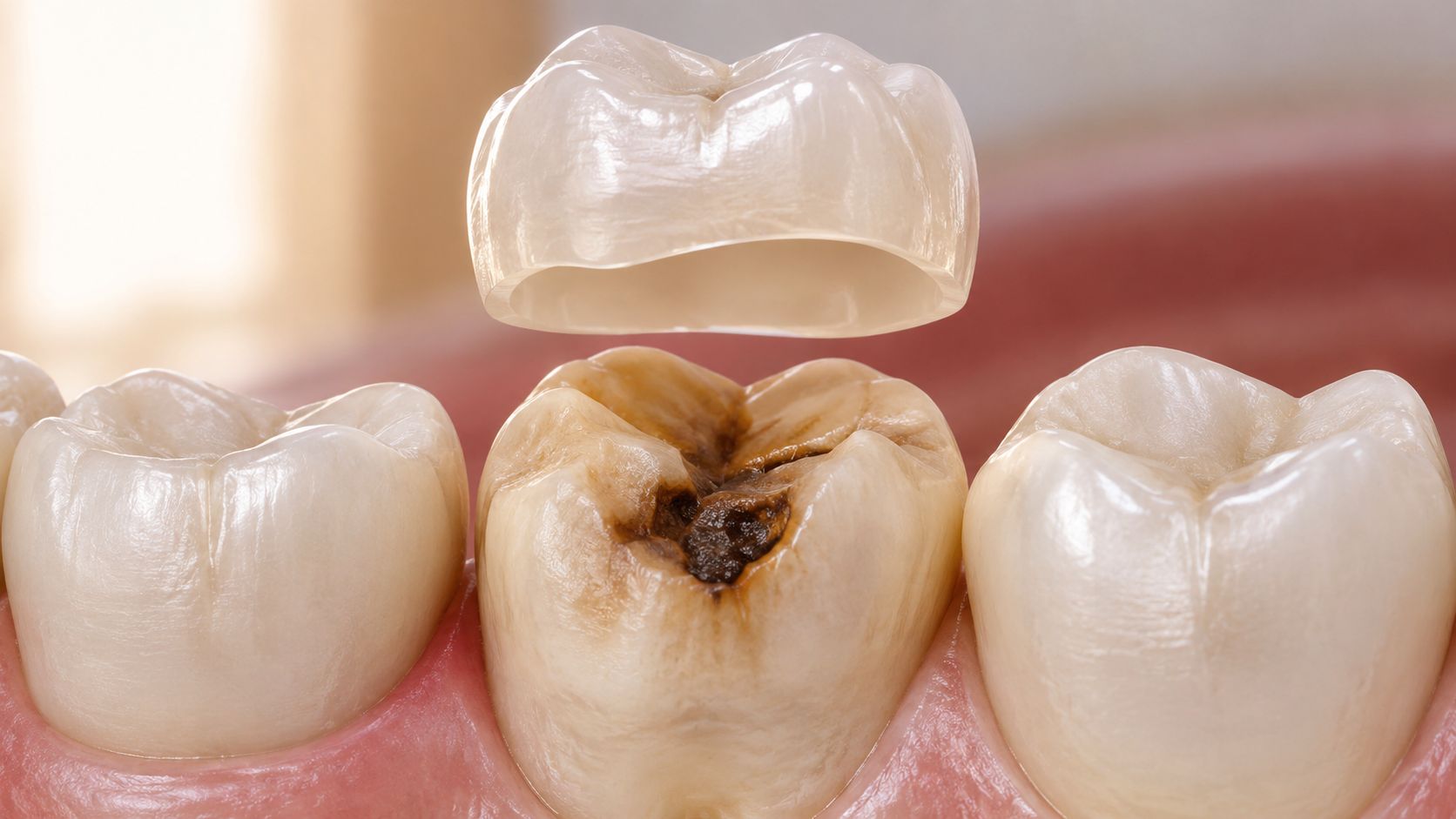
Think of a crown as a custom-fitted cover for a tooth that has lost strength or shape. It sits over the prepared tooth like a protective shell and is designed to restore function, contour, and appearance. Unlike a removable appliance, a crown is fixed in place so it can handle everyday biting and chewing.
When a filling isn't enough
A filling works well when damage is limited. But when a cavity is large, when a filling has already been replaced multiple times, or when the remaining tooth walls are thin, a filling may not give enough support. In those situations, a crown can help hold the tooth together and reduce the risk of further breakdown.
You might need a crown if you have:
- A tooth with major decay
- A visible crack
- A broken cusp on a back tooth
- A root canal-treated tooth
- A tooth that needs a cosmetic reshaping
- A bridge or implant restoration that requires a crown as the visible top portion
What a crown is trying to accomplish
Crowns do several jobs at the same time. That's why material choice matters.
| Goal | What the crown needs to do |
|---|---|
| Protection | Cover weakened tooth structure and reduce stress on fragile areas |
| Function | Let you bite and chew more comfortably |
| Appearance | Blend with surrounding teeth as naturally as possible |
| Stability | Maintain a secure fit at the gumline and bite surface |
Crowns are part of broader dental care
Crowns don't exist in isolation. They often fit into a larger treatment plan that can include family dentistry, restorative care, cosmetic improvements, or replacing missing teeth. A patient may come in for one chipped tooth and discover the bigger issue is clenching, uneven wear, or an aging filling nearby. Another may need a crown after a root canal and later decide to improve adjacent teeth with whitening or veneers so the whole smile looks balanced.
Clinical reality: The best crown choice is rarely about the material alone. It's about the tooth's condition, your bite, and how visible that tooth is when you smile.
That's why a proper exam matters. Before choosing between crown types, the dentist needs to evaluate how much healthy tooth remains, whether the tooth is under heavy load, whether gum tissue is stable, and how important flawless esthetics are in that area of the mouth.
The Two Main Choices All-Porcelain and Metal-Porcelain Crowns
When patients compare metal porcelain crowns vs porcelain, they're usually comparing two broad categories. One combines a metal foundation with a porcelain outer layer. The other is made entirely from ceramic materials with no metal underneath.
Both can restore a damaged tooth. They just do it with different design priorities.
Metal-porcelain crowns
A metal-porcelain crown, often called a porcelain-fused-to-metal crown or PFM crown, has two layers. Inside, there's a metal substructure that provides support. On the outside, there's tooth-colored porcelain shaped to resemble a natural tooth.
This design became popular because it offered a useful balance. The metal core gave the crown strength, and the porcelain exterior improved appearance compared with a full metal restoration. For many years, PFM crowns were a standard choice, especially on back teeth and in situations where durability mattered.
A PFM crown can make sense when:
- The tooth handles heavier chewing forces
- A bridge needs added framework support
- There's limited room for the restoration
- The patient values function first and esthetics second
The trade-off is that the crown may not mimic natural enamel as closely as a metal-free option. In some smiles, especially if gums recede over time, a darker edge near the gumline can become visible.
All-porcelain crowns
An all-porcelain crown has no metal inside it. It's made from ceramic materials designed to look more like natural tooth enamel. This category includes different ceramics, and they aren't all the same.
Some ceramic crowns are selected because they're especially attractive in visible areas. Others are chosen because they're built for more strength. Two names patients often hear are zirconia and E-max.
Zirconia
Zirconia is a modern ceramic known for strength. It's often used when a patient wants a metal-free restoration but still needs something capable of handling significant bite forces. Some zirconia crowns are more opaque, while others are made to improve esthetics.
E-max
E-max is often chosen in highly visible areas because it can deliver a very natural appearance. It tends to be a strong esthetic option when matching neighboring front teeth matters more than maximizing toughness for a heavily loaded molar.
The design philosophy behind each option
PFM crowns were built around reinforcement first, appearance second. All-porcelain crowns were developed to deliver a more natural appearance, while newer ceramics also pushed hard to improve strength.
That's why the debate isn't really old versus new. It's a question of priorities.
| Crown type | Core idea | Best known for |
|---|---|---|
| Metal-porcelain or PFM | Metal support under porcelain | Long history of dependable use |
| All-porcelain | Metal-free ceramic restoration | More natural translucency and no metal edge |
If you've been searching for guidance on metal porcelain crowns vs porcelain, this is the most useful starting point. PFM crowns are hybrids. All-porcelain crowns are metal-free. After that, the decision ultimately comes down to visibility, force, gum health, and maintenance expectations.
Side-by-Side Comparison Aesthetics Durability and Health
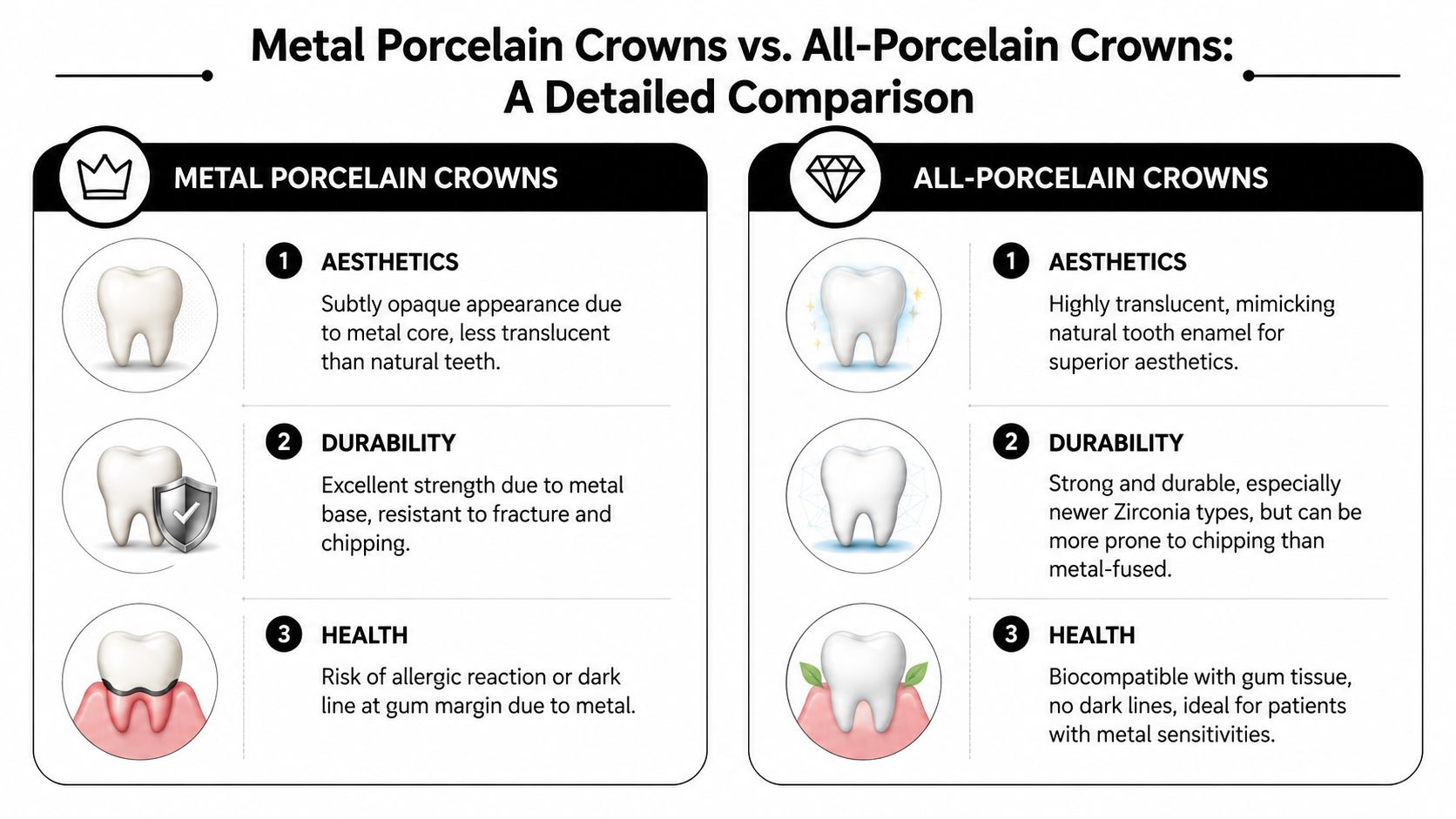
A patient in Cornelius may care about three things right away. Will the crown look natural when I smile, will it hold up when I chew, and will it stay kind to my gums over time? Those are the questions that matter in the chair, and they give a clearer answer than material names alone.
| Factor | Metal-porcelain crown | All-porcelain crown |
|---|---|---|
| Appearance | Tooth-colored exterior, but may look slightly less lifelike | Usually more natural in translucency and light reflection |
| Gumline | May show a darker edge in some cases over time | No metal margin, so no dark line from metal |
| Strength profile | Long-standing option with a durable framework | Varies by ceramic type, with zirconia offering strong posterior performance |
| Chipping risk | Porcelain layer can be a concern in some designs | Depends on ceramic type and bite forces |
| Metal sensitivity concerns | May not suit patients who prefer to avoid metal | Metal-free option |
Aesthetics matter more than people think
For front teeth, all-porcelain usually gives me more freedom to create a natural result. Real enamel has depth, translucency, and variation in how it reflects light. Metal-free ceramics tend to match that effect more closely.
PFM crowns can still look very good. The limitation is usually not the visible porcelain surface. It is the underlying metal and how that can affect brightness and the edge near the gums. If gum tissue recedes later, some patients notice a dark line at the margin. In a back tooth, that may not matter much. In the smile zone, it often does.
A simple rule helps. The more visible the tooth, the more appearance tends to drive the decision.
Durability depends on the material, the bite, and the tooth
PFM crowns have earned respect because they have been used for many years and often perform well under load. They remain a practical option for patients who need a proven design, especially in areas where bite force is heavy.
Modern ceramics deserve a more specific discussion than "porcelain versus metal." Zirconia has improved strength for many back-tooth cases, while other ceramics may be chosen because they look more lifelike in the front. On implants, the mechanical demands are different than on natural teeth. For patients who clench, grind, or chew hard foods regularly, those details affect the decision as much as the material category.
Patients reviewing restorative dentistry treatment options are usually relieved to hear that I do not pick a crown by trend. I pick it by location, bite pattern, appearance goals, and how much risk of wear or chipping the case presents.
Gum health and biocompatibility
Gums respond best to a crown that fits precisely, has a smooth margin, and is easy to keep clean. Material matters, but contour and fit matter just as much. A beautifully made crown with healthy margins is usually kinder to tissue than a bulky crown of any type.
All-porcelain appeals to patients who want a metal-free option or want to avoid any chance of a dark margin showing later. PFM crowns can also work well with healthy gums, especially when the design is clean and home care is consistent. If a patient already has recession, thin gum tissue, or high cosmetic expectations, that often pushes the choice toward all-porcelain.
Practical trade-offs I review with Cornelius patients
This is usually where the decision becomes clearer.
If the tooth is in your smile line, the natural look of all-porcelain often carries more weight. If the tooth is farther back and handles strong chewing forces, a PFM or a high-strength ceramic may make more sense depending on your bite. If you grind your teeth, I factor that in before discussing shade or polish. If you have thin gums or you are already concerned about a visible edge near the gumline, that changes the recommendation too.
The best crown is the one that fits your mouth, your habits, and your long-term goals.
Making the Right Choice for Your Smile and Lifestyle
A Cornelius patient might sit in my chair with a simple question. “Which crown would you put in your own mouth?” My answer depends on where the tooth is, how you use it, what you want it to look like in five or ten years, and whether this crown is part of a bigger plan for your smile.
The right choice gets clearer once we stop treating crowns like a one-size-fits-all product. I recommend the material that best fits your bite, your appearance goals, and the way you want this tooth to function every day.
When all-porcelain is often the better fit
All-porcelain is often the better fit for visible teeth. It reflects light more naturally, avoids the risk of a dark line near the gumline, and usually gives the most natural result when the crown shows in photos or conversation.
That matters more than patients sometimes expect.
If you smile broadly, have thinner gum tissue, or want your restoration to blend closely with nearby teeth, all-porcelain usually rises to the top of the list. It is also a strong option for patients who prefer a metal-free restoration or are planning a larger cosmetic dentistry treatment plan and want consistency across the smile.
Situations where all-porcelain is commonly favored include:
- Front teeth where translucency and shade matching matter
- Patients with metal sensitivity concerns
- Smile makeover cases where adjacent teeth must look uniform
- Patients who want the cleanest possible gumline appearance

When a metal-porcelain crown may still be recommended
PFM crowns still have a place in dentistry because they have been used successfully for many years and can be a practical choice in the right case. I still recommend them selectively, especially when the tooth is farther back, appearance is not the main concern, or the overall design benefits from added substructure support.
This is less about old versus new materials and more about using the right tool for the job.
PFM may be considered in cases like:
- Some posterior teeth where chewing forces matter more than translucency
- Certain bridge situations where added rigidity is helpful
- Patients with a strong bite when the case design supports a metal-backed restoration
- Patients who value a long clinical track record
A decision checklist for Cornelius patients
A crown should fit your life as well as your tooth. For many of my Cornelius patients, the final decision becomes easier once we walk through a few practical questions together.
Patient decision checklist
- How visible is the tooth when you smile, laugh, or speak
- How much force does that tooth handle during chewing
- Do you clench or grind even if it only happens during sleep
- Would a dark edge near the gumline bother you over time
- Do you prefer a metal-free option if it is a good clinical match
- Is this one crown or part of a larger treatment plan
- What matters more to you long term maximum blending, added structural support, or a balance of both
What works and what usually doesn't
What works is matching the crown to the tooth's job. A front tooth usually asks for a different solution than a molar. A patient who wants a very natural smile may make a different choice than a patient who mainly wants strength on a back tooth.
What usually does not work is picking a material based on one feature alone. Appearance matters. Strength matters. Gum response, bite pattern, and long-term maintenance matter too.
I tell patients this often. The best crown is not the one that sounds best on paper. It is the one that makes sense for your mouth, your habits, and your goals here in daily life around Cornelius.
Your Dental Crown Journey at Skotzko Family Dental
Understanding the crown process can alleviate concerns. It's typically more straightforward than expected, focusing on tooth protection and keeping you comfortable.
The first visit
The process starts with an exam and a discussion about what's happening with the tooth. If a crown is the right option, the tooth is prepared by removing damaged areas and shaping it so the new crown can fit securely. If the tooth has extensive damage, the dentist may also rebuild part of the core before the crown is made.
After preparation, an impression or digital record is taken so the final crown can be custom fabricated. Shade selection also matters, especially for visible teeth. The goal isn't just to place a crown. It's to make it look and feel like it belongs.
Before you leave, you'll typically receive a temporary crown. That temporary protects the tooth and helps you function normally while the final restoration is being made.
The period between visits
Temporary crowns are useful, but they aren't meant to be your long-term restoration. During this stage, patients are usually advised to avoid sticky or very hard foods on that side and to clean the area gently.
This is also the point when questions about appearance often become clearer. A patient who originally focused only on fixing a broken tooth may realize they also want the final crown to match whitening plans or other cosmetic dentistry options more closely.
The final appointment
At the second visit, the temporary crown is removed and the final crown is tried in. The dentist checks fit, bite, contour, and appearance before bonding or cementing it into place. Small adjustments are common. A crown that looks good but feels high when you bite isn't finished yet.
Seeing the process can make it feel less intimidating:
What patients usually notice afterward
Most patients notice two immediate benefits. The tooth feels protected again, and they stop thinking about it every time they eat or smile. There can be mild soreness at first, especially around the gumline, but that usually settles as the area adjusts.
A few practical points matter after placement:
- Chew normally, but pay attention if the bite feels off
- Brush and floss consistently because crowned teeth still need healthy gums
- Don't use the crown as a tool to open packaging or bite hard objects
- Ask about a nightguard if you clench or grind
Questions about cost and insurance
Cost depends on the material, the tooth, and whether any additional treatment is needed first. Insurance can also vary in how it approaches restorative care. The most useful approach is to look at value, not just the initial fee. A crown is protecting a tooth you're trying to keep for the long term.
Frequently Asked Questions About Dental Crowns
Is getting a crown painful
Most patients do well with crown treatment because the tooth is numbed before preparation begins. You may feel pressure or vibration, but you shouldn't feel sharp pain during the procedure. Afterward, some tenderness is normal, especially if the tooth was already irritated or the gums are a little sore from the preparation.
How long do crowns last
There isn't one single answer because lifespan depends on the material, the location of the tooth, your bite, and how well you care for it. Some materials have a long clinical track record, while newer ceramics offer strong performance in many cases. What matters most day to day is good home care, routine dental visits, and protecting the crown from habits like grinding or chewing ice.
Can a crown be whitened later
No. A crown doesn't respond to whitening products the way natural enamel does. If you're considering whitening, it's often worth discussing before a visible crown is made so the crown shade can be matched to your preferred smile color.
If whitening is on your wish list, bring it up early. Shade planning is easier before the final crown is fabricated.
Will dental insurance cover a crown
Many dental plans help with crowns when they're considered medically necessary for restoring a damaged tooth. Coverage details vary, and some plans treat materials differently depending on the tooth and the reason for treatment. The fine print matters, so it's smart to ask for a benefits review before treatment begins.
How should I take care of a new crown
Care for it the same way you should care for your natural teeth, but be extra consistent around the margin where the crown meets the tooth.
- Brush thoroughly along the gumline
- Floss daily and don't skip the crowned tooth
- Keep recall visits so the fit and surrounding tissues can be checked
- Wear a nightguard if you clench or grind
If you're in Cornelius, NC and want a clear answer about metal porcelain crowns vs porcelain for your specific tooth, the best next step is a one-on-one evaluation. A crown works best when the material choice is made around your bite, your smile goals, and the condition of the tooth itself.
If you're ready to talk through your options with a trusted local team, schedule a consultation with Skotzko Family Dental Clinic. Patients in Cornelius, NC and nearby communities can get practical guidance on crowns, cosmetic concerns, and long-term restorative care in one comfortable visit.