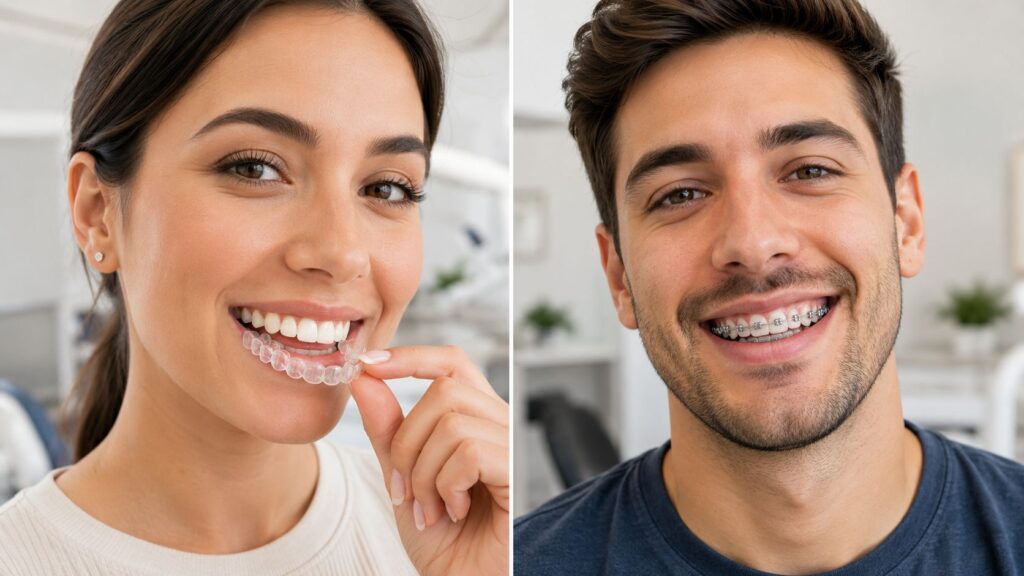
Invisalign vs Braces for Adults: Your 2026 Guide
June 18, 2026
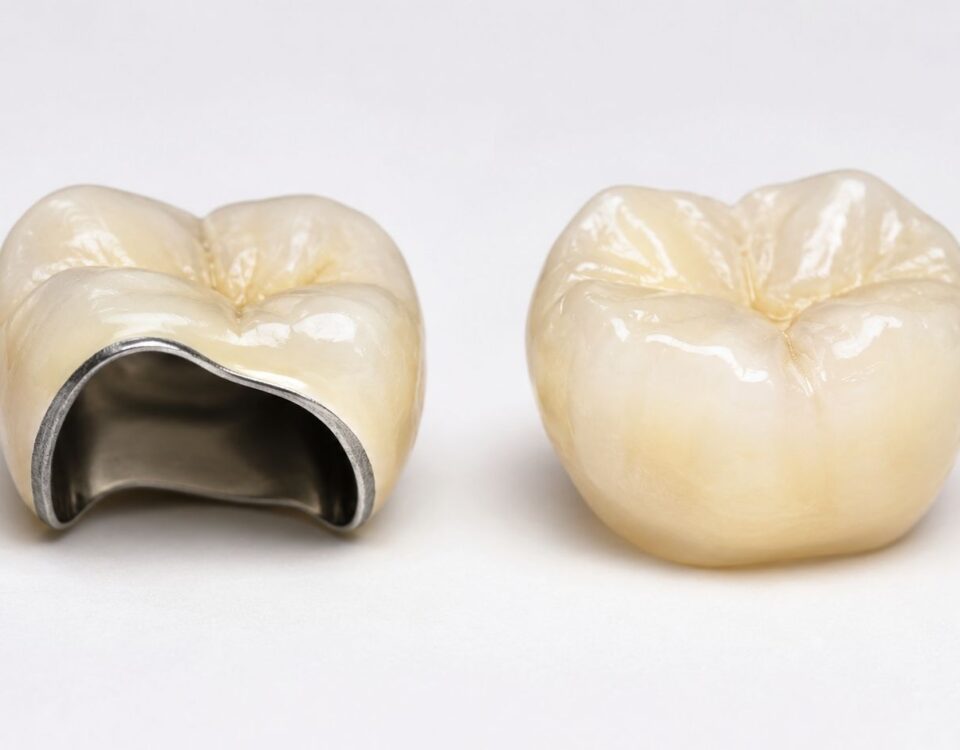
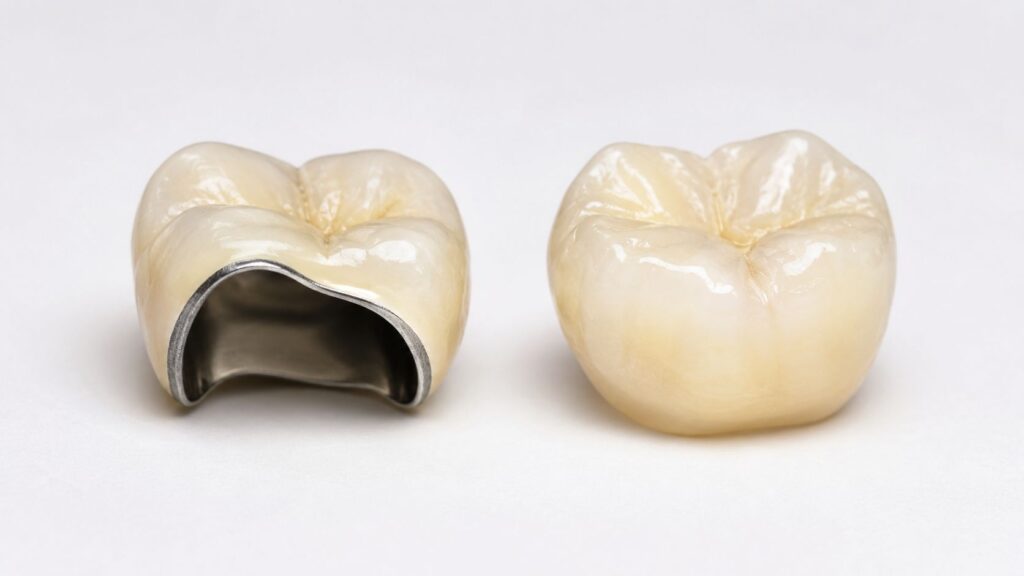
Metal Porcelain Crowns vs Porcelain: A Cornelius Guide
June 20, 2026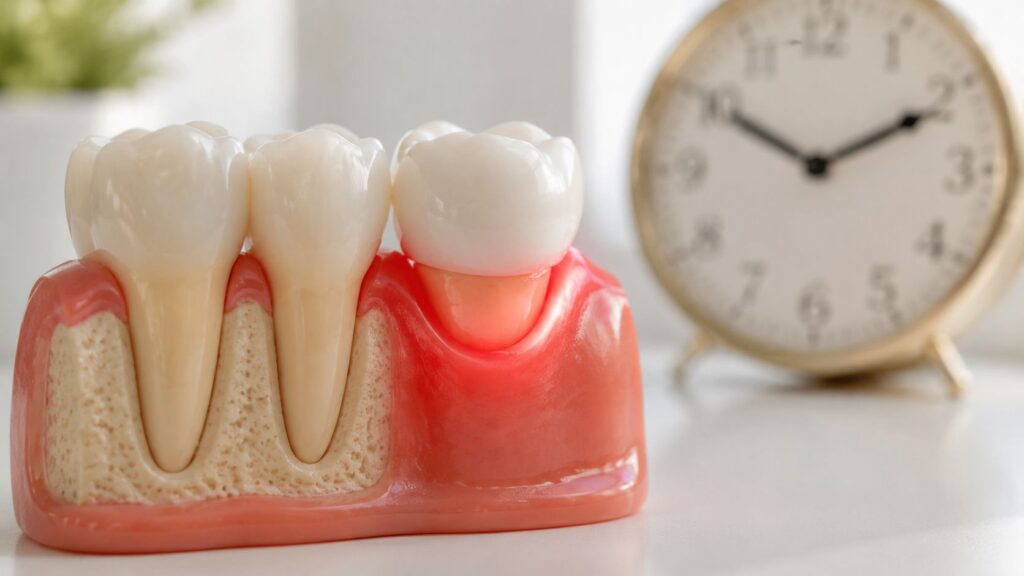
Most post-crown sensitivity is temporary and usually settles within about 1 to 2 weeks, with the strongest discomfort often showing up in the first 48 to 72 hours after placement. If you're still noticing sensitivity to cold, heat, or biting around the one-week mark, that can still fall within a normal recovery window.
If you've recently had a crown placed and your tooth feels more reactive than you expected, you're not alone. Many patients in Cornelius, NC call with the same concern. The tooth may feel tender with cold drinks, sore when chewing, or just "different" than the rest of your mouth. That can be unsettling, especially if you thought the procedure was finished and healing would be immediate.
In most cases, this kind of sensitivity doesn't mean anything has gone wrong. A crown restores and protects a damaged tooth, but the tooth underneath still has to recover from the work involved. At Dr. Skotzko Family and Cosmetic Dentistry, patient questions like this are common, and clear answers matter. Knowing what's normal, what helps, and when to call can make the recovery period much less stressful.
Your New Crown and You A Guide from Your Cornelius Dentist
A new crown often fixes a bigger problem. It may protect a cracked tooth, strengthen a tooth after a large filling, or restore shape and function after wear or decay. But even when the crown fits well and looks natural, the first days afterward can come with some sensitivity.
That surprises a lot of people. They expect the damaged tooth to feel instantly better. Sometimes it does. Sometimes it needs a little time.
What most patients notice first
The most common complaints are fairly simple:
- Cold sensitivity: Water, iced drinks, or cool air may trigger a quick zing.
- Heat sensitivity: Coffee or soup may feel stronger than usual.
- Pressure discomfort: Biting down can feel tender for a short period.
- General soreness: The tooth and surrounding gum tissue may feel mildly irritated.
A crown appointment isn't just about placing a cap on a tooth. The tooth is shaped, cleaned, and bonded so the restoration can fit securely. That process can leave the area temporarily irritated, much like a bruised spot that settles as the tissue calms down.
Practical rule: Mild sensitivity that gradually improves is usually far less concerning than pain that becomes stronger or more constant.
Why reassurance matters
Dental discomfort tends to feel bigger at night, during meals, or when you're already worried. That's why timelines matter. If you know the usual pattern, you don't have to guess whether every twinge is a problem.
For families looking for a dentist near me in Cornelius, NC, trust often starts with straightforward guidance. You should know what works, what doesn't, and what deserves attention. Waiting forever and hoping for the best isn't a smart plan. But neither is assuming every sensitive crown means something is wrong.
The middle ground is better. Watch the pattern. Protect the tooth. Give it reasonable time to settle. If the symptoms don't follow that pattern, your dentist should evaluate it.
Why Teeth Get Sensitive After a Crown Procedure
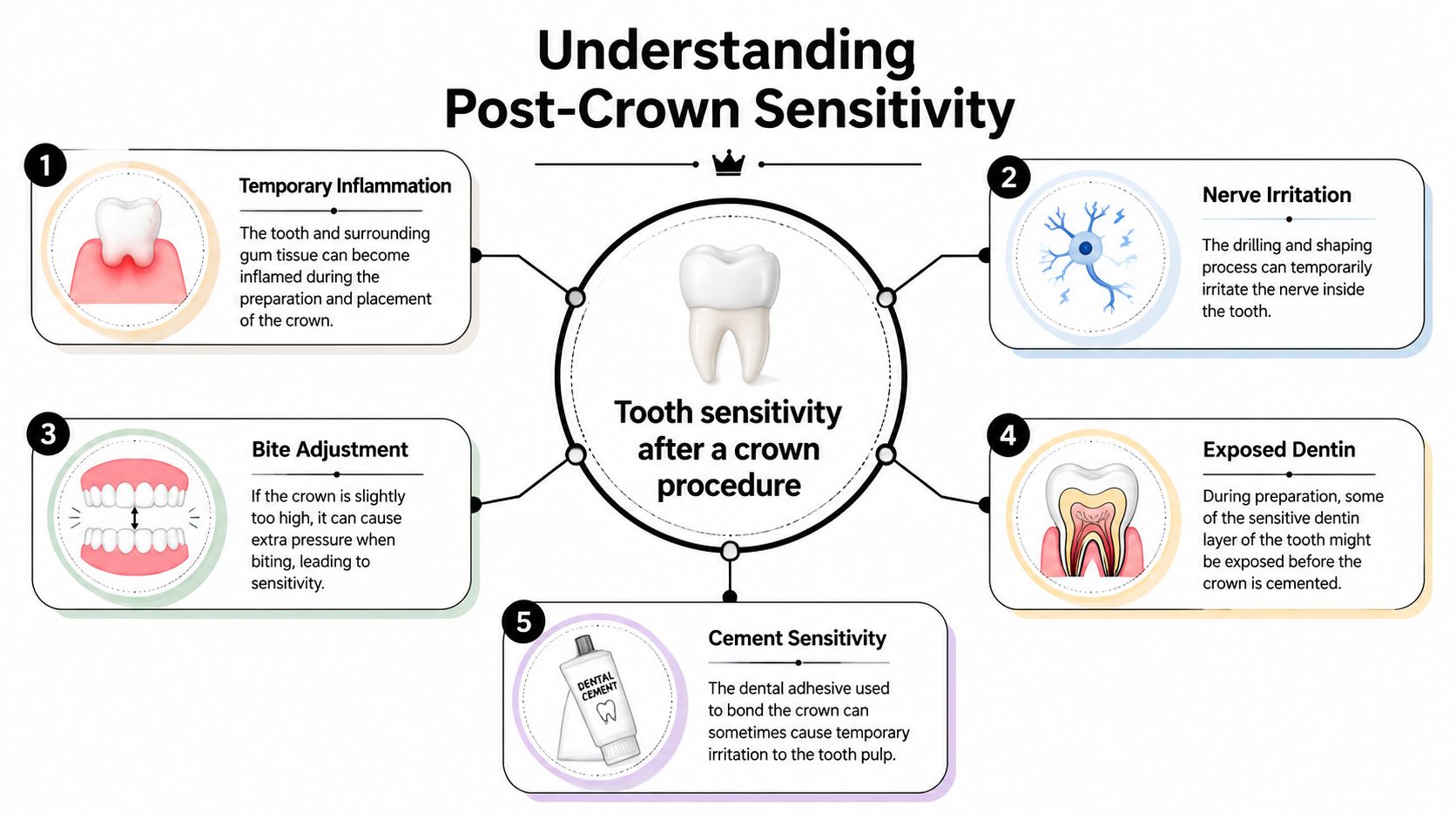
Sensitivity after a crown usually comes from irritation, not failure. The tooth has been worked on, the surrounding tissue has been handled, and the nerve inside the tooth may be more reactive for a while.
The tooth has been through a procedure
To place a crown, a dentist has to reshape the tooth so the restoration fits properly. That removes outer structure and brings treatment closer to the inner portion of the tooth where the nerve lives. Even if everything goes smoothly, that can leave the tooth temporarily reactive.
It's comparable to a sore muscle after exercise. The body isn't necessarily injured. It just needs time to settle after being stressed.
A few common causes are worth knowing:
- Temporary inflammation: The tooth and gum tissue can become irritated during treatment.
- Nerve response: The inner tooth can react after drilling and shaping.
- Exposed dentin during treatment: Before the crown is fully sealed and settled, the tooth may be more responsive to temperature.
- Cement irritation: The bonding materials can trigger brief sensitivity in some cases.
- Bite pressure: If the crown hits early when you chew, the tooth can feel sore or sharp under pressure.
What feels normal and what doesn't
Temperature sensitivity is common. So is mild soreness around the gumline. A little tenderness when biting isn't unusual early on either, especially if the area was already inflamed before treatment.
What doesn't help is chewing aggressively on that side right away, testing the tooth over and over, or switching to very hot and very cold foods to "see if it's getting better." That usually just keeps the area irritated.
A sensitive crown often isn't a sign that the crown itself is bad. More often, the tooth is simply reacting to the procedure or to the way the bite is landing.
The bite matters more than patients expect
One of the most practical trade-offs with crown work is precision. A crown should be strong, sealed, and natural-looking, but it also has to meet the opposing teeth correctly. If it sits even slightly high, the tooth can absorb too much force every time you chew or clench.
That kind of sensitivity often feels different from temperature sensitivity. Patients describe it as a sharp or focused pain when they bite down, not a general ache. The good news is that if bite pressure is the issue, a small adjustment can make a major difference. What doesn't work is trying to "get used to it" for too long when chewing still feels off.
The Typical Timeline for Crown Sensitivity Recovery
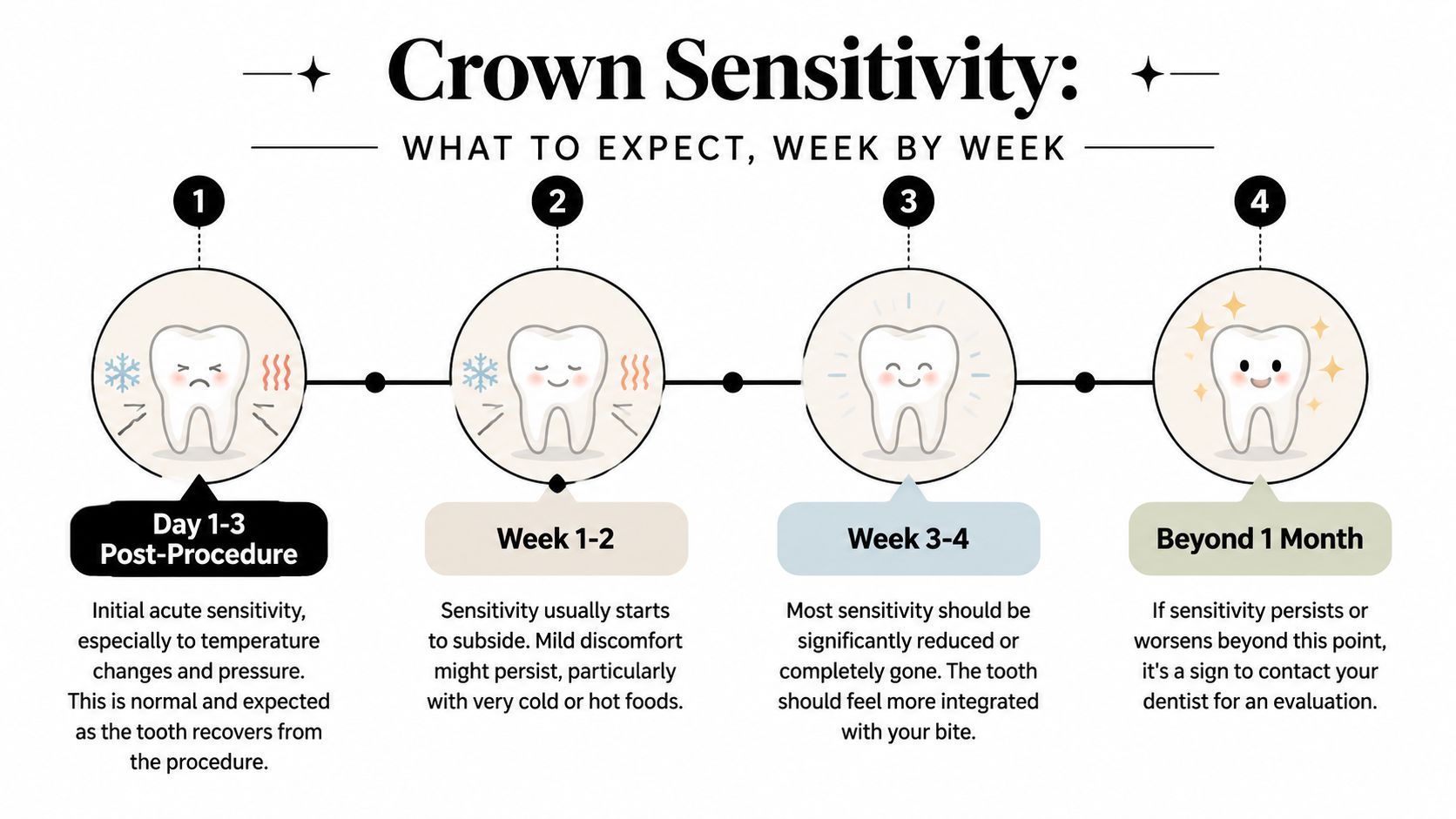
The question patients ask most is simple. How long does sensitivity last after crown treatment? The clearest answer is this: most post-crown sensitivity is temporary and usually lasts about 1 to 2 weeks, with the strongest discomfort often in the first 48 to 72 hours after placement, according to guidance on post-crown sensitivity timing.
A timeline helps more than a vague promise that it will improve soon.
The first few days
The first 48 to 72 hours are often the most noticeable. That's when the tooth may respond to cold drinks, warm foods, or pressure from chewing. The area has just gone through preparation and placement, so some tenderness is expected.
This is also when patients tend to pay the closest attention. Every sip and every bite gets tested. That's understandable, but it can make normal healing feel more dramatic than it really is.
For a visual overview, this short video gives a helpful patient-friendly explanation of the recovery pattern after crown placement.
The first week
By the one-week point, many people notice that the intensity has started to fade. The tooth may still react to cold or feel mildly sore when chewing certain foods, but the symptoms should be moving in the right direction.
A useful way to judge progress is trend, not perfection. If each day feels a little easier, that's generally reassuring. If day seven feels worse than day two, that's different.
| Recovery window | What patients commonly notice |
|---|---|
| First few days | Stronger awareness of cold, heat, or pressure |
| Around one week | Symptoms may still be present but should begin calming down |
| Around two weeks | Marked improvement is commonly expected |
The one to two week mark
The broader clinical pattern is improvement over the first couple of weeks as the tooth and surrounding tissues settle. In practical terms, someone who still has some sensitivity at one week can still be within a normal window. By around two weeks, though, clear improvement is commonly expected.
If a crown is healing normally, the discomfort usually becomes less frequent, less intense, and less easy to trigger.
That matters because healing isn't always a straight line. A patient may feel good one day and more sensitive the next after chewing something crunchy or drinking something cold. What matters is the overall direction. Better over time is the pattern you want.
Factors That Can Affect Your Healing Time
Not every crown settles on the same schedule. The crown itself matters, but so does the condition of the tooth before treatment and how your bite comes together afterward.
One of the biggest variables is whether you're wearing a temporary crown. When a temporary crown is used, sensitivity can continue until the permanent crown is placed, which is often about 2 to 3 weeks later, based on clinical guidance about temporary and permanent crown sensitivity. Temporary materials may not insulate the tooth as well, and the underlying tooth may still be healing from preparation.
Temporary crown versus final crown
A temporary crown does an important job, but it isn't the same as the final restoration. Patients sometimes assume the temporary phase should feel identical to the finished result. It often doesn't.
A few practical differences can affect comfort:
- Less insulation: Temporary materials may allow more temperature sensitivity.
- More awareness: The tooth can feel less "settled" while waiting for the final crown.
- Healing overlap: The tooth may still be recovering while you wear the temporary.
After the permanent crown is placed, some discomfort can still continue for a few days to a week if the tooth was already inflamed or heavily decayed before treatment, as noted in the same guidance.
The condition of the original tooth
A tooth with deep decay, a large old filling, or pre-existing inflammation often needs more time to calm down. That's not unusual. It means the tooth started from a more irritated place.
Bite pressure is another major factor. If the crown is slightly high, the tooth gets overloaded every time you chew. Patients often describe that as pain on biting rather than a temperature zing. Pain lasting more than a few weeks is commonly treated as a warning sign that the crown may be high, the bite may be off, or the nerve may need evaluation. That isn't something to ignore or "push through."
Simple At-Home Care for Managing Crown Sensitivity
Home care won't fix a crown that's too high or a nerve that's seriously inflamed, but it can make a normal recovery much easier. The goal is to reduce triggers while the tooth settles.
What helps in the first days
Patients usually do best with simple habits, not complicated routines.
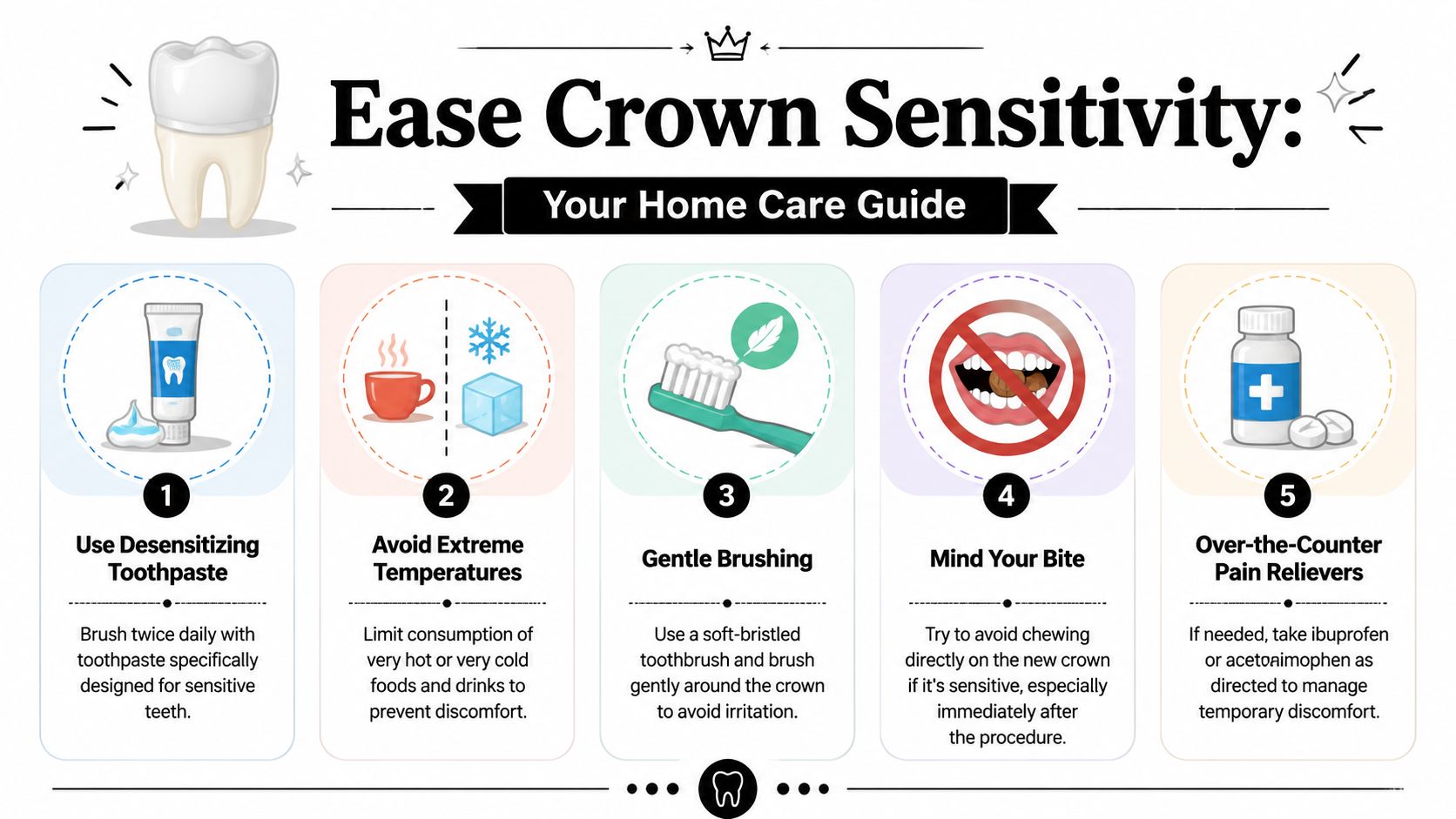
- Use desensitizing toothpaste: These products can help reduce sensitivity over time by calming the pathways that carry sensation from the tooth surface inward.
- Choose moderate temperatures: Very hot coffee and ice-cold drinks tend to trigger discomfort more than room-temperature foods.
- Brush gently: A soft-bristled toothbrush cleans the area without adding extra irritation.
- Be selective about chewing: If one side feels tender, avoid crunching directly on that crown for the moment.
- Use over-the-counter pain relief if appropriate: Medications such as ibuprofen or acetaminophen may help with temporary soreness when taken as directed.
What doesn't work well
Some responses are common but counterproductive.
| Less helpful approach | Better approach |
|---|---|
| Testing the tooth repeatedly | Give the area quiet time to settle |
| Avoiding brushing completely | Keep the crown clean with gentle brushing |
| Eating hard or sticky foods right away | Pick softer, less irritating foods for a short period |
| Waiting indefinitely when biting feels wrong | Call your dentist if the bite feels off |
Gentle care works better than constant checking. Most sensitive crowns calm down faster when patients stop provoking the tooth.
Keep the area clean without being aggressive
One mistake people make is babying the crown so much that they stop cleaning around it well. That can leave plaque near the gumline and make the area feel more irritated, not less. Brush normally, just more gently. Floss carefully if your dentist has advised you to do so.
If you're dealing with a temporary crown, be a little more cautious with sticky foods and hard chewing. The goal is to protect the restoration while avoiding unnecessary stress on the tooth underneath.
For localized dental guidance, Dr. Skotzko Family and Cosmetic Dentistry in Cornelius can evaluate whether a sensitive crown is following a normal healing pattern or needs a simple adjustment.
Warning Signs When to Call Your Cornelius Dentist
Most sensitivity fades. Some symptoms don't fit that pattern and deserve attention sooner rather than later.
Symptoms that are usually part of healing
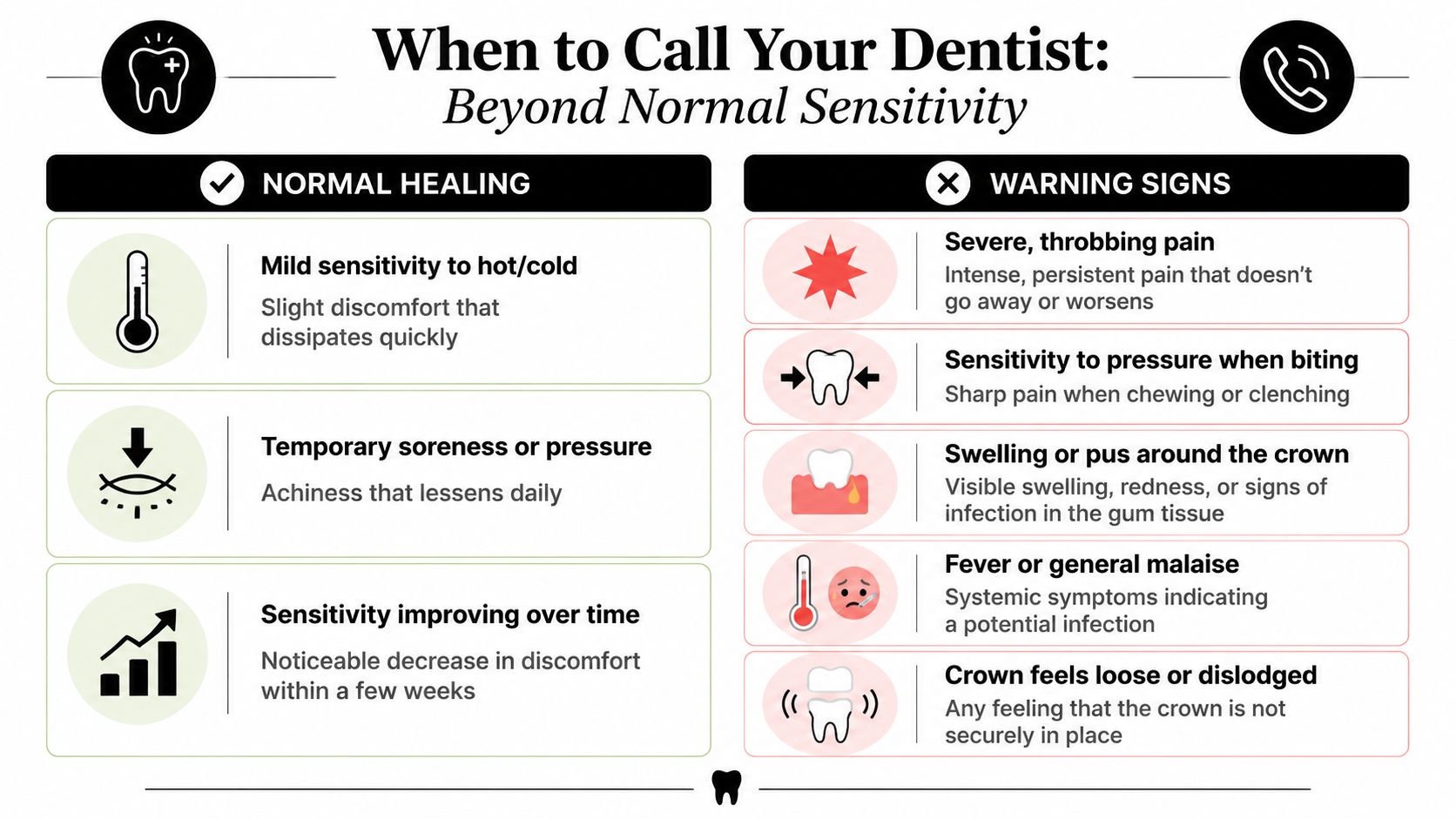
Mild temperature sensitivity, light soreness, and tenderness that improves over time are usually not alarming. The key phrase is improves over time. Normal healing tends to move in a better direction, even if there are occasional off days.
Signs that need a call
Contact your dentist if you notice any of the following:
- Severe, throbbing pain: This is different from mild sensitivity and may point to a deeper problem.
- Sharp pain when biting: That can suggest a bite issue or stress on the tooth.
- Swelling around the crown: Gum swelling, drainage, or a bad taste in the area should be checked.
- A loose or shifting feeling: A crown should feel stable.
- Symptoms that persist or worsen instead of easing: That pattern matters.
If the nerve inside the tooth remains irritated or becomes unhealthy, additional treatment may be necessary. In some cases, that means evaluating whether root canal treatment may be appropriate.
Pain that is stronger, more constant, or more focused on biting pressure deserves more attention than ordinary cold sensitivity.
A simple adjustment is sometimes all that's needed. Other times, the dentist needs to check the seal, the nerve, or the surrounding gum tissue. Calling early is usually easier than waiting until the pain becomes more disruptive.
Comprehensive Restorative Care at Skotzko Family Dental
A crown is one piece of restorative dentistry, not a stand-alone service. It protects a tooth, restores chewing function, and helps maintain the shape of your bite. When a tooth can be saved, a crown is often a practical long-term solution.
That same restorative mindset applies across many dental needs. Some patients need a single crown after a crack or large filling. Others need broader planning that may include bridges, dentures, extractions, implants, or endodontic treatment depending on the condition of the teeth and gums. Information about these treatment options is available through restorative dentistry services in Cornelius.
How crowns fit into the bigger picture
Restorative and cosmetic care often overlap. A crown can strengthen a tooth and improve its appearance at the same time. Invisalign can improve alignment so biting forces are distributed more evenly. Veneers and whitening address smile appearance in a different way, while implants replace missing teeth when a natural tooth can't be preserved.
Patients usually do best when treatment planning looks at the whole mouth, not just the single tooth that's bothering them today.
- Restorative care supports function, comfort, and tooth stability.
- Cosmetic care improves smile appearance while respecting oral health.
- Family dentistry helps maintain the routine care that protects dental work over time.
A thoughtful practice doesn't just place a crown and send you on your way. It checks fit, function, gum health, and long-term maintenance so the treatment works well in daily life.
Schedule Your Consultation with a Dentist Who Cares in Cornelius NC
How long sensitivity lasts after crown treatment: the short answer is that mild sensitivity is often temporary and commonly settles with time. What matters most is the pattern. Improvement is reassuring. Pain that lingers, worsens, or feels sharp when biting should be checked.
For patients in Cornelius, NC, it helps to have a dental office that gives clear answers without making you guess. If your new crown feels tender, if your bite seems off, or if you're unsure whether your symptoms are normal, it's worth reaching out. A quick evaluation can often tell the difference between routine healing and a problem that needs attention.
Families in Cornelius, as well as nearby Huntersville and Davidson, often want more than one-time treatment. They want a long-term dental home for preventive care, restorative work, cosmetic improvements, and honest guidance when something doesn't feel right. That's especially important after procedures like crowns, where a little reassurance and a timely adjustment can make a big difference.
If you have questions about crown sensitivity, restorative treatment, or finding a comfortable dental home in Cornelius, contact Skotzko Family Dental Clinic to request an appointment and get personalized guidance.