
Teeth Whitening for Sensitive Teeth: Get a Brighter Smile
June 15, 2026
How to Prepare for a Root Canal: A Patient’s Guide
June 17, 2026
If you've just been told you need a root canal, your first thought probably isn't about the procedure itself. It's about what happens after. Will you be in pain? How long will it last? Can you go to work, drive home, eat dinner, or sleep normally that night?
Those are fair questions. Patients often don't worry about the technical steps of treatment nearly as much as they worry about root canal recovery time.
Patients in Cornelius, NC often come in expecting a long, difficult recovery because root canals still carry an old reputation. In reality, the recovery is usually much more manageable than people expect. The part that often causes confusion is this: feeling better and being fully finished are not always the same thing. A tooth can calm down quickly, while still needing its final protection to stay strong for the long term.
Easing Your Concerns About Root Canal Treatment
A common conversation in the dental chair goes like this: “I can handle the appointment. I just don't want to be miserable for a week afterward.” That fear makes sense. Dental pain can make everything feel bigger than it is, especially if you've already been dealing with a throbbing tooth, trouble chewing, or a night of poor sleep.
The reassuring news is that many patients can get back to normal activities the same day or within a day, and discomfort often improves over 2–7 days, as explained in Harvard Health's overview of what to expect after a root canal. That's very different from the picture many people have in their heads.
Recovery has two parts
The biggest point I want nervous patients to understand is that recovery happens in two phases.
The first is symptom recovery. This is often the focus of the question, “How long will I hurt?” It covers numbness wearing off, tenderness settling down, and getting back to normal routines.
The second is structural recovery. This is the part many quick online answers leave out. Even when the pain has faded, the tooth may still need a filling or crown to protect it fully. Until that final step is done, the tooth may not be as durable as it should be.
Practical rule: If the tooth feels better, that's a good sign. It does not automatically mean the tooth is finished healing in the way that matters most for long-term function.
Why this matters for nervous patients
When people know what's normal, they usually feel less anxious. Mild soreness doesn't feel nearly as alarming when you expect it. A little tenderness while chewing makes more sense when you know the area has been treated and the surrounding tissues can still be irritated for a short time.
It also helps to know what root canal treatment is trying to do. The goal is to remove infected or inflamed tissue from inside the tooth, clean the space, and preserve the natural tooth rather than losing it. In general and restorative dentistry, that's a very valuable outcome because keeping your natural tooth usually gives you the most familiar bite and chewing feel.
For patients in Cornelius and nearby communities, clear guidance matters just as much as treatment itself. Family dentistry isn't only about fixing a problem. It's about helping you understand what your body is doing, what to expect next, and what protects your smile after the appointment is over.
Your Root Canal Recovery Timeline From Start to Finish
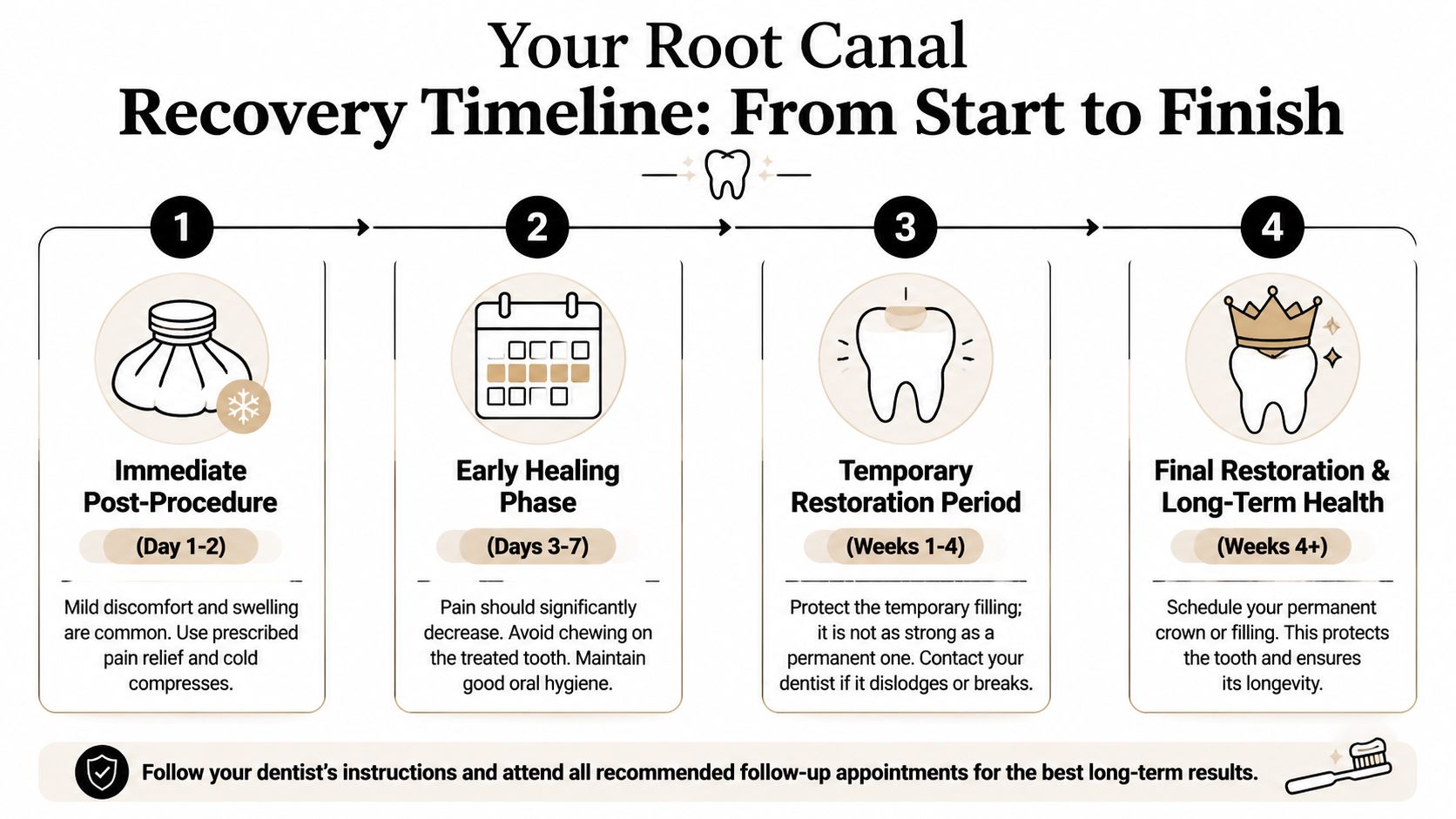
Recovery from a root canal typically occurs in less than a week, although the usual healing window can range from a few days to two weeks depending on the tooth and the complexity of the procedure, according to Cleveland Clinic's root canal guidance. The easiest way to think about recovery is by time block, not by one vague promise that you'll “feel fine soon.”
The first few hours
Right after treatment, the biggest issue usually isn't pain. It's numbness, pressure awareness, and being careful not to bite your cheek or tongue. Your bite may also feel a little different until the area settles and you get used to the temporary restoration.
This is usually a good time to take it easy. You can often return to routine activity quickly, but it's smart to avoid testing the tooth too soon by chewing on it right away.
Day one and day two
This is the stretch patients notice most. The treated tooth and surrounding tissues can feel sore, especially if the tooth was painful or infected before treatment. Biting pressure can feel tender, and the gum around the area may feel mildly irritated.
What works here is simple, steady care:
- Use the pain medicine your dentist recommended and follow the instructions exactly.
- Choose softer foods so you're not forcing the tooth to handle heavy chewing.
- Chew on the other side if that's possible.
- Keep expectations realistic because tenderness in this window is common.
Some offices also review home care and follow-up scheduling during this period. If you want a closer look at the procedure itself and what treatment involves, root canal treatment details can help fill in that part of the picture.
Days three through seven
This is when individuals often start noticing a clear turn in the right direction. The tooth often feels less reactive. You may still know it was treated, but you're no longer thinking about it every few minutes.
A few patterns are common in this phase:
| What you may notice | What it usually means |
|---|---|
| Mild tenderness when chewing | The area is still settling |
| Less discomfort each day | Normal healing trend |
| Sensitivity around the tooth | Temporary tissue irritation |
| No pain at rest, but some pressure soreness | Common during early healing |
Recovery usually feels gradual, not instant. Most patients don't wake up and feel completely normal all at once. They notice that each day asks a little less of them.
Up to two weeks
Some teeth calm down very quickly. Others stay mildly tender a bit longer, especially if the case was more involved or the surrounding tissue was already inflamed. That's why a healing range matters more than a single promise.
What doesn't fit the normal pattern is pain that keeps intensifying instead of easing. A treated tooth should trend toward less irritation, not more. If symptoms are lingering, worsening, or making it hard to function, that deserves a call to your dentist.
Practical Aftercare Steps for a Smooth Recovery
The first day after treatment often throws people off. They expect the tooth to feel steadily better from the moment they leave the office. In fact, inflammation-related discomfort often peaks at 17–24 hours after treatment and then declines, and numbness from local anesthesia commonly lasts 2–4 hours, which is why it's smart to delay eating until full sensation returns, as explained in this post-treatment recovery guidance.
That pain curve matters because it tells you what's normal. Feeling a little worse the next day doesn't automatically mean something is wrong.
What to do the day of treatment
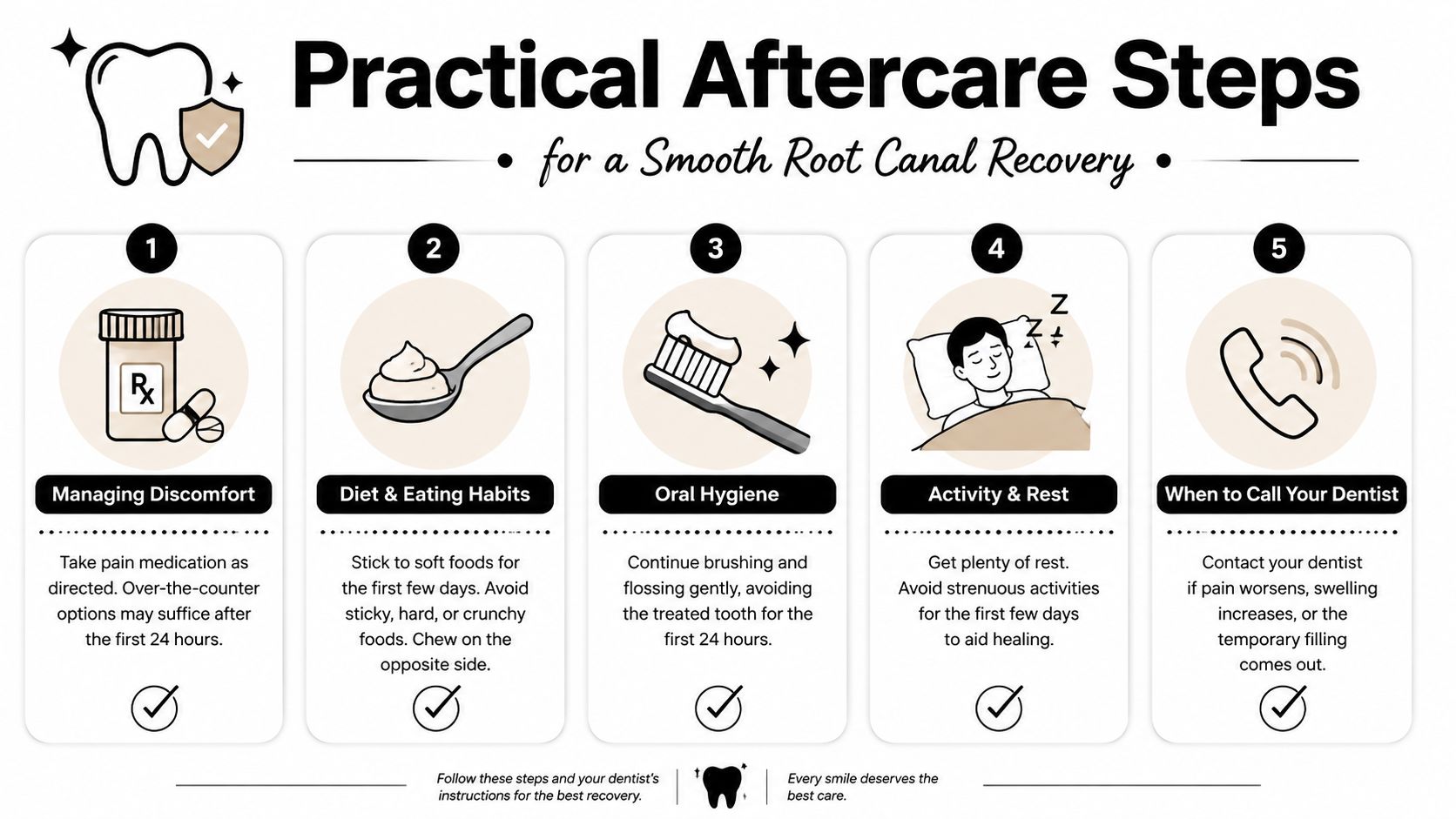
Start with protection, not toughness. Don't rush to eat just because you're hungry. Wait until the numbness has worn off so you don't accidentally bite your cheek, tongue, or lip.
A few smart moves help early on:
- Take medicine on schedule if your dentist advised over-the-counter pain relief such as ibuprofen or acetaminophen.
- Stick with soft foods once you can safely eat.
- Avoid chewing on the treated side if the tooth has a temporary filling or feels tender.
- Skip very hot foods at first if the area still feels strange from anesthesia.
How to eat without aggravating the tooth
Most problems after a root canal don't come from normal healing alone. They come from patients testing the tooth too aggressively. Crunchy chips, hard bread, sticky candy, and chewing ice are all poor choices while the area is settling.
A short soft-food stretch is usually more comfortable. Think foods that don't demand forceful chewing. If the tooth has a temporary restoration, being careful matters even more because temporary materials aren't meant to take the same punishment as a final crown.
Soft foods aren't about being overly cautious. They reduce pressure on a tooth that may still be irritated and may still need full structural protection.
Here's a simple way to think about meals:
| Better choices | Foods to postpone |
|---|---|
| Yogurt, eggs, soup, pasta, oatmeal | Nuts, popcorn, hard candy, crusty bread |
| Soft vegetables, rice, smoothies | Sticky caramel, chewing gum, ice |
| Fish or tender chicken cut small | Tough meats that need forceful chewing |
Keeping the area clean
Good hygiene still matters. Patients sometimes avoid brushing entirely because they're afraid of touching the area. That usually creates a different problem. You want the mouth clean while also being gentle.
Brush carefully. Floss as instructed. Don't scrub the treated tooth aggressively. A clean mouth supports a smoother recovery and reduces irritation from plaque collecting around the temporary restoration or gumline.
This short video gives a helpful visual overview of the healing process and common aftercare concerns.
Activity and common sense
You generally don't need to shut down your entire schedule. You do need to be reasonable. If you feel fine, normal non-strenuous activity is usually manageable. If you feel sore, tired, or tender, slow down.
The mistake is treating “I can function” as “I should ignore the area completely.” What works is protecting the tooth, staying ahead of discomfort, and letting the tissues settle instead of challenging them.
Factors That Influence Your Personal Healing Time
Not every root canal recovery follows the same script. Two patients can have the same procedure and very different experiences afterward. One might need very little downtime. Another might still feel pressure sensitivity for longer. That difference doesn't automatically mean one result is good and the other is bad.
The tooth itself matters
A front tooth and a back tooth don't ask the same thing of your body. Molars handle heavier biting forces and can be more demanding in day-to-day use. A tooth that was painful before treatment may also leave the surrounding tissues more irritated afterward.
The condition of the tooth before care also shapes the recovery. If the nerve was badly inflamed or the area around the root was already sensitive, the healing experience may feel more noticeable even when treatment went well.
Your habits matter too
What you do after the appointment changes a lot. Patients who chew on the treated side too soon, skip instructions, or ignore a temporary filling often create setbacks that don't need to happen.
A few examples:
- Diet choices: Hard or sticky foods can aggravate the tooth or damage a temporary restoration.
- Oral hygiene: Gentle cleaning helps. Avoiding the area completely usually doesn't.
- Follow-up: Delaying the next step can leave the tooth vulnerable longer than necessary.
A root canal-treated tooth often feels quieter before it's fully protected. That gap is where preventable problems can happen.
Overall health and healing style
People heal at different speeds. Some bodies calm inflammation quickly. Others stay tender longer after any dental procedure. Stress, clenching, grinding, and general health can all influence how the tooth feels during recovery.
This is also why a personalized exam matters. In a general, family, or restorative dentistry setting, dentists don't just look at the root canal itself. They look at the bite, the remaining tooth structure, chewing habits, and whether a crown will likely be needed. Cosmetic goals may also enter the conversation for visible teeth, especially when appearance and function both matter.
If a patient ultimately loses a compromised tooth, restorative options such as crowns, bridges, dentures, partials, or dental implants may come into the discussion. The better path, when possible, is protecting the natural tooth you've already treated.
Beyond Initial Healing The Role of Your Final Restoration
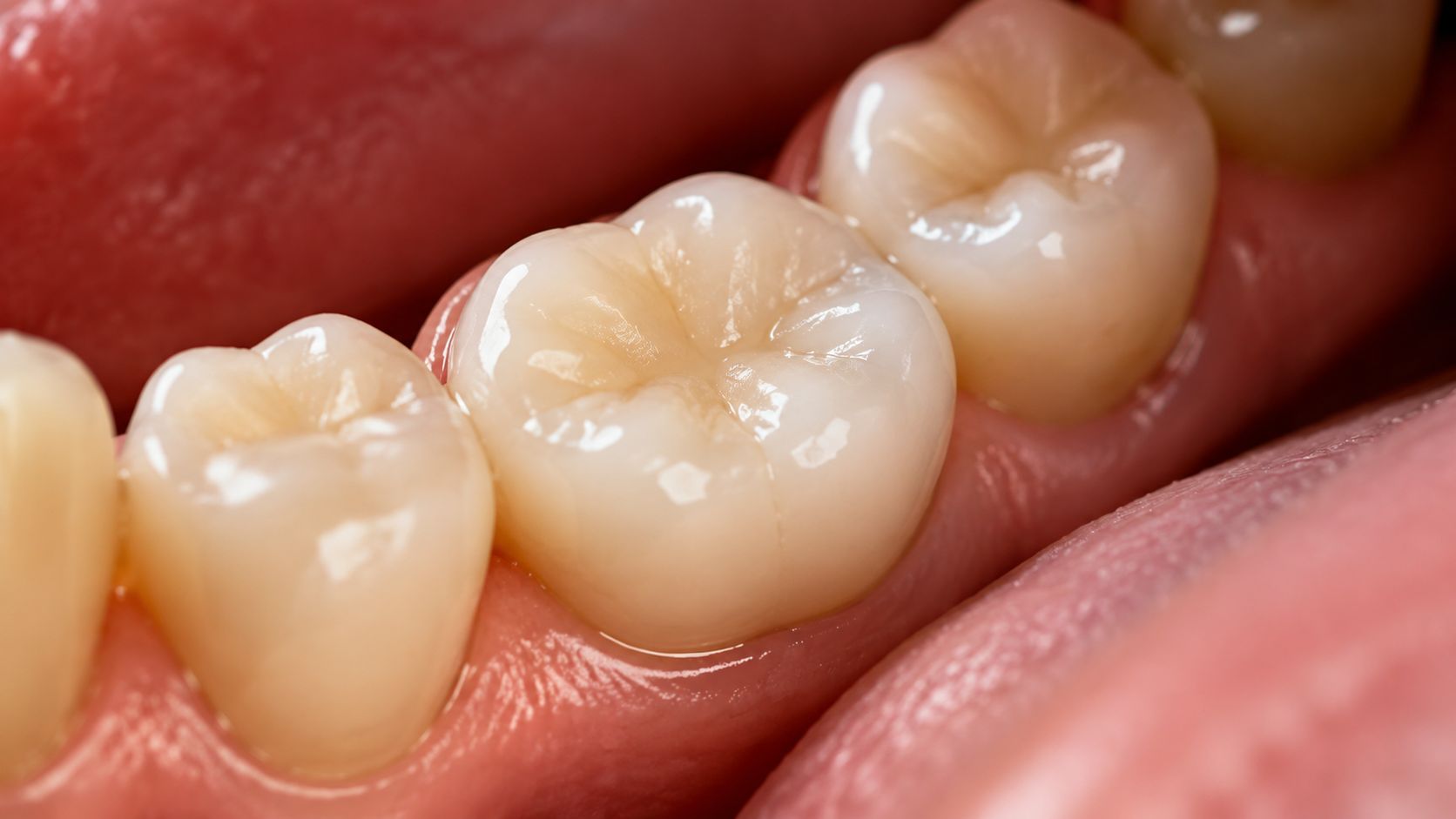
This is the part patients most often underestimate. A root canal doesn't end when the soreness fades. It ends when the tooth is sealed and protected well enough to function long term.
Think of the treated tooth like a house that has had major internal repairs. The wiring may be fixed. The damage inside may be addressed. But if the roof is still incomplete, the house remains vulnerable. A root canal-treated tooth can feel much better before it is fully ready to take normal chewing forces for years.
Symptom relief is not the finish line
This is where the idea of fast symptom recovery but slower structural completion really matters. Patients sometimes assume that once the tooth stops hurting, they can postpone the next step indefinitely. That's risky.
The long-term numbers make the point clearly. A large U.S. dental analysis found a median survival time of 11.1 years for root canal-treated teeth, and reporting on that research noted that teeth restored with a filling and crown last about 20 years, while teeth with no restorative work last around 6.5 years, according to this published analysis of root canal-treated tooth survival.
That difference is why final restoration is not just an add-on. It's part of the treatment.
Why crowns matter so much
After a root canal, the tooth may have less internal resilience than before. If decay, a large old filling, or fracture risk is already part of the picture, leaving the tooth without proper coverage invites trouble. Chewing pressure doesn't care that the nerve has been treated.
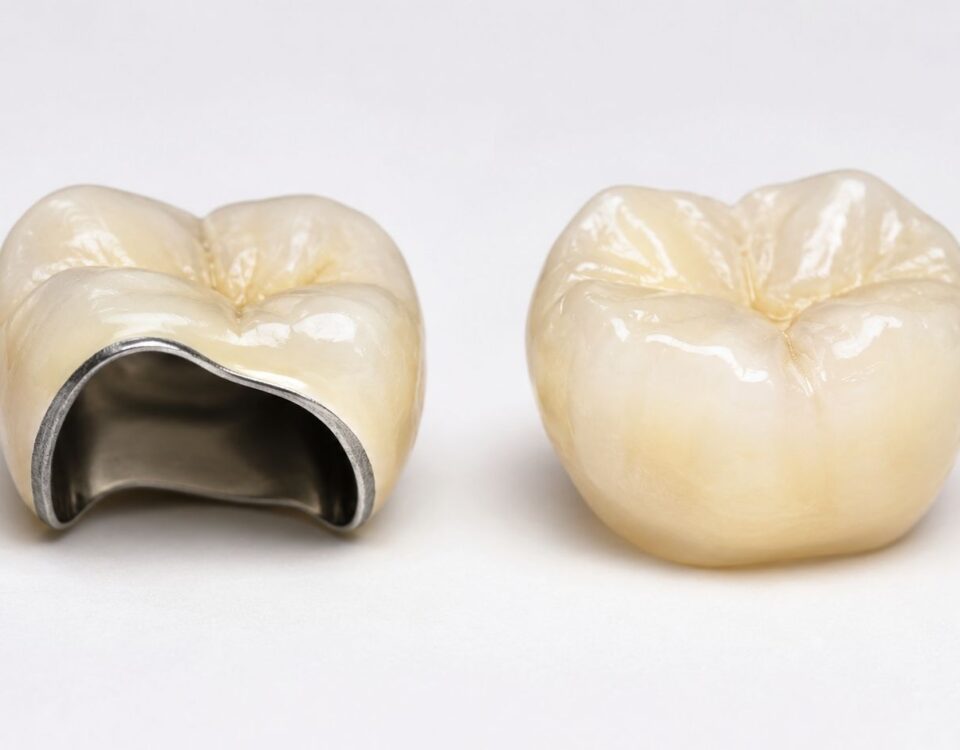
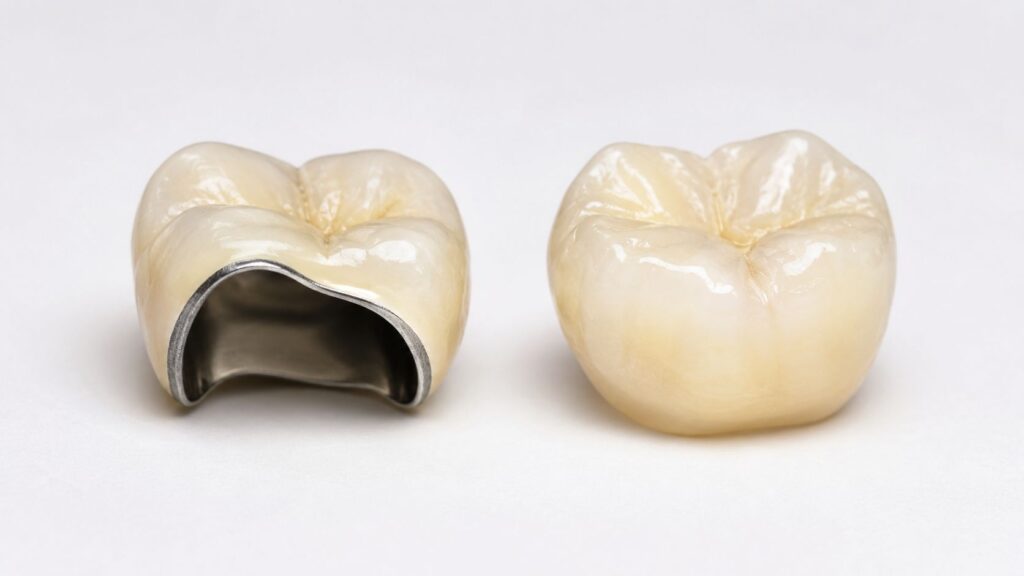
A crown or final filling helps by doing several jobs at once:
- Sealing the tooth: It helps reduce the chance of bacteria getting back into vulnerable spaces.
- Reinforcing structure: It protects weakened tooth walls from breaking under normal use.
- Restoring function: It lets the tooth return to a more dependable chewing role.
For patients looking at the next step, restorative dentistry options cover how fillings, crowns, bridges, and related care fit into preserving teeth and rebuilding function.
Where this fits in everyday dental care
This is the section where practical dentistry matters more than theory. If the tooth has enough healthy structure, a final filling may be appropriate. If the tooth has taken on more damage or handles heavy bite force, a crown often becomes the wiser choice. If a tooth can't be saved, then replacement options such as dental implants may become part of the discussion.
At Skotzko Family Dental Clinic, that planning can include root canal treatment, crowns, bridges, fillings, implants, and routine family dental follow-up under one roof. What matters most is matching the restoration to the condition of the tooth, not stopping at the point where pain is gone.
Your Partner in Dental Health in Cornelius NC
A calmer recovery starts with knowing what's normal. For most patients, root canal recovery time is shorter and easier than they feared. The first part is about symptoms settling down. The second part is about making sure the tooth is protected well enough to last.
That second part is easy to overlook because symptom relief can happen quickly. But a tooth that feels fine can still need a final filling or crown. If patients remember only one thing, it should be this: pain improvement is encouraging, but protection is what supports long-term success.
Signs you should call your dentist
A recovering tooth should gradually move in the right direction. If it doesn't, don't guess. Reach out.
Call if you notice:
- Pain that keeps getting worse instead of easing.
- Swelling that increases rather than settling down.
- A temporary filling or restoration that comes loose or breaks.
- Trouble biting that feels sharp or abnormal after the initial soreness should be calming.
- Symptoms that don't feel right to you, especially if they interfere with eating or sleeping.
Local care with a long view
People looking for a dentist near me in Cornelius, NC usually want more than a one-time fix. They want a dental home that can handle today's toothache and tomorrow's preventive, cosmetic, and restorative needs too. That includes routine cleanings, fillings, crowns, root canals, cosmetic dentistry, veneers, Invisalign, and options for missing teeth when replacement becomes necessary.
Families in Cornelius and the surrounding area benefit most when care is consistent. A tooth that has had a root canal still needs routine exams, maintenance, and a dentist who pays attention to how it's functioning over time. That's how you protect not just one tooth, but your overall oral health.
If you live in Cornelius, Huntersville, or Davidson and you're dealing with tooth pain, uncertainty about aftercare, or questions about the next step after a root canal, getting clear guidance can make the whole process feel much more manageable.
If you need help with root canal treatment, recovery guidance, crowns, fillings, cosmetic dentistry, or ongoing family dental care, Skotzko Family Dental Clinic serves patients in Cornelius, NC and nearby communities with practical, patient-centered care. Schedule a visit if you want answers, relief, and a plan to protect your tooth for the long term.