How Much Do Dentures Cost? Get 2026 Prices in Cornelius
June 14, 2026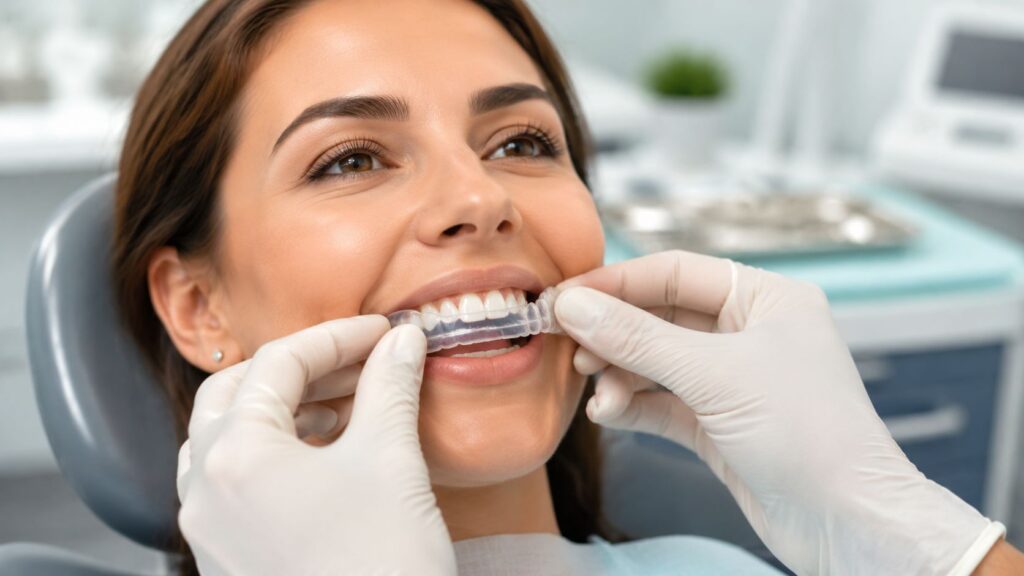
A lot of people want whiter teeth right up until they remember the last sharp “zing” from a cold drink, or the story a friend told about whitening that left their teeth aching for days. That hesitation makes sense. If your teeth already run sensitive, it's reasonable to wonder whether a brighter smile is worth the discomfort.
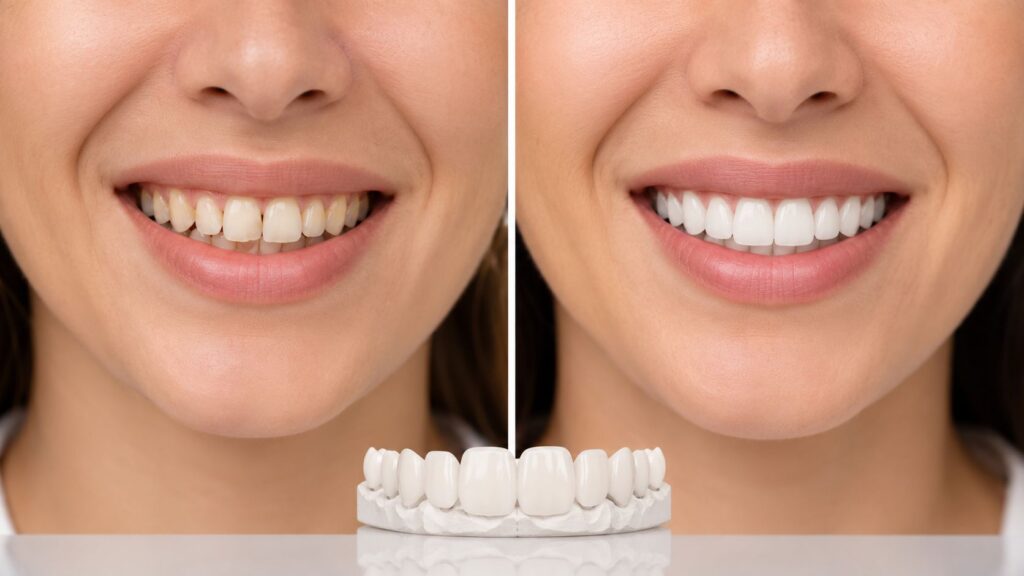
The good news is that teeth whitening for sensitive teeth usually isn't an all-or-nothing choice. In most cases, the main question is not “Can I whiten?” but “Which method gives me the result I want with the least irritation?” That's a much better conversation, because it puts comfort, safety, and realistic expectations at the center of the plan.
A Brighter Smile Without the Pain in Cornelius NC
In Cornelius, NC, many adults are in the same spot. They notice coffee stains, wedding photos on the calendar, or a smile that looks a little duller than it used to. They also know their teeth can be reactive. Maybe cold water bothers them. Maybe past whitening strips felt too strong. So they put the whole idea off.
That's often where the anxiety starts. People assume whitening has to hurt if they want it to work. It doesn't.
Sensitive teeth do not automatically rule out whitening
Whitening sensitivity is common, but that doesn't mean every approach is a bad fit. Some people do best with slower, lower-strength options. Others want a stronger result and do better with dentist supervision, where the treatment can be adjusted if sensitivity starts to build. The right choice depends on two things: how sensitive your teeth are now, and how dramatic a result you want.
Practical rule: The faster and stronger the whitening approach, the more important comfort planning becomes.
That trade-off matters. If your main goal is a modest refresh, a gentler path may be the smartest one. If you want a more noticeable change, you may still be a candidate, but it helps to have a dentist evaluate your enamel, gums, and existing restorations first.
What most nervous patients need to hear first
Sensitivity after whitening is usually temporary, not a sign that your teeth have been “ruined.” It's a known side effect of peroxide-based whitening. With the right product strength, wear time, and timing, many patients can whiten comfortably enough to stay on track.
A cautious approach also protects you from wasting time. That matters just as much as comfort. Many over-the-counter products are positioned as gentle, but “gentle” only helps if the treatment still matches your staining level and expectations.
If you've been avoiding whitening because you don't want to trade a brighter smile for days of discomfort, you're asking the right question. The answer usually comes down to method, timing, and whether your sensitivity is a normal concern or a sign of something that should be treated first.
Understanding the Source of Tooth Sensitivity
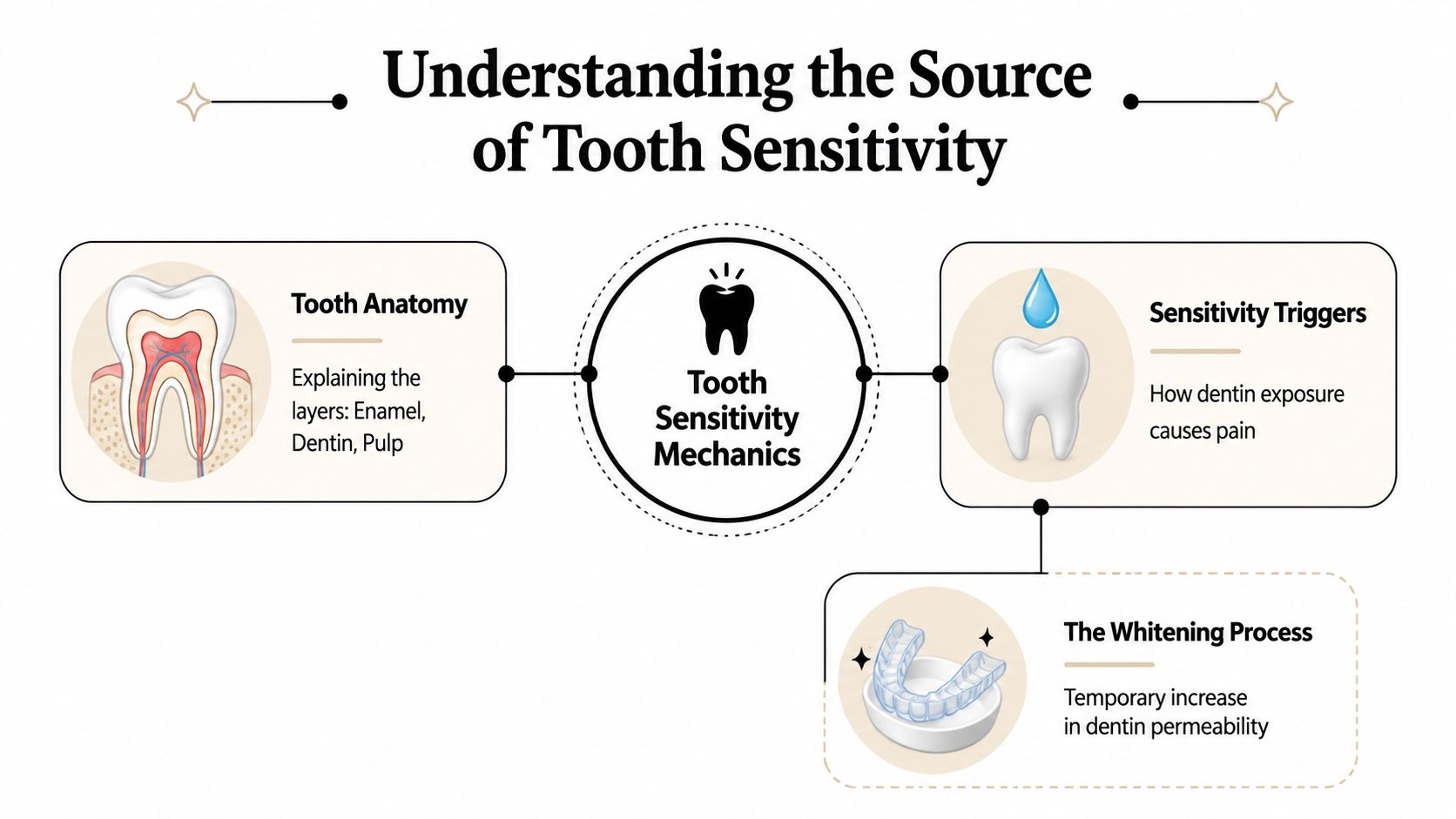
To understand why whitening can make teeth feel tender, it helps to think of a tooth as having layers. The enamel is the hard outer shell. Under that sits dentin, which is more porous. In the center is the pulp, where the nerve lives.
Whitening agents have to move through the outer surface to break up stain molecules. That's how whitening works. But that same process can temporarily irritate the deeper part of the tooth.
Why the “zing” happens
Peroxide diffuses through enamel and into dentin, where it can cause transient irritation of the pulp. That's the biological reason for whitening sensitivity. It isn't random, and it isn't usually a sign of permanent harm. A review of clinical trials found that in-office bleaching with a 35% hydrogen peroxide product caused sensitivity in all cases, and it also found that side effects increase with higher peroxide concentration and longer application time, as summarized in this clinical review of whitening sensitivity mechanisms.
Concentration is only part of the story
A lot of people focus only on the percentage of peroxide. That matters, but it's not the whole picture. Time on the teeth matters too. Even a product that seems reasonable on paper can cause more irritation if it's worn too long, used too often, or layered on top of already sensitive teeth.
Here's the simple takeaway:
- Higher strength means more risk: Stronger peroxide usually increases the chance and intensity of sensitivity.
- Longer wear can add to irritation: Leaving a product on longer than directed can make a tolerable treatment feel much less comfortable.
- Light activation isn't the fix: The same review noted that light activation does not reduce sensitivity or improve whitening persistence.
Whitening works by reaching below the surface stain. That's why it can also reach the part of the tooth that reacts.
Why this explanation matters
When patients understand the cause, they usually feel less alarmed by temporary sensitivity. The discomfort has a mechanism. It also has predictable control points. Dentists can often reduce problems by choosing a lower concentration, shortening wear time, or using desensitizing support such as potassium nitrate during treatment.
That's why “best whitening” isn't one universal product. For sensitive teeth, the best method is the one that gets enough whitening while keeping peroxide strength and contact time within a range your teeth can tolerate.
Choosing the Right Whitening Method for Your Smile
If you have sensitive teeth, choosing a whitening method is a balancing act between comfort, speed, and visible change. The most useful way to compare options is to stop asking which method is “strongest” and start asking which one fits your goals.
The main decision point
For sensitive teeth, the most evidence-backed control variable is peroxide concentration. The ADA notes that temporary sensitivity is more prevalent at higher active-agent concentrations and can affect up to two-thirds of users during the early stages of bleaching, usually resolving within a few days. It also points to lower-strength regimens such as 10% carbamide peroxide as a practical starting point for patients who want to reduce discomfort, as described by the American Dental Association guidance on whitening.
That means gentler products are not just “comfort marketing.” Lower concentration is one of the most practical ways to reduce the chance of pain.
Side-by-side comparison
| Whitening Method | Average Time | Sensitivity Control | Best For |
|---|---|---|---|
| In-office professional whitening | Faster results, usually in fewer sessions | Highest level of supervision and immediate adjustment | People who want stronger whitening and professional monitoring |
| Dentist-prescribed at-home trays | Gradual whitening over a longer treatment period | Good control through custom fit and guided use | People who want a middle ground between comfort and effectiveness |
| Over-the-counter strips or sensitive formulas | Slowest path for most people | Variable, depends on fit, formula, and how carefully they're used | Mild staining and patients who prefer the gentlest practical starting point |
In-office whitening when results matter most
Professional in-office whitening is often the best fit for people who want a more noticeable change and don't want to guess their way through sensitivity. The biggest advantage isn't just speed. It's control. A dentist can isolate the gums, monitor your response, and change the plan if your teeth start reacting.
That said, stronger in-office whitening is not automatically the most comfortable path. If you already know your teeth are reactive, this option needs careful judgment. Sometimes it's still the right choice because the dentist can manage the process more precisely than you can at home. Sometimes it's too aggressive as a starting point.
Dentist-prescribed trays for a more controlled pace
Custom trays sit in the middle. They're usually the most practical choice for patients who want better whitening than an over-the-counter product can reliably deliver, but who also want a slower and more controlled treatment window.
The custom fit matters. It helps keep gel where it belongs and reduces unnecessary gum contact. It also makes it easier to fine-tune how long you wear the trays. For many sensitive patients, that flexibility is the difference between “I can do this” and “I had to stop.”
If you're exploring broader smile options along with whitening, it can help to review a local cosmetic dentistry treatment overview so your whitening plan fits the rest of your goals.
Over-the-counter whitening for mild goals
OTC products can be a sensible starting point if your staining is mild and your priority is comfort. Sensitive-formulated strips and lower-peroxide products are usually positioned as slower, milder options. That's their strength and their limitation.
They may work well enough for surface staining. They may also feel disappointing if you want a substantial shade change.
The gentlest product is not always the best value if it's too mild for your goal.
How to choose without wasting time
A simple decision rule helps:
- If you want a subtle refresh: Start with the gentlest realistic option.
- If you want a noticeable change: Consider dentist-supervised whitening, especially if you've had sensitivity before.
- If your teeth are already sensitive day to day: Don't choose based on marketing alone. Get an exam first.
- If you've quit whitening before because of pain: Focus on concentration, wear time, and custom guidance.
The best whitening plan for sensitive teeth is rarely the most aggressive one. It's the one that gives you enough result to feel worthwhile, without pushing your teeth past what they can tolerate.
Your Plan for a Comfortable Whitening Experience
Comfort during whitening usually starts before the first whitening gel ever touches a tooth. If you have a plan, the process feels much more manageable.
Clinical research consistently shows that tooth sensitivity is the most prevalent side effect of whitening, affecting between 30% and over 78% of patients depending on bleaching concentration, and the discomfort is typically mild to moderate, peaks soon after treatment, diminishes significantly within 24 hours, and resolves for most within two weeks, according to this summary of whitening sensitivity research.
That timeline is reassuring because it tells you what “normal” tends to look like.
Before you whiten
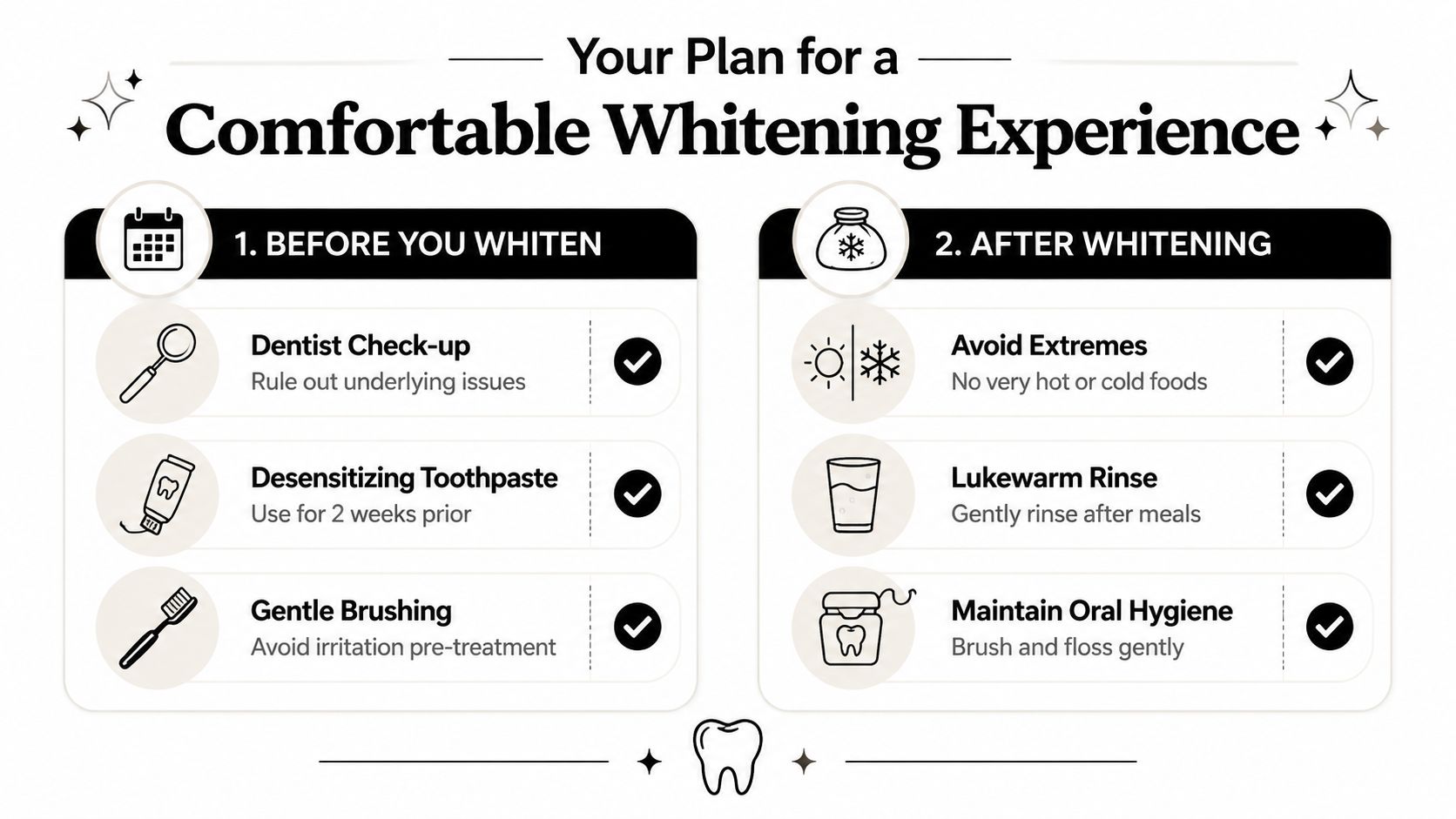
A few steps can make a big difference:
- Use a sensitivity toothpaste: Products with potassium nitrate are commonly recommended before whitening because they help calm nerve irritation.
- Get your teeth checked first: Existing decay, recession, or cracked enamel can make whitening much less comfortable.
- Start gently if you're prone to sensitivity: Shorter sessions are often better tolerated than pushing through full wear time immediately.
- Brush and floss carefully: A clean mouth helps whitening work more evenly, but aggressive brushing can irritate already sensitive teeth.
After whitening
The first day matters most. Teeth often feel their most reactive shortly after treatment, so give them a break.
- Avoid temperature extremes: Very hot and very cold foods can trigger those brief electric sensations.
- Choose bland, non-acidic foods: Acidic drinks and foods can make tender teeth feel worse.
- Stay consistent with oral hygiene: Gentle brushing and flossing help without adding irritation.
- Use your dentist's aftercare instructions: If they recommend a desensitizing product, use it exactly as directed.
Here's a short visual walkthrough that reinforces the basics of a more comfortable whitening process.
What a realistic recovery feels like
There's no need to panic if teeth feel tender right after whitening. Mild to moderate sensitivity that fades fairly quickly is expected. The important part is the direction. It should improve, not keep building day after day.
If discomfort peaks early and then settles down, that usually fits the normal pattern.
If the pain feels sharp, lingers, or makes you avoid chewing on one side, that's different. At that point, it's worth stepping back and making sure the issue is whitening sensitivity, not an untreated dental problem.
When Whitening Is Not the Right First Step
One of the biggest misconceptions about teeth whitening for sensitive teeth is that all post-whitening pain is normal. It isn't. Some sensitivity is a temporary side effect. Some pain is a warning sign.
Professional guidance notes that sensitivity usually fades within a few days after whitening, but persistent pain can point to cavities, gum disease, or exposed roots that should be treated before whitening is considered safe, as explained in this guidance on when sensitivity may signal an underlying issue.
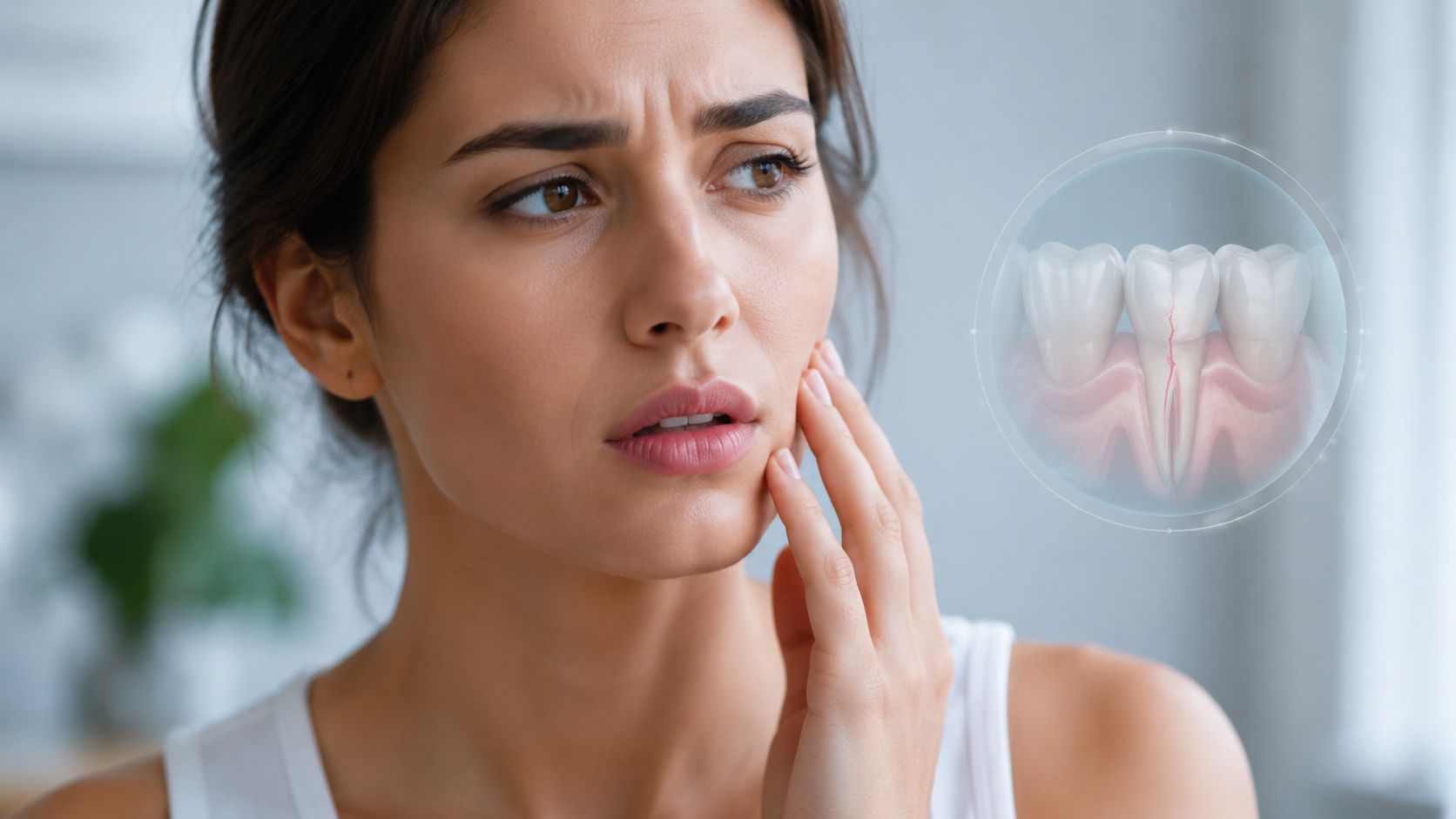
Signs that need a dental exam first
Whitening should usually wait if you already have symptoms like these:
- Pain that lingers before whitening: If cold air or sweet foods already hurt, the tooth may need evaluation first.
- Visible gum recession: Exposed root surfaces are often much more reactive than enamel-covered areas.
- A chipped or cracked tooth: Whitening gel can aggravate an already compromised tooth.
- One specific tooth that hurts more than the others: That pattern can suggest a local problem rather than routine whitening sensitivity.
Other situations where planning matters
Not every issue is about pain. Sometimes whitening just isn't the right first cosmetic step.
Crowns, veneers, and fillings do not whiten like natural enamel. If they're visible when you smile, whitening your natural teeth without planning ahead can leave you with mismatched shades. Pregnancy, a known peroxide allergy, or active gum inflammation are also reasons to pause and get individual guidance.
Whitening should never be used to “test” whether a tooth is healthy.
If a tooth is sending warning signals, whitening won't fix the problem. It may make it louder. A pre-whitening exam is one of the smartest parts of the process because it separates expected short-term sensitivity from pain that needs treatment.
Begin Your Journey to a Confident Smile in Cornelius NC
The safest whitening plan is always a personalized one. That's especially true if you've had sensitivity before, have older dental work, or aren't sure whether your teeth are reacting normally.
A good consultation should do more than ask whether you want whiter teeth. It should look at enamel health, gum condition, current restorations, and your actual whitening goals. Some patients want a small refresh before an event. Others want a more noticeable change and need help choosing between in-office treatment and a slower tray-based plan.
What a thoughtful whitening consult should include
A dentist should help you answer a few practical questions:
- How sensitive are your teeth right now
- Are your stains likely to respond to a gentler method
- Would lower-strength treatment still meet your goals
- Are there restorations that could affect the final appearance
That kind of planning is what makes whitening feel predictable instead of risky.
For patients comparing cosmetic options in nearby communities, it may also help to review cosmetic dentistry services in Davidson, NC and think about how whitening fits into a broader smile plan.
The right approach is rarely about chasing the strongest product. It's about choosing a method your teeth can tolerate and your smile can benefit from. If you live in Cornelius, NC, or nearby areas and you've been putting off whitening because of sensitivity, a professional evaluation can help you move forward with much more confidence.
Frequently Asked Questions About Sensitive Teeth Whitening
Does low-sensitivity whitening still work
Yes, but the result depends on what you mean by “work.” Gentler over-the-counter options are generally effective for mild staining, while patients who want a more noticeable shade change often do better with in-office or dentist-supervised whitening that balances stronger results with professional comfort management, as discussed in this overview of whitening options for sensitive teeth.
Is whitening sensitivity permanent
Usually, no. Temporary sensitivity is the common pattern. If discomfort keeps going, becomes more intense, or seems isolated to one tooth, that's a reason to stop and get checked rather than assume it's part of the process.
Should I use whitening strips if my teeth are already sensitive
Sometimes, but not automatically. If your teeth are mildly sensitive and you only want a modest improvement, a lower-strength strip or sensitive-formulated product may be reasonable. If your teeth are sensitive even without whitening, it's smarter to get an exam before starting.
Is in-office whitening always too strong for sensitive teeth
No. For some patients, professional supervision makes whitening more comfortable because the treatment can be adjusted and monitored. The key isn't whether it happens in the office or at home. The key is whether the method matches your teeth and your goals.
What's the biggest mistake people make
Trying to solve this with marketing claims instead of diagnosis. If you choose only by package labels like “gentle” or “maximum white,” you can easily end up with a product that is either too irritating or too weak to feel worthwhile.
If you're ready to explore a brighter smile without guessing your way through sensitivity, Skotzko Family Dental Clinic can help you choose a whitening plan that fits your comfort level, existing dental health, and cosmetic goals. Patients in Cornelius, NC and nearby communities can schedule a consultation to find out whether in-office whitening, custom trays, or a more gradual approach makes the most sense for their smile.