
Root Canal Recovery Time: Guide & Aftercare Tips
June 16, 2026
Invisalign vs Braces for Adults: Your 2026 Guide
June 18, 2026
When a patient hears, “You need a root canal,” the reaction is usually the same. The shoulders tighten. The mind jumps to old stories. The procedure starts to feel bigger and scarier than it really is.
In practice, the fear usually comes from not knowing what will happen next.
A root canal is meant to remove infection, relieve pain, and help save your natural tooth. It's also far more routine than many people realize. More than 15 million root canals are performed each year in the United States, and modern treatment is described as a routine, highly standardized procedure focused on safety and comfort in Delta Dental's overview of root canal treatment.
If you're looking up how to prepare for a root canal in Cornelius, NC, you probably want straight answers. What should you do before the appointment? Should you eat first? Do you need someone to drive you? What changes if you're having local anesthetic versus sedation?
Those are the questions that matter when you're trying to feel calm and ready.
Your Guide to a Smooth Root Canal Experience in Cornelius NC
Most nervous patients expect the hardest part to be the procedure itself. In reality, the hardest part is often the time before the appointment, when you're imagining worst-case scenarios and filling in the blanks with outdated ideas.
That's why preparation matters. Good preparation lowers stress, avoids last-minute surprises, and helps the appointment run smoothly.

Why the process feels easier once you understand it
A root canal isn't a punishment for having a bad tooth. It's a treatment for a tooth whose inner tissue has become inflamed or infected. The goal is to clean the inside of the tooth, seal it, and preserve what can still be saved.
For many patients in Cornelius, the emotional shift happens when they realize this is not some rare, dramatic procedure. It's a standard part of restorative dentistry. The work is methodical. The steps are predictable. The preparation is mostly practical.
Root canal appointments usually go better when patients stop treating them like a mystery and start treating them like a plan.
What patients usually worry about
The concern usually isn't just pain. It's the unknowns around the appointment itself.
Common concerns include:
- Eating beforehand because patients hear conflicting advice online
- Medication questions especially with aspirin, ibuprofen, blood thinners, or supplements
- Driving afterward if sedation might be involved
- Missing work or family responsibilities if recovery is harder than expected
- Whether the tooth will really be okay afterward
Those are reasonable concerns. They also have practical answers.
At this stage, what works is simple preparation and clear communication with your dental team. What doesn't work is guessing, skipping instructions, or assuming every root canal is prepared for the same way.
A calmer way to think about the appointment
Think of the visit in three parts:
- Before treatment, the focus is on medical history, medications, anesthesia planning, and logistics.
- During treatment, the focus is on numbing, cleaning the tooth, and sealing it.
- After treatment, the focus shifts to healing and restoring the tooth so it stays strong.
That structure takes a lot of fear out of the process. Instead of one big scary event, it becomes a series of manageable steps.
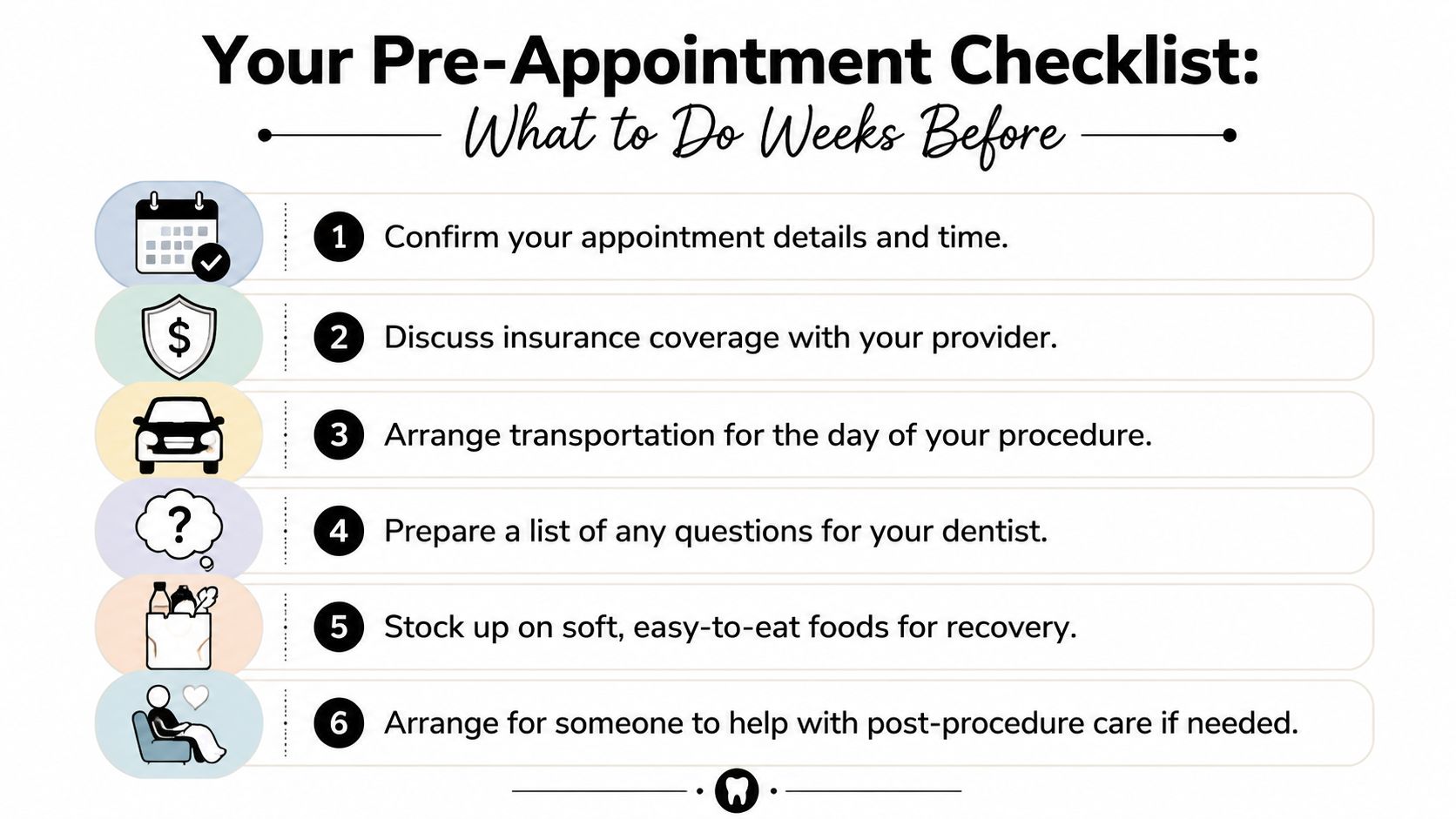
Your Pre-Appointment Checklist What to Do Weeks Before
A smooth root canal rarely depends on doing something dramatic the night before. It usually depends on handling the basics early.
That starts with your health information.
Start with medications and medical history
One of the most useful steps you can take is to make a full list of what you use regularly. That includes prescriptions, over-the-counter pain relievers, vitamins, and herbal supplements. As noted in guidance on preparing for a root canal appointment, patients should inform their dentist about all medications, including aspirin, ibuprofen, blood thinners, and herbal supplements, because some may need to be adjusted before treatment.
That point gets missed all the time.
Patients often remember to mention prescription medications but forget daily aspirin, occasional NSAID use, fish oil, or supplements they don't think “count.” They count. If something affects bleeding, healing, sedation response, or blood sugar control, your dentist needs to know about it.
Practical rule: Don't decide on your own which medications matter. Bring everything up, even if it seems unrelated to your tooth.
Questions worth asking before the appointment
If you want fewer surprises, ask direct questions early. The answers shape your plan for the day of treatment.
A short list to keep handy:
- Ask about anesthesia plans so you know whether your visit is local anesthetic only or involves sedation
- Ask whether any medication changes are needed rather than stopping anything on your own
- Ask about eating instructions because they depend on the anesthetic plan
- Ask whether you'll need time off afterward or whether a lighter schedule is enough
- Ask whether a follow-up restoration is expected so you can plan ahead
Handle paperwork before the stressful part
Many patients feel more settled when the administrative details are done before procedure day. If your office offers digital paperwork, use it. If not, request forms in advance when possible.
For patients who want to save time before arriving, patient forms for upcoming dental visits can help you gather information before the appointment. That's especially useful if you're coordinating family schedules, insurance details, or medication lists.
Plan the practical side of recovery
A little planning at home makes the first evening easier. You don't need to turn your kitchen into a recovery center. You just want simple, low-effort options ready.
Helpful prep often includes:
- Soft foods at home such as yogurt, soup, smoothies, oatmeal, eggs, or mashed foods
- A lighter evening schedule in case you want to rest
- Childcare or help at home if your day is already packed
- Transportation planning if sedation is even a possibility
What works is reducing friction. If you come home tired, numb, or sore, you won't want to make complicated decisions.
What not to do in the weeks before
A few missteps create avoidable stress:
- Don't stop prescribed medication without instruction
- Don't wait until the day before to mention blood thinners or medical conditions
- Don't assume every office uses the same sedation protocol
- Don't rely on social media advice over the instructions given for your specific case
Preparation is mostly about clarity. Once your dentist knows your health history and you know the anesthesia plan, the rest becomes much easier.
The Day Before and Morning Of Your Procedure
This aspect often causes much confusion. Patients often get generic advice that mixes together local anesthetic instructions and sedation instructions, even though they aren't the same.
That distinction matters.
According to Cleveland Clinic's root canal treatment guidance, for local anesthesia alone, offices often advise a normal meal beforehand. Sedation cases typically require fasting for several hours and a pre-arranged ride home.
Root Canal Prep Local Anesthesia vs. Sedation
| Preparation Step | Local Anesthesia Only | Sedation (Nitrous Oxide, Oral, or IV) |
|---|---|---|
| Eating before the visit | Often a normal meal is advised | Fasting may be required, based on instructions |
| Drinking fluids | Hydration is usually helpful unless told otherwise | Follow specific fasting directions for liquids |
| Driving home | Many patients can drive themselves if only local anesthetic is used | You'll need a ride home |
| Medication planning | Still important to review all medications and conditions | Even more important because sedation may change instructions |
| Schedule for the day | A lighter day is smart, but many patients can resume normal activity | Plan for reduced alertness and more downtime |
| Arrival planning | Arrive with your questions answered and your medical history updated | Arrive with escort logistics confirmed |
If you're having local anesthetic only
Most routine root canals are done this way. The main priority is arriving in a stable, comfortable state.
The day before and morning of the appointment, that usually means:
- Eat normally unless told otherwise so you don't show up hungry, shaky, or distracted
- Stay hydrated
- Brush and floss as you normally would
- Wear comfortable clothing
- Avoid alcohol and tobacco before treatment
- Give yourself extra time so you're not rushing into the chair already tense
This is the prep path many patients need. It's simpler than the internet often makes it sound.
If sedation is part of your treatment plan
Sedation changes the rules. For example, “just have breakfast and drive yourself” can become a real problem.
If sedation is planned, follow the instructions precisely. That often includes fasting for a period before the procedure and arranging for someone to bring you home. If your office gave you a specific cutoff time for food or drink, follow that exact timeline.
If you're not sure whether your visit includes only local anesthetic or some form of sedation, call and confirm before procedure day. That single question prevents a lot of cancellations.
Night-before details that help more than patients expect
The highest-value tasks are small:
- Set out comfortable clothes.
- Put your ID, insurance card, and medication list in one place.
- Confirm your appointment time.
- If sedation is planned, confirm your driver.
- Keep the next day lighter than usual if you can.
What doesn't help is doom-scrolling root canal stories the night before. Most of those stories are either outdated, incomplete, or based on a completely different situation than yours.
What to Expect During Your Root Canal in Our Cornelius Office
You arrive in Cornelius with a sore tooth, a lot of questions, and one big worry. “What is going to happen once I'm in the chair?”
The visit is usually much calmer once the sequence is clear.
When you check in, we confirm your health history, review the tooth we're treating, and make sure the plan still fits what you need that day. If anything changed since your last visit, tell us before we start. That includes a new medication, a recent illness, pregnancy, use of a blood thinner, or any past problem with numbing medicine or sedation.
If you like knowing the setting before your appointment, you can review our Cornelius dental office information ahead of time.
What changes if you are having local anesthesia only versus sedation
This is the point that confuses many patients, and it matters.
If your root canal is being done with local anesthesia only, you'll stay awake and aware the whole time. The goal is simple. Get the tooth fully numb, keep you comfortable, and check in with you throughout the procedure. You may feel pressure, vibration, water, and movement, but you should not feel sharp pain. You can respond to questions, ask for a break, and let us know right away if something feels off.
If sedation is part of your treatment plan, the flow feels different. You may remember less of the appointment, feel drowsy, or need more time to settle in before treatment begins, depending on the type of sedation being used. That can be a good choice for patients with strong anxiety, a difficult gag reflex, or a longer procedure. The trade-off is that sedation adds monitoring, recovery considerations, and more strict instructions before and after the visit.
Both approaches are used safely every day. The right one depends on your medical history, your anxiety level, and how involved the treatment is.
What happens once treatment starts
After you're settled, we numb the area thoroughly. I tell nervous patients this is the turning point of the visit, because comfort improves once the tooth is fully anesthetized.
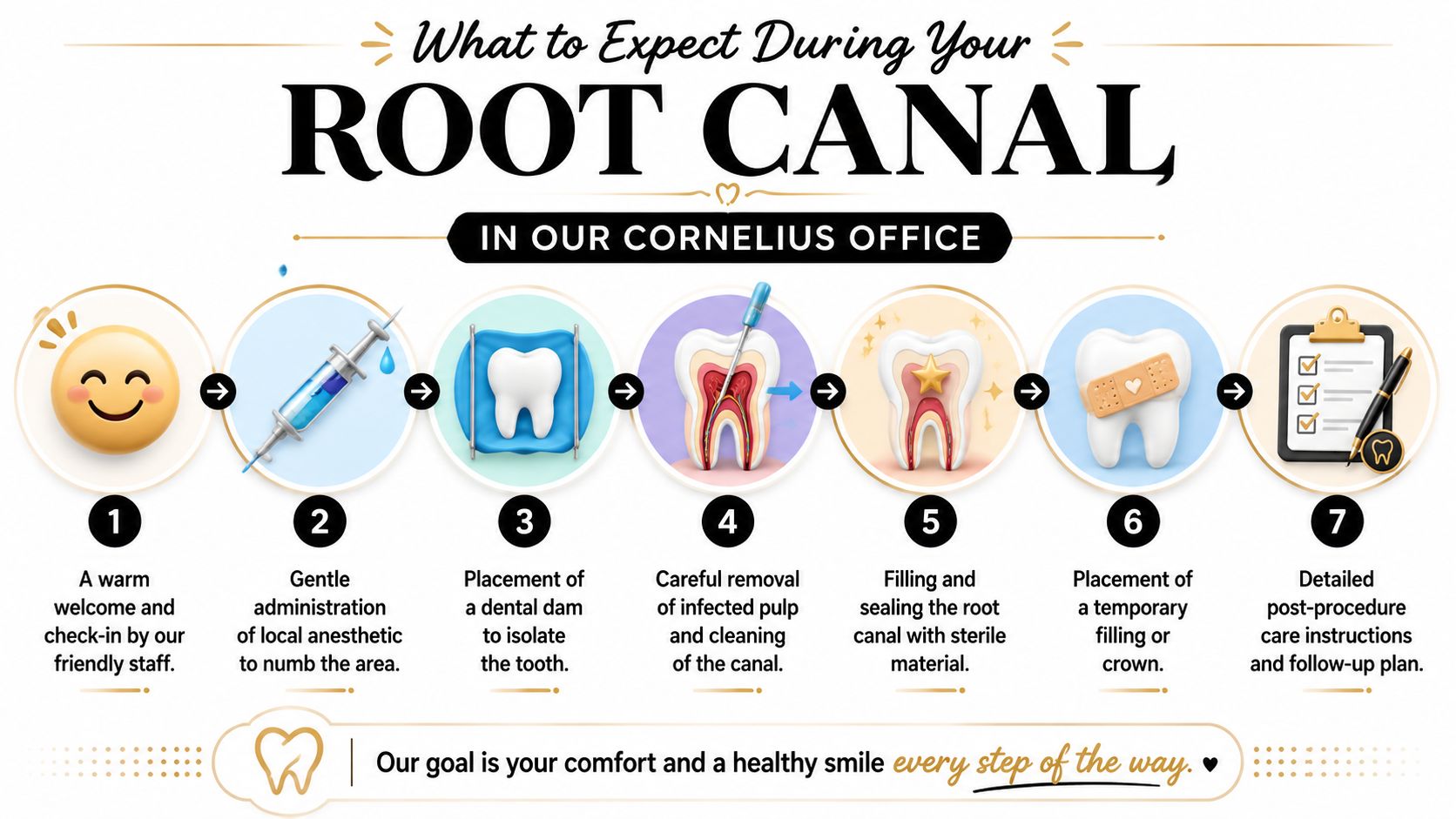
From there, the procedure follows a careful sequence:
- The tooth is numbed with local anesthetic.
- A dental dam is placed to keep the tooth clean and dry.
- A small opening is made in the tooth to reach the pulp space.
- The canals are cleaned and shaped to remove infected or inflamed tissue.
- The inside of the tooth is disinfected and sealed with a filling material.
- A temporary or protective filling is placed if the final restoration is not being done that day.
That is the core of a root canal. It is precise, methodical treatment focused on removing infection and preserving the tooth.
What you are likely to feel during the appointment
For patients with local anesthesia only, the sensations are usually less dramatic than expected. Pressure is common. So is the sound of instruments and the feeling that we are working in one small area for a while. Those sensations can feel strange, but they are not the same as pain.
For patients who receive sedation, awareness is often reduced, but local anesthetic is still used. Sedation helps with anxiety and comfort. It does not replace numbing the tooth.
I also recommend agreeing on a pause signal before we begin. A raised hand works well. Patients relax more when they know they can stop us, ask a question, swallow, or reset for a moment.
Why some root canals take one visit and others take longer
Patients often expect every root canal to follow the exact same timeline. They do not.
A straightforward case may be finished in one visit. A more complex tooth, active infection, challenging anatomy, or the need for sedation can change the pace. Sometimes the best decision is to complete treatment in stages rather than rush through a difficult tooth. Good dentistry is not about speed. It is about cleaning the canals well and setting the tooth up for a durable restoration.
What matters before you leave
Before you head home, you should know three things clearly. What was done today, what you need to do with that tooth until the final restoration is placed, and when to call if something does not feel right.
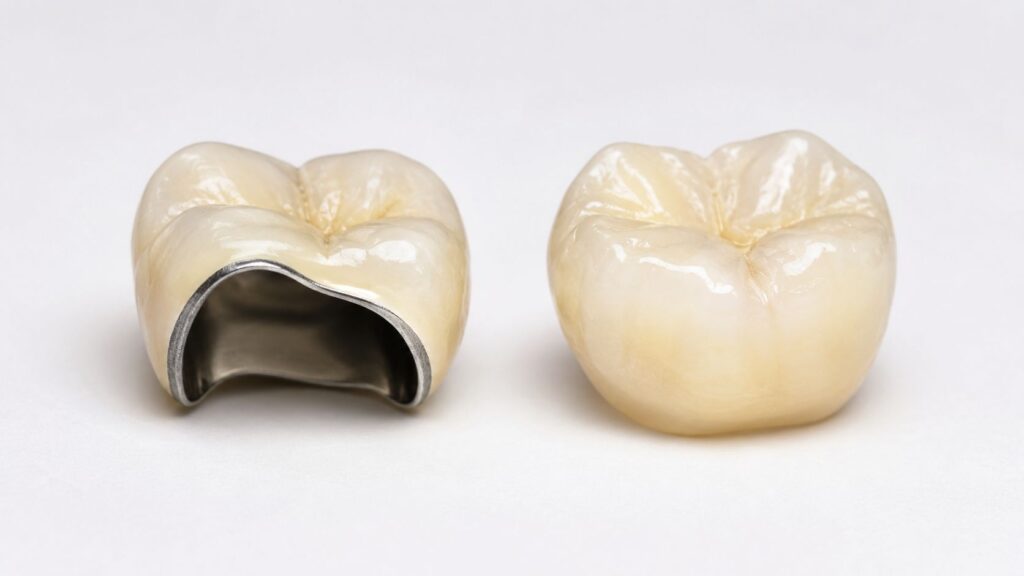
Many root canal teeth need a crown or another final restoration afterward, especially back teeth that handle strong chewing forces. That step protects the tooth from fracture and helps it last. Patients sometimes feel so relieved after the root canal that they underestimate the restoration phase. I encourage people not to skip it.
By the time the appointment ends, many patients tell me the procedure was easier than the buildup to it. That reaction is common. Fear usually grows in the unknown. Clear steps, good numbing, and steady communication change the experience.
Navigating Your Immediate Recovery The First 48 Hours
The first two days are usually manageable when patients know what's normal and what habits to avoid.
The most common issue is mild soreness once the numbness wears off. The surrounding tissues can feel tender, and the tooth may feel different when you bite. That doesn't automatically mean something is wrong. It usually means your mouth just had a procedure and needs a little time to settle.
Guidance on comfort planning from Tend's explanation of what to expect during root canal treatment notes that discussing a pain strategy in advance is often more effective than waiting for discomfort to begin. The same guidance also notes that many patients feel little more than pressure during the procedure itself.
What helps on the first day
Most patients do best when they keep the first evening simple.
Useful habits include:
- Follow the medication plan you were given rather than improvising
- Wait for numbness to fade before chewing so you don't bite your lip, cheek, or tongue
- Choose soft foods that don't require much chewing
- Keep the treated side out of heavy chewing
- Rest if you need to, especially if the appointment felt mentally draining
Good food choices and bad ones
The goal isn't a perfect recovery diet. It's avoiding foods that put unnecessary stress on a freshly treated tooth.
Good early choices usually include:
- Yogurt
- Soup
- Smoothies
- Applesauce
- Oatmeal
- Scrambled eggs
- Mashed potatoes
- Soft pasta or rice
Avoid:
- Hard foods that require forceful chewing
- Crunchy snacks that can stress a temporary filling
- Sticky foods that pull on dental work
- Chewy foods that load the treated tooth before it's fully restored
What's normal and what deserves a call
Normal early recovery often includes tenderness, mild swelling sensation, or soreness when chewing. You may also feel protective of that side of your mouth for a day or two.
Call the office if you have symptoms that seem out of proportion, keep worsening, or make you feel that something has clearly changed instead of gradually improving. If a temporary filling feels loose or your bite feels very off, that also deserves attention.
When in doubt: if you're asking yourself whether a symptom seems normal, it's reasonable to call and ask. Good aftercare includes communication.
One mistake patients make after feeling better
Once the numbness fades and the immediate pain is gone, some patients assume the tooth is “finished” and start chewing on it like normal. That's risky if the tooth still has a temporary filling or hasn't had its final restoration.
Be gentle with it. The tooth has been treated, but it may still need protection.
Beyond the Root Canal Restoring Your Smile for Good
A root canal removes infection and saves the tooth. The next step is making sure that tooth can keep handling everyday chewing without breaking down.
That second step is where many patients get tripped up, especially after the tooth already feels better. Once the pain is gone, it is easy to assume treatment is finished. In many cases, it is not.
Why the crown or final restoration matters
After root canal treatment, a tooth can be weaker than it was before. Sometimes that weakness comes from the decay that started the problem. Sometimes it comes from old fillings, cracks, or the opening created to clean and seal the inside of the tooth. Back teeth are the biggest concern because they absorb heavy biting forces all day.
For that reason, many treated teeth need a final restoration that does two jobs well. It seals the tooth against leakage and protects what is left of the natural structure. Often that restoration is a crown. In other cases, a bonded filling or another type of protective coverage is the better choice. The right answer depends on the tooth, its position in the mouth, and how much strong enamel and dentin remain.
I tell patients this often in our Cornelius office. The root canal solves the infection problem. The restoration solves the strength problem.
Waiting too long to complete that final step creates a real trade-off. Delaying may feel easier in the short term, but the tooth stays more exposed to fracture, a lost temporary, or reinfection around a compromised seal.
What restoration changes in daily life
A well-made restoration lets the tooth return to its job. Chewing feels more stable. The bite feels more even. The tooth is less likely to crack under pressure from normal meals.
That matters even more if your root canal involved sedation rather than local anesthetic alone. Patients who choose sedation are often focused, understandably, on getting through the appointment itself. Patients who have treatment with local anesthesia only are sometimes more tuned in to the details afterward because they remember each step clearly. In both situations, the final restoration is still what protects the long-term result.
Skotzko Family Dental Clinic provides crowns and other restorative treatment used to protect teeth after procedures like root canals, along with general and cosmetic dental care.
How this supports your smile long term
The goal is not only to keep the tooth comfortable. The goal is to keep it useful and natural-looking for years.
A properly shaped crown or final restoration should fit your bite, match the surrounding teeth reasonably well, and let you chew with confidence again. Patients often notice that their whole mouth feels more balanced once that tooth is restored correctly.
This is also the point where bigger dental plans sometimes come into focus. After the urgent problem is handled, some patients start asking about whitening, straightening, or replacing other missing teeth. That conversation can wait until the treated tooth is sealed and protected.
Finish the whole plan. Saving the tooth is the first win. Protecting it is what helps that win last.
Frequently Asked Questions About Root Canal Treatment
A patient will often ask me the same thing right after we schedule treatment. "What do I need to do before I come in?" The answer depends less on the root canal itself and more on how we plan to keep you comfortable. A visit done with local anesthesia only has different preparation steps than one that includes sedation, and that difference matters.
Does a root canal hurt
With good local numbing, patients usually feel pressure, vibration, and time passing more than pain. If you are anxious, that can make every sensation feel bigger than it is, which is why comfort planning before the appointment helps so much.
Should I eat before my root canal
Check your anesthesia plan first.
For local anesthesia only, patients can often eat a normal meal beforehand, and I usually prefer that to arriving hungry and tense. For a visit with sedation, food and drink restrictions may apply, sometimes starting several hours before the appointment. Follow the exact instructions from your dentist's office, not a general internet checklist.
Do I need someone to drive me home
If your appointment is being done with local anesthesia only, you can often drive yourself home and return to a normal routine with some common-sense caution.
If sedation is part of the plan, arrange a driver ahead of time. Do not count on deciding that at the last minute. Sedation can affect alertness, coordination, and judgment for the rest of the day.
What if I'm very anxious
Tell the office before the day of treatment. That gives us time to adjust the plan, explain the steps clearly, and decide whether local anesthesia alone is enough or whether sedation would make the visit easier for you.
Small details help. A pause signal, a short break partway through, or knowing what comes next can lower stress more than patients expect.
Can I go back to work after a root canal
Many patients can return to work after a root canal done with local anesthesia only, especially if the job is not physically demanding. You may still want a lighter schedule because your mouth can feel sore and numb for a while.
After sedation, plan to be done for the day. Rest, avoid important decisions, and let someone else handle driving.
Why do I need a crown after a root canal
A root canal treats infection inside the tooth. It does not automatically make the tooth strong again.
Many treated teeth need a crown or another final restoration to protect them from cracking during normal chewing, especially back teeth that handle heavy force. As noted earlier, the long-term result is usually better when the tooth is fully restored instead of left exposed or patched only temporarily.
What should I bring up before the appointment
Tell your dentist about all medications, vitamins, supplements, blood thinners, heart conditions, diabetes, pregnancy, past reactions to anesthesia, and any history of fainting or panic during dental care.
Be specific. "I get nervous" is helpful. "I panic when I feel numb and I had trouble with sedation once before" is much more useful, because it helps us choose the safest and most comfortable plan.
What's the biggest preparation mistake patients make
They prepare for the wrong kind of appointment.
A patient scheduled for local anesthesia may skip breakfast because they assumed all root canals require fasting. Another patient scheduled for sedation may eat normally and then find out the appointment has to be delayed or changed. That single mix-up causes more confusion than almost anything else. If you are unsure, call and ask one direct question. "Am I having local anesthesia only, or am I having sedation?"
Skotzko Family Dental Clinic provides family, restorative, and cosmetic dental care for patients in Cornelius, NC. If you have questions about preparation, anesthesia, follow-up crowns, or what your visit may involve, reaching out before the appointment can make the process feel more predictable and less stressful.