
Best Way to Clean Teeth: A Cornelius Dentist’s Guide
May 31, 2026
How to Care for Dental Crowns: A Cornelius, NC Guide
June 2, 2026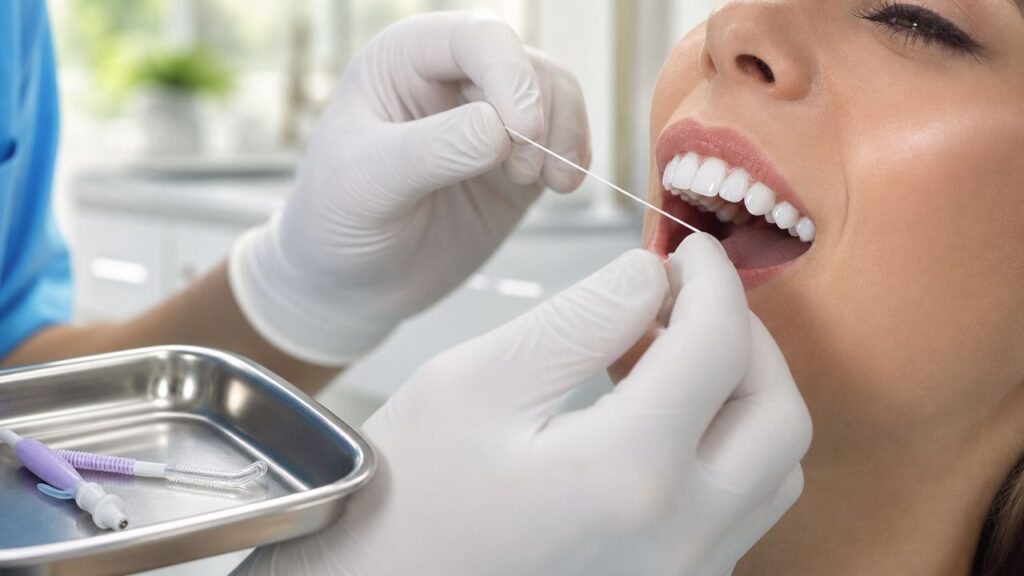
You brush your teeth, rinse, look in the mirror, and figure you've done enough. That's a very common routine. It's also the reason many people feel confused when they hear at a dental visit that they still have buildup between teeth or irritation along the gums.
I talk about this often with patients in Cornelius, NC. They're not ignoring their health. Most are doing what they were taught as kids, and for many people that means brushing well but not really knowing how to clean between teeth in a way that feels easy, comfortable, and realistic.
The good news is that this doesn't have to be complicated. Once you understand what each tool does, where it works best, and how to use it gently, daily between-teeth cleaning becomes much more manageable for children, adults, seniors, and people with braces, bridges, or implants.
Why Brushing Alone Is Not Enough for a Healthy Smile
A toothbrush does a good job on the front, back, and chewing surfaces of teeth. It does not do a complete job between teeth, where plaque and food collect in the narrow spaces your bristles can't fully sweep.
That's the gap many people miss. You can brush every morning and night and still leave behind buildup in the contact areas between teeth and just under the gumline. Those are common trouble spots for cavities, bleeding gums, and bad breath.

The blind spot in many home routines
An international dental hygiene review found that over 80% of people brush twice daily, but only 7% floss every day, one-third (33%) have never used floss or cleaned between their teeth, and two out of three adults (66%) show signs of plaque on their teeth according to this dental hygiene statistics review. Those numbers help explain why so many mouths look “pretty clean” at first glance but still develop problems in the tight spaces.
If you've ever thought, “I brush well, so why are my gums still irritated?” this is often the answer.
Practical rule: Brushing cleans the easy-to-reach surfaces. Interdental cleaning targets the surfaces brushing misses.
What matters for patients in Cornelius
In day-to-day family dentistry, I find that many patients don't need more motivation. They need a simpler method and clearer instructions. Some have very tight teeth and do best with floss. Others have a little spacing, gum recession, braces, bridges, or implants and need a different tool altogether.
That's why personalized prevention matters. If you want guidance that fits your mouth rather than generic advice, our preventive dental care page explains how routine cleanings and home care work together.
A healthy smile isn't just about looking clean after brushing. It's about removing plaque from the places where disease starts. Once you understand that, cleaning between teeth stops feeling optional and starts making sense.
Mastering Traditional Flossing for a Deep Clean
Floss still has an important place in oral care, especially when teeth are very close together and a brush won't fit. The problem is that many people were told to floss, but they were never shown how to do it comfortably.
If flossing makes your gums sore, shreds between teeth, or feels awkward around the back molars, technique is usually the issue. A gentler method gives you more control and makes the habit much easier to keep.
Start with enough floss
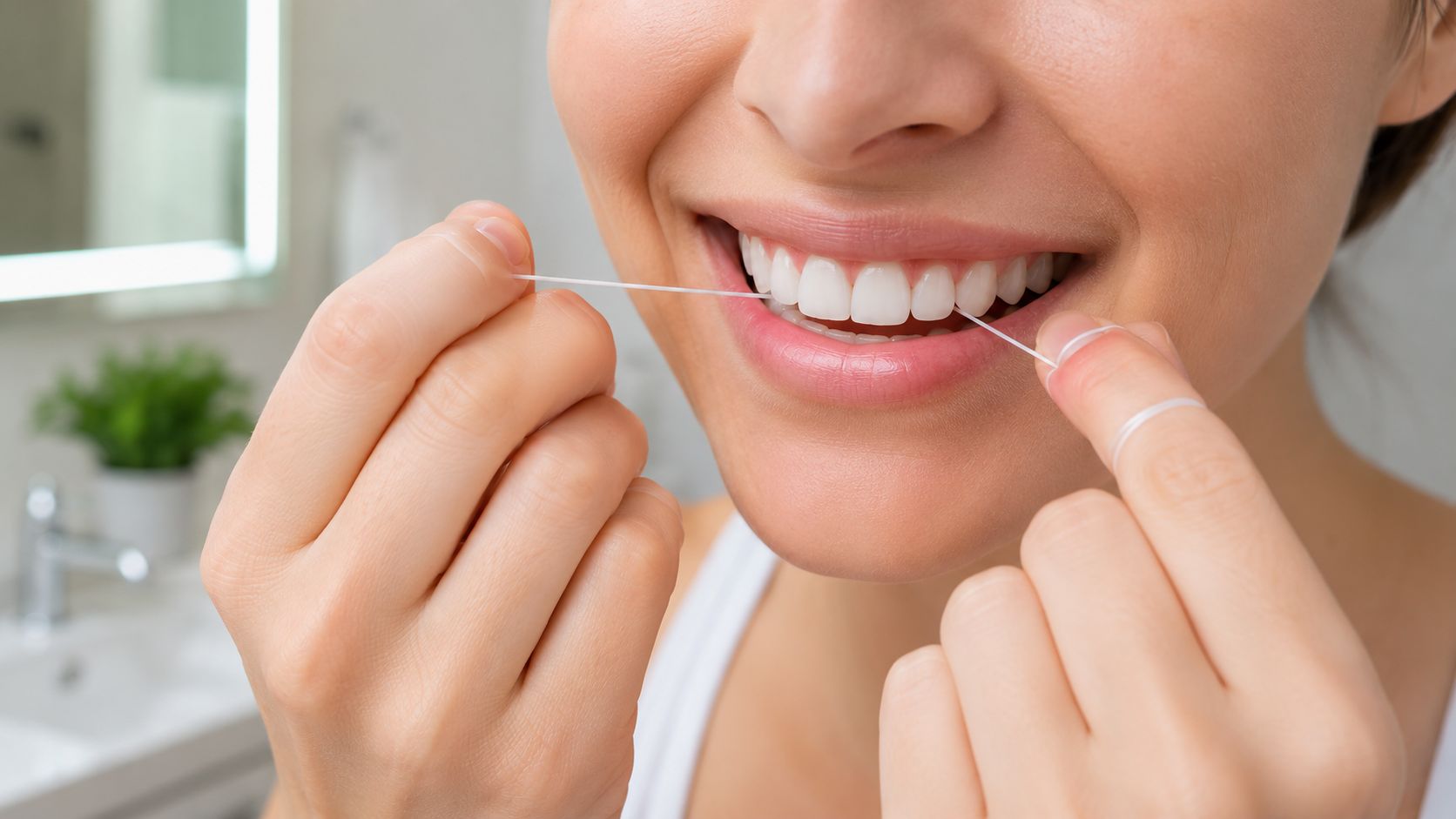
Expert guidance from Cleveland Clinic recommends using about 18 inches of floss, wrapping it around your middle fingers, then guiding it with your thumbs and forefingers into a C-shape around each tooth for about 10 gentle up-and-down strokes per side in this Cleveland Clinic oral hygiene guide.
That amount may sound like a lot, but it gives you clean sections of floss as you move around the mouth. A short piece becomes hard to control and tends to encourage sawing or snapping.
What the motion should feel like
Slide the floss gently through the contact point. Don't pop it down into the gums. Once it passes between the teeth, curve it against one tooth so the floss hugs the side in a C shape. Then move it up and down with light pressure, including slightly below the gumline.
After that, wrap the floss around the neighboring tooth and repeat. The goal is to polish the side of each tooth, not just pass floss through the space.
A few details make a big difference:
- Keep tension light: Tight enough for control, not so tight that it cuts into your fingers.
- Use fresh floss segments: Move to a clean section as you go.
- Slow down at the back teeth: Molars are easy to skip, but they trap a lot of debris.
If your flossing routine is quick enough that you barely feel where each tooth surface is, you're probably moving too fast.
The mistake that discourages people
The most common error is snapping floss straight through the contact. That can pinch the gum tissue and make flossing feel harsher than it should. Then people assume flossing just “doesn't work for me,” when really the technique is working against them.
A better mental cue is glide, curve, wipe.
Glide through the contact. Curve around one tooth. Wipe the side of the tooth with controlled vertical strokes. Then do the same on the next tooth.
For patients who need a visual refresher, this short demonstration helps reinforce the hand position and motion:
Make flossing more comfortable
If your gums bleed a little when you restart flossing, that can happen when plaque has been sitting there. It doesn't mean you should quit. What matters is using a gentle approach and staying consistent.
These adjustments often help:
- Choose waxed floss if standard floss catches or frays.
- Use floss picks carefully if finger floss is difficult, though they may be harder to curve well around each tooth.
- Try floss at night when you're less rushed and can be more precise.
Traditional floss is especially useful for very tight contacts. When used correctly, it reaches places a brush can't and cleans below the gumline in a very targeted way.
Choosing Your Tool Floss Brushes and Water Flossers
No single tool is right for every mouth. That's the part many patients appreciate hearing, because it removes the feeling that they're somehow failing if traditional floss isn't a good fit.
Some people have tight contacts where floss is the only practical option. Others have spaces that allow an interdental brush to slide through with light resistance. Some have braces, bridges, or implants that make a water flosser or proxy brush much easier to use day after day.
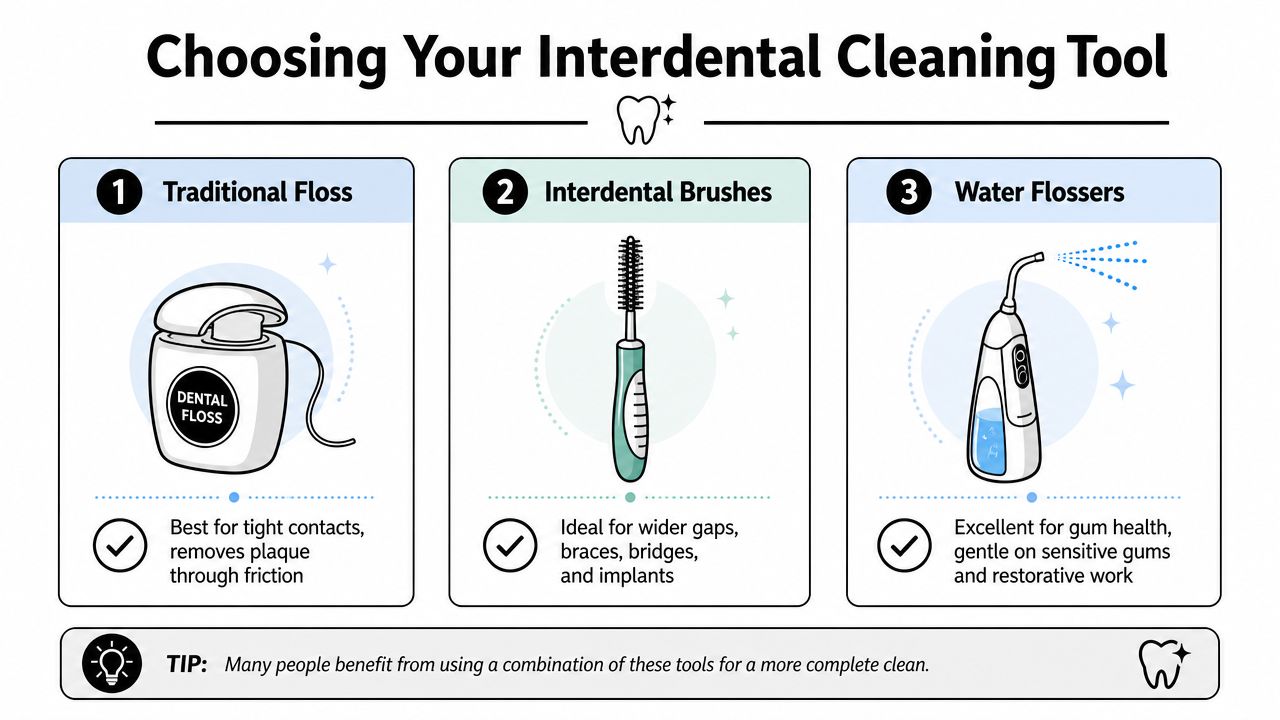
Interdental cleaning tool comparison
| Tool | Best For | Plaque Removal | Ease of Use |
|---|---|---|---|
| Traditional floss | Very tight contacts | Effective when technique is good and the floss wraps around the tooth | Moderate learning curve |
| Interdental brushes | Wider spaces, gum recession, braces, bridges, many implant areas | Often stronger real-world plaque removal when the size fits correctly | Often easier for many adults |
| Water flossers | Braces, bridges, implants, sensitive gums, people who dislike string floss | Helpful as part of a routine, but not ideal as the only method for biofilm removal | Easy for many users once set up |
Why many experts now favor interdental brushes
This surprises a lot of people. Systematic reviews report that interdental brushes are at least as good as, and often superior to, floss for reducing plaque and gingivitis, and the European Federation of Periodontology consensus found them to be the most effective method for interproximal plaque removal, especially for periodontal maintenance needs, as summarized in this peer-reviewed overview of interdental cleaning evidence.
That doesn't mean floss is outdated. It means tool choice should match anatomy.
If the space between teeth allows a small brush to pass gently, the bristles can scrub the tooth surfaces very effectively. Many patients also find these brushes easier to hold and control than string floss, which helps with consistency.
The best tool is the one that fits your tooth spacing and that you'll actually use every day.
How to choose an interdental brush size
Size matters here. A brush should fit with light resistance. If it won't pass without force, it's too large for that space. Forcing it can irritate the gums and make the whole routine unpleasant.
A simple way to understand it is:
- Very tight contact: Start with floss.
- Space you can enter gently: Try a small interdental brush.
- Different areas in the same mouth: Use more than one tool if needed.
Many people need floss in the front and a brush in some back areas. That's normal. Mouths aren't uniform.
Where water flossers fit
Water flossers can be very useful, especially around orthodontic appliances and restorative work. They're often easier for people with limited dexterity or sensitive gums. But they shouldn't automatically replace all other between-teeth cleaning, because the main challenge is still removing sticky biofilm from the tooth surface.
If you're unsure what fits your mouth, a hygiene visit at Skotzko Family Dental Clinic can help identify where floss works, where a proxy brush works better, and whether a water flosser adds convenience to your routine.
Cleaning Techniques for Braces Implants and Bridges
Special dental work changes how you clean, but it doesn't make good home care impossible. You just need the right path for the shape of your smile.
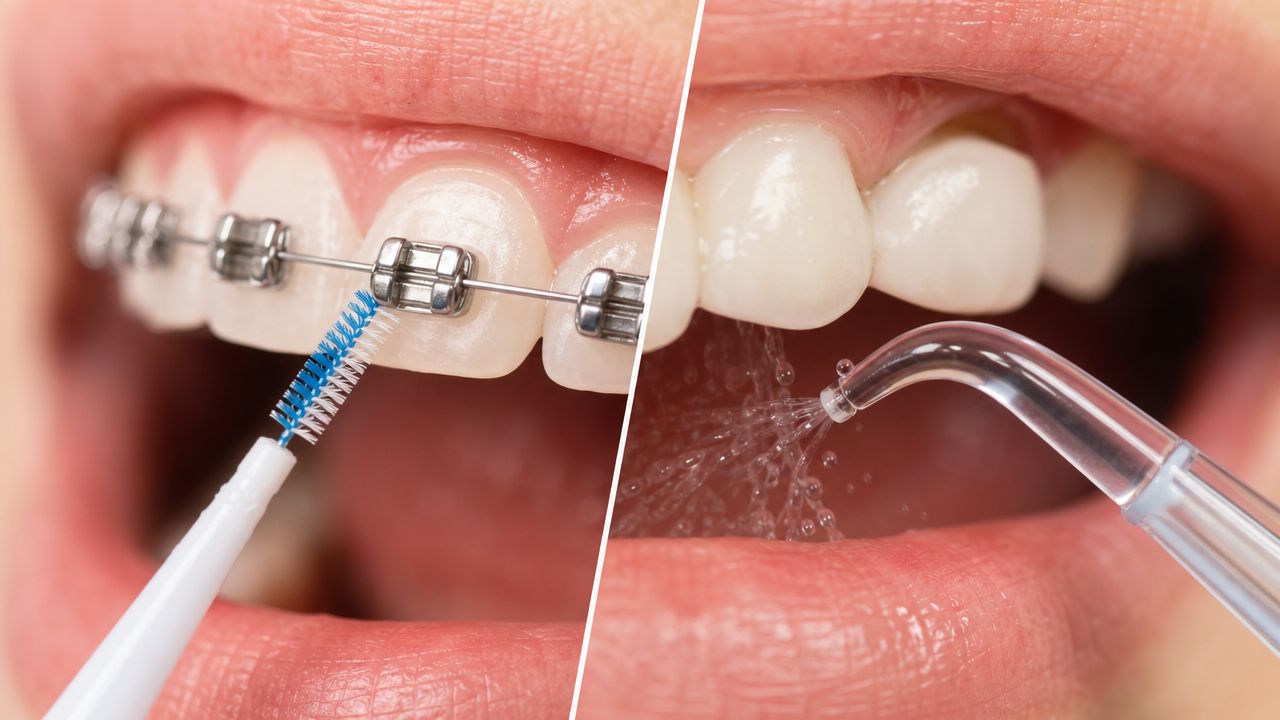
Public health guidance notes that interdental brushes are especially useful around larger gaps, braces, and for people with reduced manual dexterity, and it also advises that parents start cleaning between a child's teeth from age 2 in this public guidance on cleaning between teeth.
Braces and aligner attachments
Braces create extra ledges where food and plaque collect. Even if you brush carefully, the brackets and wires make certain spots harder to reach.
For braces, these options usually work well:
- Interdental brushes: Great for cleaning around brackets and under wires.
- Floss threaders or orthodontic flossers: Helpful when you need floss to pass under the wire.
- Water flossers: Useful as an add-on to flush around hardware.
With braces, angle the small brush gently under the wire and around each bracket. Use short, controlled motions. Don't jam the brush straight in. For flossing, thread the floss under the wire first, then clean the sides of the tooth as you would with regular floss.
If you wear clear aligners, remove them before cleaning between teeth. Attachments can still trap plaque, so be extra thorough around those raised areas.
Implants and bridges
Implants and bridges don't get cavities the way natural teeth do, but the tissues around them still need careful cleaning. Plaque can collect around implant crowns, under bridge connectors, and near the gumline where inflammation begins.
That's one reason patients with restorative work often benefit from more customized guidance. If you're learning how to care for replacement teeth, our dental implant information page explains how implants fit into long-term oral health.
For many implant and bridge patients, the most workable routine includes:
- Interdental brushes: Often useful for open embrasures and under some bridge areas.
- Super floss or threaders: Helpful for cleaning under pontics and fixed bridgework.
- Water flossers: Good for rinsing around contours and hard-to-reach margins.
Clean gently around implants. You want to disrupt plaque, not scrub aggressively.
Around restorations, the goal is detail. Slow, targeted cleaning protects the work you've already invested in.
Children, teens, and seniors
Kids usually need help longer than parents expect, especially with the back teeth. Once two teeth touch, between-teeth cleaning matters. For younger children, floss holders can be easier than loose string floss.
Teens often understand the instructions but rush the routine. They may do better with a simple setup they can keep visible at the sink or in a school bag if they have braces.
Older adults may deal with arthritis, limited grip strength, bridges, implants, or wider spaces from gum recession. In those cases, larger-handled flossers, interdental brushes, or water flossers can make the routine much more realistic.
A simple way to adapt your routine
If your mouth includes several different conditions, split the job by area instead of trying to use one tool everywhere.
For example:
- Front teeth with tight contacts: Floss
- Back teeth with more space: Interdental brush
- Around bridgework or implants: Add a water flosser or threader where needed
That kind of mixed routine is often more effective and easier to stick with than forcing one method to do everything.
Common Mistakes and How to Build a Consistent Habit
Many people think the problem is discipline. Usually, the actual problem is friction. The routine feels awkward, too aggressive, or too time-consuming, so it gets skipped.
One reason that matters is that brushing alone may remove only about 42% of plaque on average, according to the ADA News summary on choosing an interdental cleaning method, which also notes that an interdental brush should fit with light resistance, and that forcing an oversized brush or snapping it through contacts can irritate the gums in this ADA guidance on interdental cleaning tools.
Mistakes that make cleaning harder
A few habits cause most of the frustration:
- Using too much force: If floss snaps into the gums or a brush is shoved through a space, your tissue gets irritated.
- Picking one tool for every space: Tight contacts and open spaces often need different tools.
- Only cleaning when food gets stuck: That turns prevention into a rare reaction.
- Skipping the back teeth: Molars are harder to reach, but they need attention.
Small fixes that improve follow-through
You don't need a perfect routine on day one. You need one that's easy to repeat.
Try these habit cues:
- Pair it with brushing at night: Attach it to a routine you already do.
- Keep the tool visible: A drawer hides reminders. The counter helps.
- Start with one area: If the full mouth feels overwhelming, begin with the back teeth or the spots that trap food most often.
- Choose comfort over stubbornness: If string floss makes you avoid the whole task, a brush or flosser may be the smarter choice.
Consistency beats intensity. A gentle daily routine works better than aggressive cleaning done once in a while.
A little bleeding or awkwardness at the beginning doesn't mean you're failing. It usually means you're cleaning an area that's been neglected and learning a new skill. With the right tool and a steadier technique, the routine usually gets easier quickly.
Your Partner in Lifelong Oral Health in Cornelius
The goal isn't to become perfect at every dental tool. The goal is to clean the areas your toothbrush misses, do it gently, and repeat it often enough that your gums stay healthier over time.
That steady approach matters. A 2025 U.S. study found that adults who cleaned between their teeth 5 to 7 days a week had a substantially lower prevalence of poor self-rated oral health and lack of functional dentition compared with adults who cleaned less often, as reported in this 2025 study on interdental cleaning and adult oral health. In plain language, regular between-teeth cleaning is linked with better day-to-day oral health and better long-term function.
If you live in Cornelius, NC, or nearby communities and you're not sure whether you should be using floss, interdental brushes, a water flosser, or a combination, that's a very normal question. The right answer depends on your spacing, gum condition, age, dexterity, and any dental work you already have.
At-home care works best when a dental team can check your technique, help you choose the right size brush or floss aid, and show you how to clean around the specific shapes in your mouth. That kind of practical coaching often makes the difference between a routine you abandon and one you can maintain.
If you'd like personalized help with how to clean between teeth, schedule a visit with Skotzko Family Dental Clinic. We help patients in Cornelius, Huntersville, and Davidson build realistic home-care routines that fit their teeth, their dental work, and their daily lives.