How to Clean Between Teeth: A Cornelius Dentist’s Guide
June 1, 2026
Best Toothbrush for Sensitive Gums: Cornelius Guide
June 3, 2026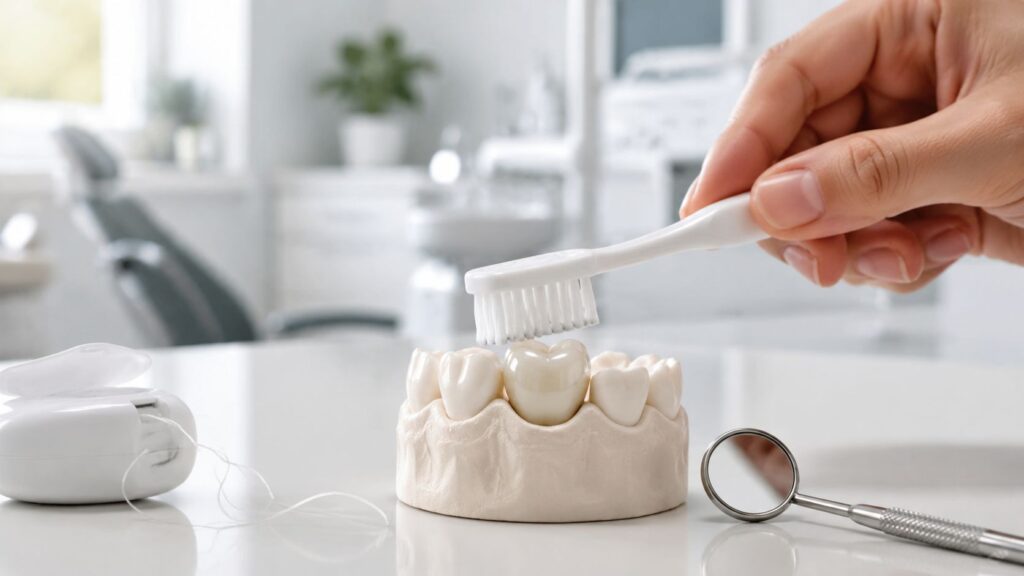
A new crown often brings real relief. You can chew again, the tooth looks normal again, and the sharp edge or deep crack that kept catching your tongue is finally covered. Then the next question shows up fast. How do you take care of it so you don't end up back in the chair sooner than expected?
That's a smart question, and it's one I hear often from patients in Cornelius and nearby communities. A crown is a strong restoration, but it still depends on the health of the tooth underneath it and the gum around it. Good crown care isn't complicated. It just needs to be consistent, practical, and specific to whether you have a temporary crown or a permanent one.
At Dr. Skotzko Family and Cosmetic Dentistry, we try to make dental care feel less mysterious and more manageable. If you've been looking up how to care for dental crowns because you just had treatment done, or you're trying to make an older crown last, this guide will help you understand what matters day to day.
Your New Dental Crown and How to Protect Your Investment
After a crown appointment, it's common to feel two things at once. Relief is first. Caution is second. You're glad the tooth is restored, but you also know you don't want to damage it by eating the wrong thing or cleaning it the wrong way.
That instinct is right. A crown protects a weakened tooth, but it doesn't turn that tooth into something maintenance-free. I usually explain it this way to patients. The crown is like a well-made roof. It helps cover and protect what's underneath, but if the edges aren't kept clean and monitored, problems can still start where the roof meets the house.
What a crown does well
A crown can restore shape, strength, and function. It can also improve how a tooth looks when a filling is no longer enough. For many people, it's the treatment that lets them stop babying one side of the mouth and start chewing normally again.
That said, a crown works best when you treat it like part of your overall oral health, not like a separate appliance. The tooth under the crown, the bite around it, and the gums next to it all affect how long it serves you.
Practical rule: Protecting a crown usually comes down to three things. Keep the edge clean, avoid unnecessary force, and let your dentist check it before a small issue becomes a bigger one.
What patients often get wrong
The most common mistake is assuming the crown itself can't decay, so the area no longer needs extra attention. The crown material may be durable, but plaque can still collect where the crown meets the gum. If that edge stays inflamed or loaded with bacteria, the tooth underneath can still run into trouble.
Another mistake is treating a new crown as either too fragile or completely indestructible. Neither is accurate. You don't need to be afraid of it, but you do need to be thoughtful about habits like chewing ice, clenching, or opening packaging with your teeth.
For families in Cornelius who want one dental home that handles routine care, restorative work, and long-term maintenance, that follow-through matters. Patients from Cornelius, Huntersville, and Davidson often tell us the most helpful part isn't just getting the crown placed. It's having a clear plan for keeping it healthy afterward.
Daily Care Habits for a Long-Lasting Crown
If you want the simplest answer to how to care for dental crowns, here it is. Clean the crown like a natural tooth, and be especially careful at the gumline.
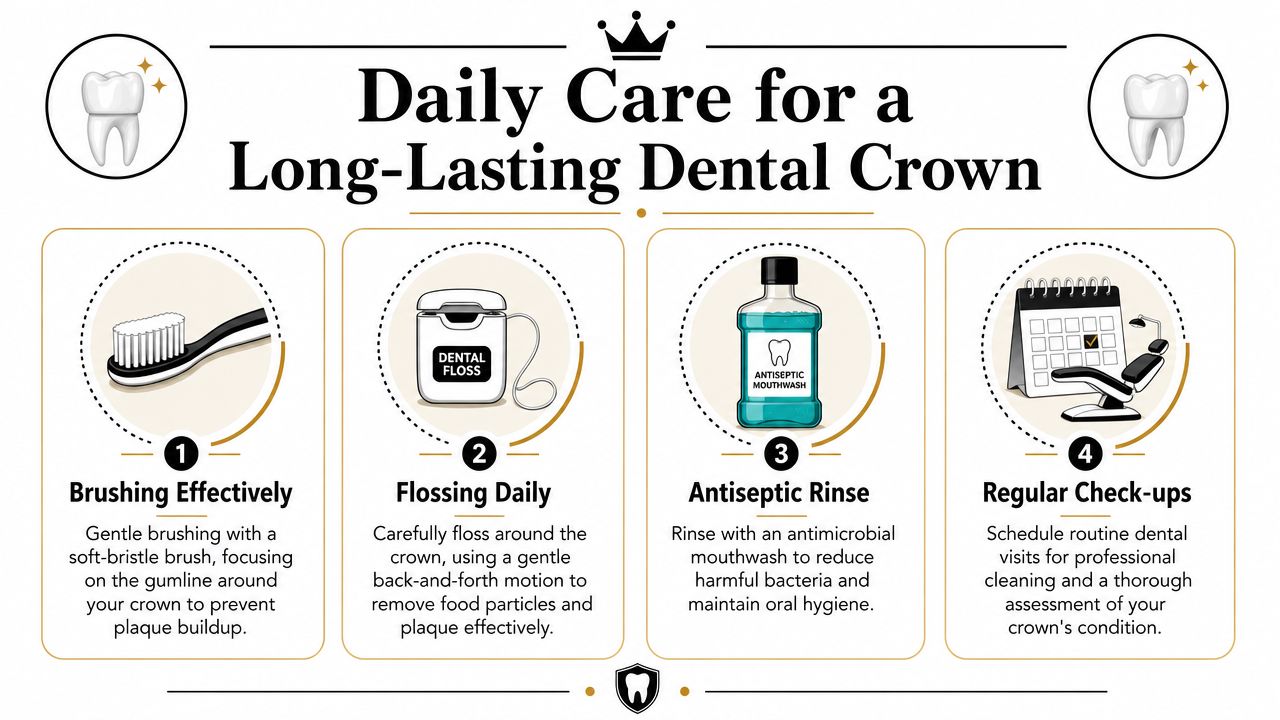
A key point from WebMD's dental crown guidance is that dental crowns do not make the underlying tooth immune to decay or gum disease. WebMD advises brushing at least twice daily, flossing daily, especially where the crown meets the gum, and rinsing with antibacterial mouthwash at least once a day.
Brushing the right area
When patients say, “I brush really well,” I often ask a follow-up question. Are you brushing the crown itself, or are you cleaning the margin where the crown meets the gum? That edge is the part that deserves the most attention.
Use a soft-bristled toothbrush and make small, gentle strokes along the gumline. Don't scrub hard. Hard brushing can irritate the gums without removing plaque any better. Think careful contact, not force.
A good routine looks like this:
- Brush in the morning and before bed: Those are the anchor points that keep plaque from sitting too long.
- Angle the bristles toward the gumline: This helps clean the crown margin instead of only polishing the visible surface.
- Slow down around the crowned tooth: A few extra seconds there matters more than brushing the whole mouth aggressively.
Flossing without causing trouble
Flossing is where many people get nervous, especially right after crown treatment. That's understandable. They don't want to pull something loose.
For a permanent crown, daily flossing is still important. The trick is technique. Guide the floss gently between the teeth, hug the side of the crown, move it back and forth, and then slide it out rather than snapping it straight back up if it tends to catch.
Clean around a crown the way you'd clean around the frame of a window. The vulnerable spot isn't the middle. It's the seam.
That idea helps people remember why flossing near the crown edge matters so much. Food and plaque don't usually cause trouble on the smooth biting surface first. Trouble often starts at the margin.
Mouthwash and simple add-ons
An antibacterial mouthwash can support your brushing and flossing routine. It doesn't replace either one, but it can help reduce bacteria in areas that are easy to miss.
Here's a practical daily checklist:
| Habit | What matters most |
|---|---|
| Brushing | Focus on the gumline around the crown |
| Flossing | Clean the sides of the crown gently and thoroughly |
| Rinsing | Use antibacterial mouthwash as part of daily plaque control |
| Self-checking | Notice soreness, food trapping, or bleeding around the crown |
If the gums around a crown bleed regularly, food keeps packing around it, or the area feels hard to clean no matter what you do, that's worth mentioning at your next visit. Those details often tell us more than patients realize.
Foods and Behaviors That Can Damage Your Dental Crown
Most crowns don't get into trouble because someone forgot one night of brushing. They get into trouble because they're asked to handle repeated force, sticky pull, or habits that natural teeth shouldn't handle either.
That's why I tell patients to stop thinking only about cleaning products and start thinking about mechanics. What are you asking that crown to do every day?
The biggest food risks
Sticky foods can pull at a crown. Hard foods can stress it. Repeated pressure from either one can create problems over time.
Common examples include:
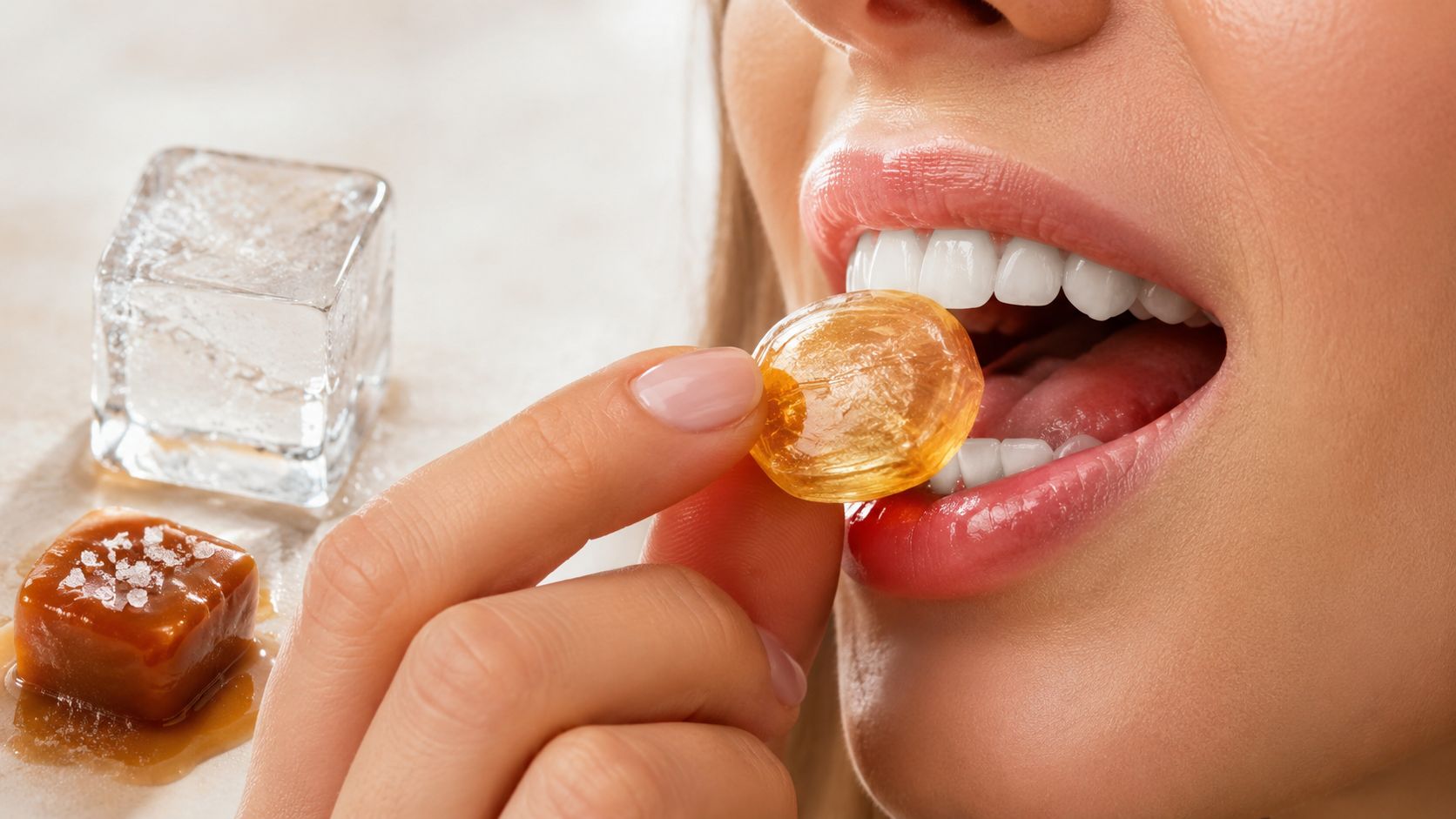
- Sticky candy: Caramel, chewy taffy, and gum can tug at a crown, especially if the seal or cement is already compromised.
- Hard items: Ice, hard candy, and unpopped popcorn kernels put sharp force on one point instead of spreading it out.
- Chewing on one side out of habit: If you always test hard foods on the crowned tooth, that tooth ends up carrying extra load.
A lot of patients are surprised by ice. It seems harmless because it melts, but biting it is still biting something hard.
Habits that do more damage than people think
Food isn't the whole story. Many crowns take damage from everyday behavior that has nothing to do with meals.
Watch for these patterns:
- Using teeth as tools: Opening bags, holding hairpins, tearing tape, or cracking nutshells can chip natural teeth and restorations.
- Nail-biting: It creates repeated pressure in a very small area.
- Clenching and grinding: This is one of the most important long-term stressors on crowns and natural teeth alike.
A crown is built for chewing food. It isn't built for opening packaging, cracking ice, or taking the force of nightly grinding without consequences.
If you grind or clench, a custom nightguard may be part of protecting your dental work. That doesn't just help the crown. It can also help reduce wear on nearby teeth and lower stress on your jaw muscles.
What works better in real life
Patients do best when they make swaps they can keep. Sip cold drinks instead of chewing ice. Cut hard foods into smaller pieces. If you like chewy sweets, keep them occasional and avoid pulling them across a new or vulnerable crown.
You don't need to eat nervously. You just need to stop putting your crown in situations where force and stress work against it.
Caring for a Temporary Crown and Managing Sensitivity
Temporary crowns deserve their own set of instructions because they behave differently from permanent crowns. This distinction often causes many patients to get tripped up, as they assume all crowns should be treated the same.
They shouldn't.
According to Cleveland Clinic's dental crown care guidance, the most evidence-aligned approach for a temporary crown is to avoid hard, sticky, or chewy foods, brush gently with a soft-bristled brush, and be cautious with flossing so the temporary restoration isn't dislodged.
How to live with a temporary crown
A temporary crown is there to protect the prepared tooth until the permanent crown is ready. It's useful, but it's not meant for long-term heavy-duty function.
The safest approach is simple:
- Eat soft foods at first, especially the first day.
- Chew carefully and avoid putting early pressure on that side when possible.
- Brush gently around the area every day.
- Floss carefully, and if the floss catches, slide it out instead of pulling straight up.
That last point matters. Temporary cement is intentionally less durable. Even normal flossing can pull the crown loose if the floss is snapped upward.
What sensitivity is normal
Some sensitivity after crown treatment can happen. The tooth may feel different for a little while, especially with temperature changes or pressure. Your bite may also feel unfamiliar at first because the shape has changed.
That doesn't always mean something is wrong. Teeth and surrounding tissues sometimes need time to settle after preparation and placement.
Here's a practical way to look at it:
| Situation | Usual response |
|---|---|
| Mild awareness when chewing | Monitor it as you adjust |
| Brief temperature sensitivity | Use gentle care and give it some time |
| Temporary crown feels slightly different | Expected during the temporary phase |
| Crown feels loose or comes off | Call the office promptly |
When to call instead of waiting
A loose temporary crown deserves attention. So does a crown that comes off completely. Don't try to “test” it for a few more days by chewing on it and hoping it settles down.
You should also contact the office if your bite feels clearly off, if pressure causes sharp discomfort, or if the area seems to worsen instead of gradually calming down.
For anxious patients, this part matters most. You're not bothering your dentist by calling about a temporary crown that feels unstable. That's exactly the kind of problem we want to hear about early.
How Crowns Fit into Your Long-Term Smile Goals
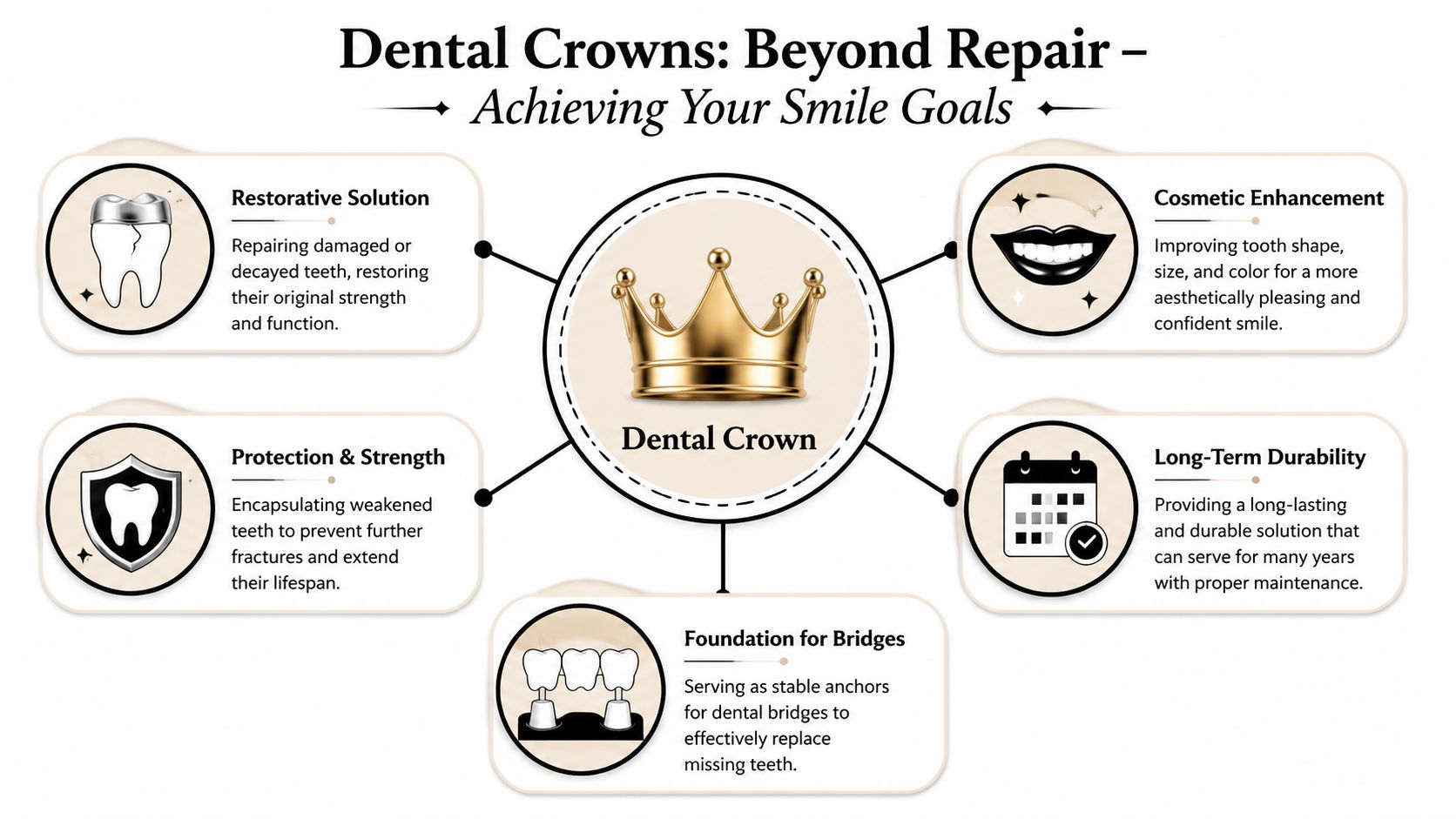
A crown is often described as a single treatment, but in real practice it's frequently one part of a broader plan. Sometimes it finishes a root canal. Sometimes it anchors a bridge. Sometimes it's the visible restoration on top of an implant. In cosmetic dentistry, it may help improve shape, contour, or symmetry when a tooth has been heavily damaged.
That's why crown care matters beyond one tooth. If you want a healthy, comfortable smile that holds up well, every restoration has to work with the rest of your bite and your long-term goals.
A crown can be restorative and cosmetic
Patients sometimes think restorative dentistry and cosmetic dentistry are separate worlds. In many cases, a crown sits right between them. It can strengthen a compromised tooth and improve how that tooth looks in the same step.
That's one reason complete planning matters. If a patient is considering whitening, veneers, Invisalign, implants, or bridge work, the crown shouldn't be viewed in isolation. It needs to fit the bite, the appearance of nearby teeth, and the long-term function of the whole mouth. For a broader view of those treatment goals, restorative dentistry options in Cornelius can help patients understand how crowns fit into larger care plans.
What longevity really depends on
Crowns can last a long time, but longevity is not automatic. A PubMed study on crown survival in general dental practice reported 10-year survival of 68% for metal crowns and 48% for all-porcelain crowns, and the same evidence summary notes that crowns commonly last 5 to 15 years on average, often longer with good oral hygiene and by avoiding damaging habits such as grinding or chewing ice.
That's the trade-off patients should understand. The crown material matters, but daily maintenance, bite forces, and gum health matter too.
Long-term success usually comes from ordinary habits done well. Clean margins, sensible chewing habits, and regular follow-up beat neglect every time.
A better way to think about the investment
If you've paid for a crown, the goal isn't to “get through” the procedure and move on. The goal is to keep that work serving you comfortably for as long as possible.
That means:
- Protecting the surrounding tooth: The crown covers it, but the underlying tooth still needs a healthy environment.
- Keeping the gums stable: Inflamed gum tissue around a crown often signals a cleaning problem or a contour issue that needs review.
- Watching the bite over time: Small changes in how teeth meet can affect one crown more than you'd expect.
This is also where full-mouth thinking becomes useful. A single crown may solve today's problem. A coordinated preventive and restorative plan helps prevent the next one.
Your Follow-Up Care at Skotzko Family Dental Clinic
Patients are often surprised by how much can be checked during a routine follow-up. They think the crown is cemented, the tooth feels fine, and that's the end of the story. But the follow-up visit is where we confirm that everything is staying healthy under real-life conditions like chewing, brushing, and everyday wear.
At a maintenance visit, the team looks at more than whether the crown is still in place. We look at the margin, the surrounding gum tissue, how the crown meets the opposing teeth, and whether food is trapping around it.

What a typical visit feels like
For many patients in Cornelius, the most reassuring part of follow-up care is that it's straightforward. You come in, we review how the tooth has felt, and we examine the area with a very specific purpose. If something seems off, such as irritation at the gumline or a bite contact that feels too heavy, it's far better to catch it early.
Professional cleaning matters here too. Even patients with good home care can miss tiny areas around a crown margin. A routine visit helps remove buildup, check the tissue response, and reinforce technique if there's one spot that keeps collecting plaque.
Patients who want a preview of the setting and approach can see our Cornelius office and patient experience.
What we pay close attention to
During crown follow-up, these details matter most:
- The edge of the crown: Leakage, plaque retention, or irritation may first appear here.
- Your bite: If the crown is taking too much force, you may notice soreness, wear, or a “high spot” feeling.
- The gums around the tooth: Healthy gums help support long-term crown success.
- Your experience at home: Food trapping, floss catching, tenderness, or sensitivity all help guide what we evaluate.
If a crown feels different in a way that persists, say so. Patients often assume they should “just get used to it,” when a small adjustment may solve the issue.
That kind of conversation is part of good dentistry. Follow-up shouldn't feel like a formality. It should feel like someone is helping you protect the work you've already invested in.
Partner with Your Cornelius Dentist for a Lasting Smile
A crown lasts best when home care and professional care work together. Brush carefully, floss with the right technique, avoid habits that overload the tooth, and don't ignore changes that feel persistent or unusual. That's the real answer to how to care for dental crowns.
If you live in Cornelius or nearby and want help protecting a new crown or evaluating an older one, Dr. Skotzko can help you keep that restoration healthy, comfortable, and functioning the way it should.
If you're due for a cleaning, need a crown checked, or want a clear plan for protecting your dental work, schedule a visit with Skotzko Family Dental Clinic.