
How to Improve Your Smile: Expert Tips from Cornelius
June 5, 2026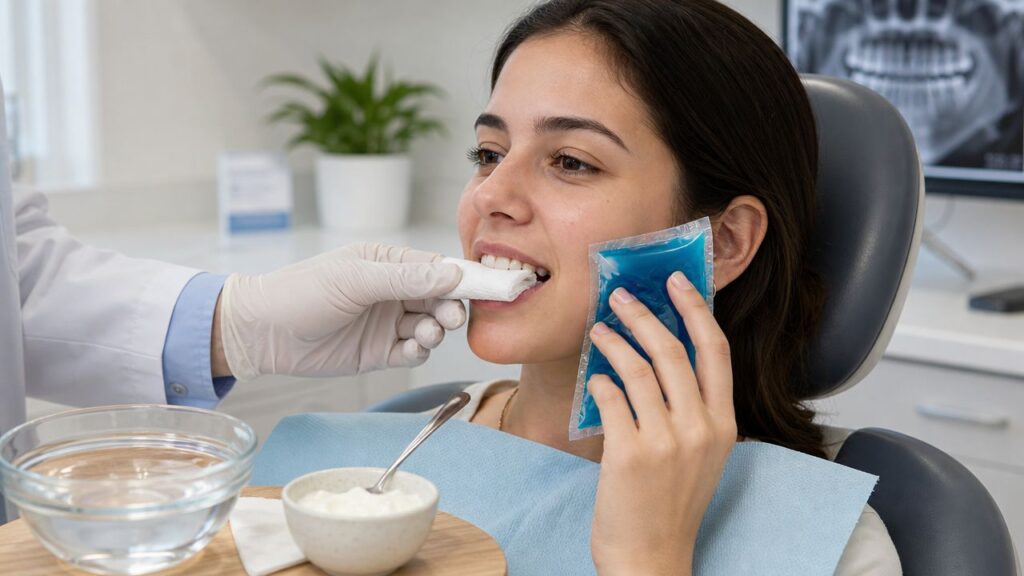
If you've just had a tooth removed, you're probably feeling two things at once. Relief that the problem tooth is out, and uncertainty about what happens next. That's normal.
Most patients don't need more complicated advice. They need clear tooth extraction aftercare instructions, a simple timeline, and reassurance about what matters most. Healing usually goes well when you protect the area early, keep things clean the right way, and know when something feels off.
A Message from Dr. Skotzko Your Guide to a Smooth Recovery
You get home from your extraction, the numbness is wearing off, and three questions usually show up right away. Is this amount of bleeding normal. Can I eat yet. Should I brush tonight.
Those are the questions I want this guide to answer clearly.
I tell my patients in Cornelius that good recovery starts with sequence, not effort. The site needs a blood clot to form and stay in place. In the first part of healing, the safest approach is to protect that clot, keep your routine simple, and avoid the habits that tend to set healing back.
The American Dental Association advises patients after an extraction to avoid smoking, drinking through a straw, and disturbing the area, because those actions can interfere with healing at the site, as described in the ADA's tooth extraction aftercare guidance. The practical takeaway is straightforward.
Practical rule: If something creates suction, repeated pressure, or rubbing at the extraction site, skip it early on.
That matters because the instinct to “check on it” often causes trouble. Repeated rinsing, touching the socket with a finger, pulling the cheek to look, forceful spitting, or chewing on that side too soon can all irritate the area. I see this more often with patients who are trying hard to do everything right but have not been told what helps.
Good aftercare follows a timeline. The first hour is about bleeding control and rest. The first 24 hours are about clot protection and swelling control. The first week is about gentle cleaning, gradual return to normal eating, and watching the overall pattern. Healing does not need perfection. It does need the right priorities at the right time.
Some findings are expected. Mild oozing, soreness, jaw stiffness, and swelling can all happen, especially after a surgical extraction or wisdom tooth removal. Children may need more help avoiding poking the area with their tongue. Older adults may need a clearer medication and hydration plan. Patients who had stitches, bone removal, or a difficult extraction often have a slower first few days, and that can still be normal.
What I want patients to remember is simple. Improvement should be gradual, even if it is not perfectly linear. If symptoms are settling down day by day, that is usually reassuring. If pain, swelling, bleeding, or a bad taste suddenly gets worse, that deserves attention.
The First 24 Hours Your Critical Healing Window
You get home, the numbness is still wearing off, and the first question is usually simple. “What do I do now?” The answer for this first day is straightforward. Protect the blood clot, keep swelling down, and do less than you think.
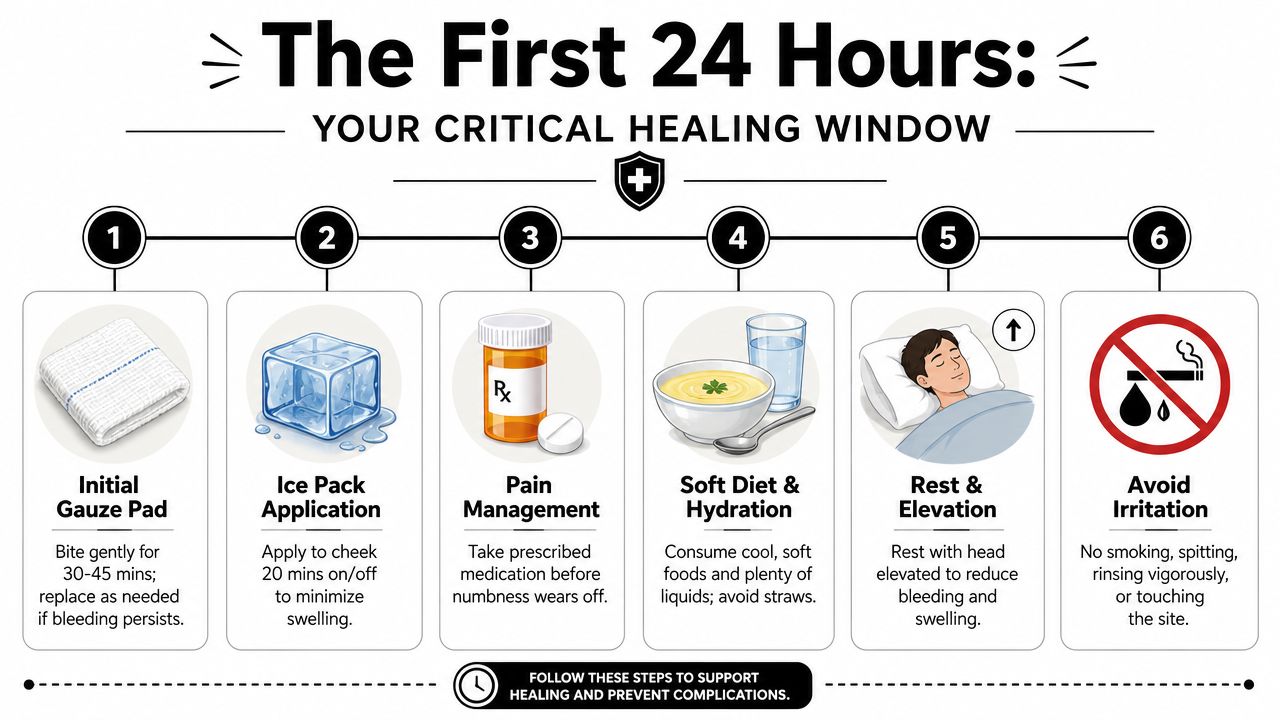
A stable clot is what starts normal healing. If it stays undisturbed, soreness usually settles in a predictable way. If it gets pulled loose by suction, smoking, rinsing, or too much activity, the first day gets harder and the next few days often do too.
Right after you get home
Start with pressure. Bite on the gauze we placed, or on fresh gauze if you were told to change it. Keep steady pressure instead of checking the area every few minutes. Mild oozing is expected. Bright red bleeding that fills the mouth is not.
Keep your head above your heart for the first several hours. Sit upright on the couch, or rest with an extra pillow if you lie down. That simple change helps limit throbbing and slows bleeding better than lying flat.
Use an ice pack on the outside of the face, not inside the mouth. A practical schedule is 20 minutes on and 20 minutes off, which is also reflected in general tooth extraction instructions from Amarillo Oral Surgery. The goal is control, not numbness.
If you had a surgical extraction, bone removal, or stitches, expect the first evening to feel tighter and more swollen than a routine simple extraction. That difference is common. It does not automatically mean something is wrong.
What the first 24 hours usually look like
First few hours: pressure, rest, and letting the numbness wear off safely. Avoid chewing until you can feel your lip and tongue well enough not to bite them.
By dinner time: soreness and stiffness often become more noticeable. This is the point where patients who delayed medication usually regret it. If we prescribed or recommended pain relief, take it as directed.
First night: some oozing on the pillowcase or a little pink saliva can still happen. Sleeping with your head slightly raised usually helps. A large amount of bleeding, worsening swelling that feels rapid, or trouble swallowing deserves a call.
What to avoid on day one
The first day is mostly about restraint.
Do not rinse forcefully. Do not spit hard. Do not use a straw. Do not smoke or vape. Do not poke the socket with your tongue, finger, or a toothbrush. Each of those can disturb the clot before it has a chance to mature.
I also tell patients in Cornelius to skip workouts, running, yard work, and heavy lifting for the day. Increased blood pressure can restart bleeding even when things seemed settled an hour earlier. As noted earlier in the article, many standard aftercare instructions advise limiting strenuous activity for at least the early recovery period.
Leave the site alone. On day one, over-managing the extraction area causes more problems than under-managing it.
A first-day plan that works
Keep pressure where it belongs
Bite on the gauze as directed. Change it only if you were told to, or if it becomes saturated.Start cold packs early
Use the ice pack on the cheek in intervals. Do not place ice directly on the extraction site.Take medication on schedule
Staying ahead of pain is easier than chasing it after the numbness wears off.Stick with cool or lukewarm fluids and soft foods
Drink from a cup. Choose foods that slide down easily and do not leave small particles in the area.Rest for the day
The body heals better when you are not testing it.
A few questions patients are often embarrassed to ask
“Can I sleep after an extraction?”
Yes. Rest helps. Keep your head raised and keep the gauze in place only for the amount of time you were instructed. Do not sleep with loose gauze in your mouth if you are likely to shift it around.
“What if my mouth tastes like blood?”
That metallic taste is common in the first several hours. Small amounts of blood mixed with saliva can seem like more than they are.
“My child keeps wanting to check the area with their tongue. Is that a problem?”
Yes, it can be. Children often disturb the area without realizing it. A soft food, a movie, and clear reminders to leave the spot alone help more than repeated inspections.
“I'm older and take several medications. Should I expect a slower first day?”
Sometimes, yes. Seniors may feel more dry mouth, fatigue, or dizziness, especially if they have eaten very little. A written medication plan, steady hydration, and help getting home and settled make a real difference.
What works and what causes trouble
| Goal | Usually helps | Usually causes trouble |
|---|---|---|
| Clot protection | Steady gauze pressure | Checking the socket repeatedly |
| Swelling control | Ice pack on the cheek in intervals | Heat in the first day |
| Drinking | Sipping from a cup | Straw suction |
| Pain control | Taking medication as directed | Waiting until pain is strong |
| Bleeding control | Rest and head elevation | Exercise and heavy lifting |
The first 24 hours set the tone for healing. Patients who keep the plan simple usually do better than patients who keep trying to inspect, rinse, test, and restart normal routines. For a difficult extraction, that patience matters even more.
Navigating Days 2 to 7 Managing Swelling and Hygiene
By this stage, the goal changes. You're no longer just protecting the site from immediate disruption. Now you're helping the area stay clean while the soreness and swelling gradually settle.
Swelling and pain control are concentrated in the first 2 to 3 days, and post-op plans commonly continue cold packs during that period using 20 minutes on and 20 minutes off. Mass General also notes that gentle rinses, such as warm salt water or a prescribed chlorhexidine rinse, are typically introduced 24 to 48 hours after the procedure in its tooth extraction aftercare guidance.

How to handle swelling and soreness
Days two and three are often the most awkward. Patients sometimes expect to feel dramatically better right away, then get concerned when the cheek still looks puffy or the jaw feels tight. Mild swelling at this point can still be part of normal healing.
Stay consistent rather than aggressive. If you were told to use cold packs, keep using them in intervals during the early swelling phase. Rest still helps. So does sleeping with your head raised if the area feels full or throbbing.
A clinical study referenced by Mass General noted that many patients were unable to return to work for 1 to 3 days after tooth removal, which is another good reminder that the early recovery period can be temporarily disruptive. You're not “behind” if you still feel tender and tired.
When rinsing starts
Once you're past the first day and your dentist's timing allows it, gentle rinsing becomes helpful. Many people tend to either over-rinse or under-rinse.
The right approach is simple:
- Use warm salt water gently: Let it bathe the area rather than swishing hard.
- Repeat regularly: Different instructions vary, but gentle rinsing during the healing week is common practice once that first-day window has passed.
- Let the liquid fall out: Don't spit forcefully.
The purpose of rinsing after the first day is to reduce debris and keep the area cleaner without scrubbing the socket.
Some offices also prescribe chlorhexidine rinse. If you were given one, follow that instruction exactly. Don't add extra products unless your dentist recommends them.
Brushing and daily oral hygiene
You still need to keep your mouth clean. The key is where and how.
Brush the rest of your teeth normally enough to control plaque, but stay away from aggressive contact at the extraction site. Patients sometimes avoid brushing altogether because they're nervous. That usually leaves the mouth feeling worse. Gentle hygiene is better than neglect.
A good routine during this phase looks like this:
- Brush carefully: Clean the other teeth and gumline with a soft toothbrush.
- Avoid digging at the socket: Don't probe it with bristles, fingernails, or oral irrigators unless your dentist specifically told you to use one.
- Keep debris from building up: Gentle rinsing after meals can help once you're in the allowed window.
Food texture matters more than most people think
By days two through seven, many patients can move from cool liquids to soft, easy-to-chew foods. This is still not the time for crunchy snacks, sharp toast edges, popcorn, or seeded foods that can lodge in the area.
A quick guide helps:
| Healing stage | Better choices | Choices to avoid |
|---|---|---|
| Early days | Yogurt, applesauce, mashed foods, soft eggs | Crunchy, sharp, crumbly foods |
| Mid-week | Soft pasta, tender fish, soups that aren't hot | Chips, nuts, seeds, popcorn |
| As comfort improves | Gradual return to normal chewing | Anything that causes pain at the site |
The test is practical. If the food requires strong chewing, leaves lots of particles, or makes you chew on the extraction side before you're ready, it's too soon.
What to Eat and Drink During Your Recovery
The evening after an extraction is when many patients in Cornelius start second-guessing every bite. They are hungry, the area feels tender, and they do not want to do anything that sets healing back. A simple rule helps. Choose foods that slide, mash, or cut easily with a fork, and avoid anything that breaks into bits or needs strong chewing.
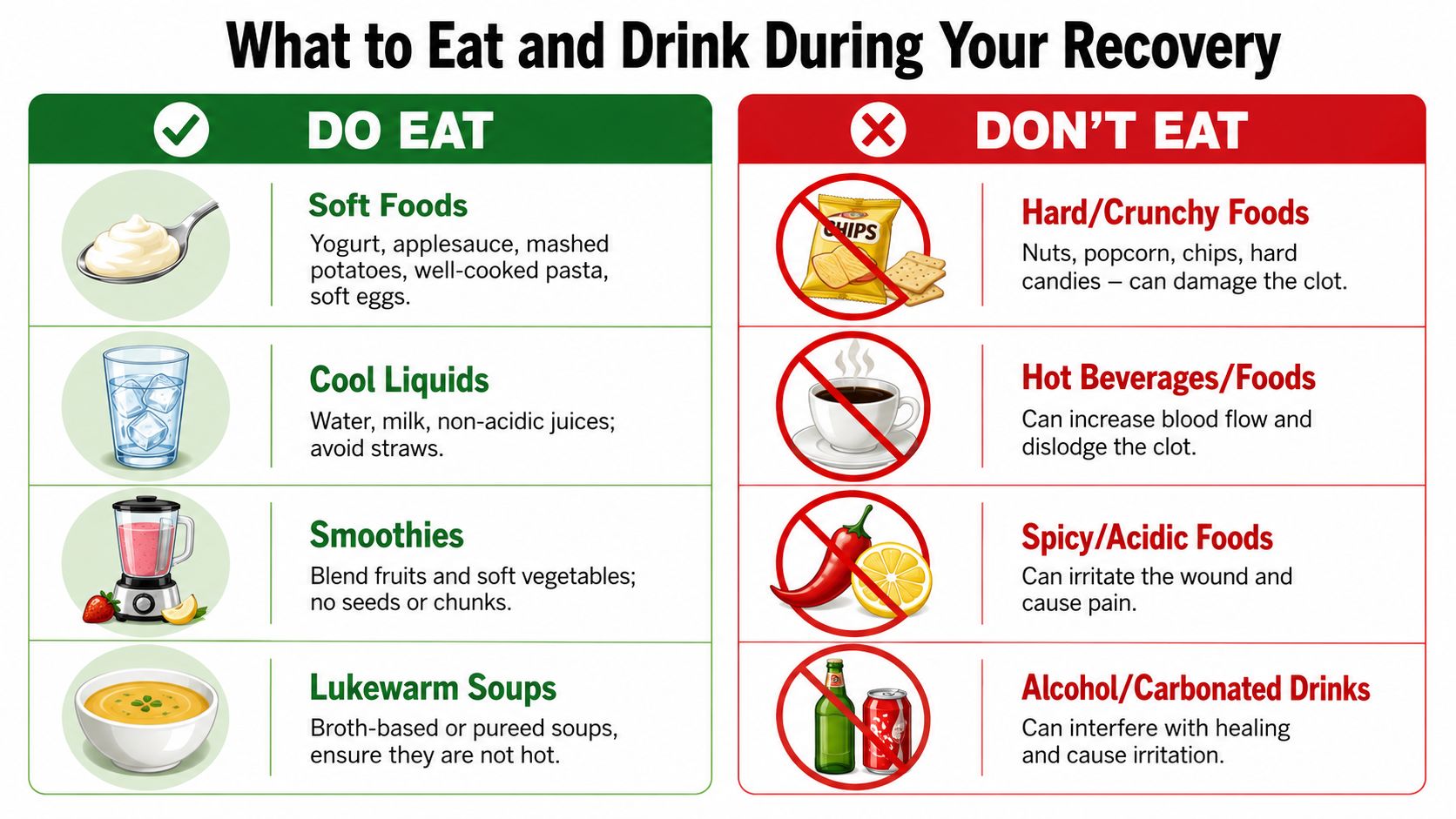
I tell patients to treat eating like a timeline, not a test of toughness. The first day is about protecting the clot and keeping yourself hydrated. The next several days are about getting enough nutrition without letting food irritate the socket. After that, texture can increase as comfort improves.
First 24 hours. Keep it cool, soft, and simple
Start with foods and drinks that need little or no chewing. Good choices include yogurt, applesauce, pudding, mashed potatoes, soft scrambled eggs, and blended soups that are warm or cool, not hot. Water, milk, and other non-irritating drinks are usually fine from a cup.
Smoothies can work well if they are seed-free and taken without a straw.
Patients often ask whether they need to avoid solid food completely. Usually, no. The better question is whether the food stays controlled in your mouth. If it crumbles, scatters, or makes you chew near the extraction site, save it for later.
Here's a helpful visual guide to keep food choices simple.
Days 2 to 7. Add texture slowly
As soreness starts to settle, many patients can handle a little more substance. Soft pasta, oatmeal that is not too hot, tender fish, cottage cheese, avocado, and well-cooked vegetables are often reasonable next steps. Chew on the other side if possible, and stop if the area starts throbbing or feels pressured.
This is also the phase where certain foods cause trouble because they seem harmless. Toast, rice, granola, popcorn, chips, nuts, and seeded foods often find their way into the socket. Spicy or acidic foods can sting. Very hot foods and drinks can make the area feel more irritated.
A practical way to judge a food is to ask three questions:
- Does it require firm chewing?
- Does it leave small particles behind?
- Does it make the extraction site feel more active afterward?
If the answer is yes to any of those, wait another day or two.
Drinks matter too
Hydration helps more than patients expect. A dry mouth feels worse, and pain medication can make that more noticeable. Sip water regularly through the day. Use a cup, not a straw.
Avoid alcohol while the area is fresh and while you are taking prescription pain medication. Be cautious with very hot coffee for the first part of recovery. If a drink increases throbbing or tenderness, let it cool and try again later.
A few honest trade-offs
Soft foods are easier on the extraction site, but some patients get tired of sweet options quickly. In that case, shift toward soft savory foods such as eggs, mashed potatoes, yogurt without added crunch, soft pasta, or mild soups. Children often do better with familiar choices like applesauce, macaroni, or mashed foods. Seniors and patients who had surgical extractions usually need a longer soft-food phase because chewing can stay uncomfortable longer.
The goal is not to eat perfectly. It is to eat in a way that protects healing tissue while keeping your strength up. If a food causes pain, catches in the socket, or makes you nervous every time you chew, it is too soon.
Special Aftercare Considerations for Different Patients
Generic instructions are useful, but they don't fit every patient equally well. A single straightforward extraction usually heals more predictably than a surgical extraction. A child needs supervision. An older adult may need a more cautious pace for food, activity, and medication review.
That's why good aftercare often needs to be personalized. Guidance commonly focuses on clot protection first, but patients with multiple extractions, more complex procedures, or age-related concerns may need adjusted timelines for diet, hygiene, and activity, as discussed in this overview of post-extraction do's and don'ts.
Surgical and wisdom tooth extractions
If the extraction was surgical, expect recovery to feel less like a quick inconvenience and more like a healing process you need to respect. The jaw may feel tighter. Swelling can be more noticeable. Eating may be slower for longer.
That doesn't necessarily mean something is wrong. It means the tissue has had more work done. Patients with surgical extractions usually do best when they stay conservative longer with food texture, mouth opening, and activity.
Useful adjustments often include:
- Longer soft-food phase: Don't force a return to regular chewing.
- More rest: Give yourself permission to keep activity low.
- Closer follow-through: If you were given specific instructions about rinsing or medications, follow those exactly.
Children need supervision, not just instructions
Children rarely manage aftercare by memory alone. Caregivers have to do the monitoring.
The main concerns are practical. A child may chew on numb cheeks, spit repeatedly, drink through a straw without thinking, or poke the area with a finger. The safest plan is a calm environment, simple soft foods, and repeated reminders.
A caregiver checklist helps:
| Patient type | Main risk | Best support |
|---|---|---|
| Young child | Disturbing the site | Supervise eating, drinking, and brushing |
| Teen | Resuming normal habits too soon | Reinforce no straws, no smoking, limited activity |
| Adult with multiple extractions | Overdoing food and activity | Slow diet progression and rest |
| Senior | Medication and slower recovery concerns | Review instructions carefully and monitor healing |
Seniors and medically complex patients
Older adults often do well after extractions, but they may need more attention to detail. Existing medications, reduced dexterity, or slower adaptation to eating changes can all make recovery feel more complicated.
What helps most is planning:
- Review medications carefully: Take only what was recommended, and ask questions if anything conflicts with your current routine.
- Keep meals simple: Soft, nourishing foods are easier than trying to “push through” with regular meals.
- Watch timing closely: If healing seems slower, don't assume the standard timeline applies exactly to you.
Patients with multiple extractions, dentures, implants, diabetes, or other healing concerns also benefit from individualized instructions. The best aftercare plan isn't always the shortest checklist. It's the one that matches the actual procedure and the person recovering from it.
Recognizing Warning Signs and When to Call Our Cornelius Office
Most extraction sites are sore before they improve. That part is expected. What matters is whether symptoms are gradually settling or starting to move in the wrong direction.
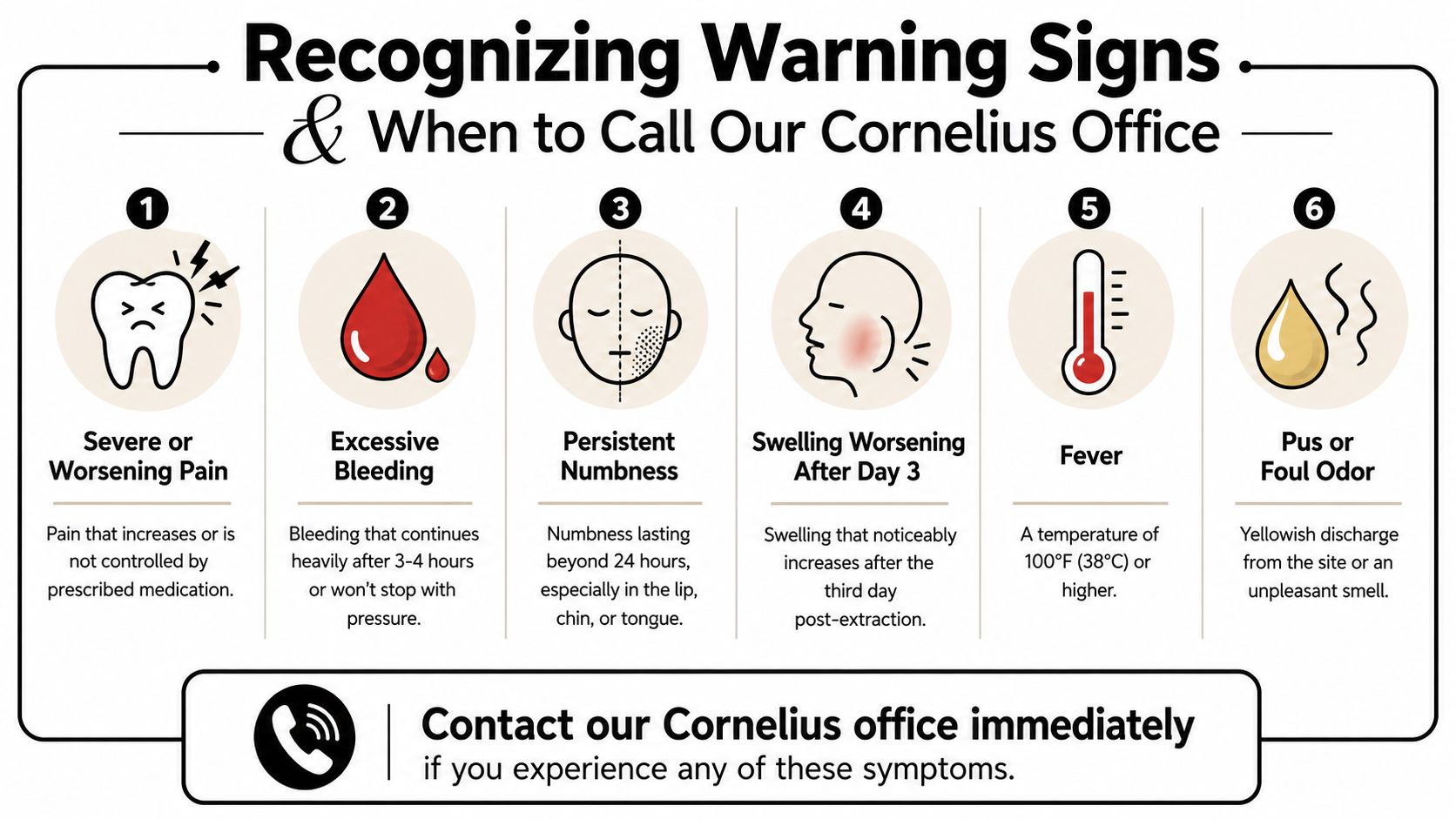
Patients should contact their dentist for severe pain, prolonged bleeding, or swelling that persists or worsens after 3 to 4 days, because those can indicate dry socket or infection. Smoking can also triple the risk of dry socket, which is why smoking after an extraction is more than a routine warning in this discussion of tooth extraction aftercare.
What's usually normal
Some tenderness, mild oozing, and discomfort with chewing are common early on. The area may look unpleasant to you even when it's healing appropriately. That alone isn't a reason to panic.
Normal recovery usually follows a simple pattern. Each day is not perfect, but the general direction is improvement.
What deserves a phone call
Call if you notice any of the following:
- Pain getting worse instead of better: Especially if it becomes severe several days into healing
- Bleeding that won't settle: Continued heavy bleeding or bleeding that doesn't respond to pressure
- Swelling that increases after the early phase: Especially if it's accompanied by worsening discomfort
- Fever, drainage, or a foul taste: These can point to infection
- Anything that feels clearly wrong to you: Patients are often right when they sense the pattern has changed
If you're debating whether you should call, call. It's easier to answer a question early than to fix a bigger problem later.
If you need prompt evaluation for urgent symptoms, visit our emergency dentist near me page for Cornelius patients.
Your Full Recovery and Future Smile with Skotzko Family Dental
Good healing after an extraction usually comes down to a few habits. Protect the clot early. Keep food soft until chewing is comfortable. Clean the mouth gently, not aggressively. Pay attention to symptoms that are getting worse instead of better.
Once the site has healed, the next question is often about the long term. If the extracted tooth needs to be replaced, there are reliable restorative options that can protect function, comfort, and appearance. Depending on the situation, that may include a bridge, a partial, or a long-term replacement such as a dental implant.
If you're exploring that next step, our dental implants page explains how implant treatment can fit into a broader restorative plan.
A tooth extraction solves one problem. A thoughtful follow-up plan protects your future bite, your smile, and the health of the surrounding teeth. That's especially important for families in Cornelius who want care that looks beyond the immediate procedure and supports lasting oral health.
If you need clear guidance after an extraction, follow-up care, or a plan to replace a missing tooth, contact Skotzko Family Dental Clinic. We're proud to serve Cornelius, NC, and nearby communities with compassionate family, restorative, cosmetic, and implant dentistry that keeps your comfort and long-term oral health front and center.