
Cosmetic Dentistry Near Me: A Cornelius, NC Smile Guide
June 12, 2026
How Much Do Dentures Cost? Get 2026 Prices in Cornelius
June 14, 2026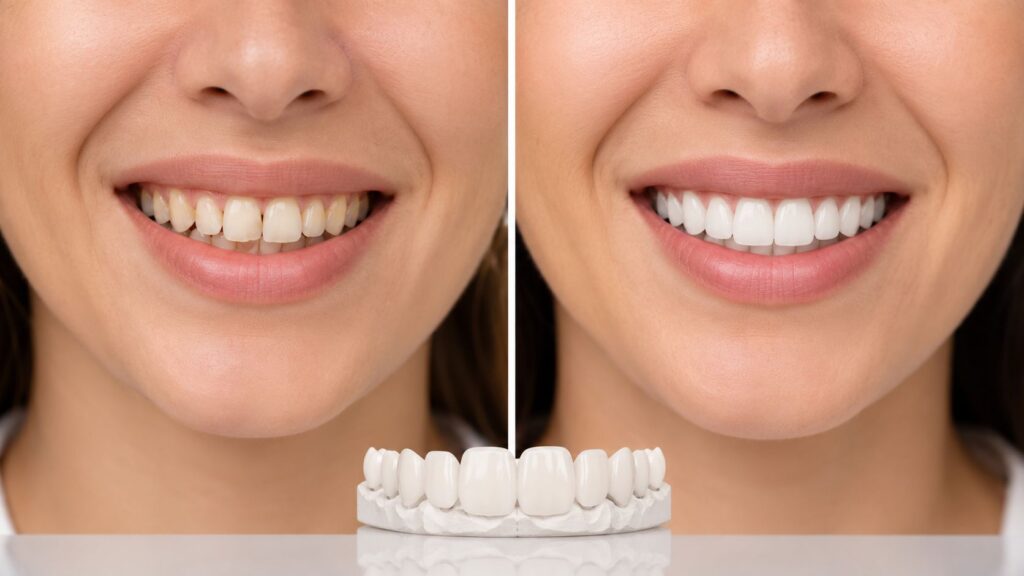
A patient usually does not walk into my office asking for “veneers before and after.” They come in saying, “I cover my mouth when I laugh,” or “My front teeth look worn in every photo,” or “I want this fixed, but I do not want it to look fake.” That is the essential starting point.
Porcelain veneers can solve several cosmetic problems at once, including chips, gaps, deep discoloration, uneven edges, and minor shape differences. The result should fit the face, bite, and personality of the patient. At Dr. Skotzko Family and Cosmetic Dentistry, the goal is a smile that looks healthy, natural, and comfortable to wear every day.
This page is built around six real Cornelius-area veneer cases, not a generic before-and-after gallery.
Each example explains what the patient wanted to change, why veneers were chosen instead of another option, and what clinical decisions shaped the final result. In some cases, the answer was symmetry. In others, it was stain coverage, edge strength, or replacing older cosmetic work that no longer matched the surrounding teeth. Those details matter because veneers are not one-size-fits-all treatment.
Good cosmetic dentistry is not about making every smile look the same. It is about choosing the right material, the right number of veneers, and the right treatment plan for the problem in front of you. The six cases below show both the benefits and the trade-offs, including where careful planning makes the difference between a smile that looks polished and one that looks overdone.
1. Case 1 Closing a Gap and Creating Natural Symmetry
Some veneer cases are dramatic because the problem is obvious. Others are powerful because they remove a distraction that's been bothering the patient for years. This was one of those cases.
Our patient had a noticeable gap between her front teeth and slight differences in width and edge shape. She didn't want a smile that looked “done.” She wanted her own smile, just more even and more comfortable to show.
Why veneers worked here
A small to moderate gap can often be improved with veneers if the surrounding tooth proportions support it. In this case, the space wasn't the only issue. The front teeth also needed subtle reshaping so the final result wouldn't look too wide at the center.
That's where good smile design matters. Closing space is easy if you only focus on the gap. Closing space while preserving natural tooth proportions takes more planning.
A veneer case like this succeeds when no one notices the veneers first. They notice the smile looks harmonious.
What the before and after change involved
The “before” smile drew attention to the center gap and slight asymmetry. The “after” smile looked more balanced because the width, line angles, and incisal edges were adjusted together.
Key decisions in a case like this usually include:
- Tooth proportion: Each veneer has to add width carefully so the front teeth don't look boxy.
- Midline control: The center of the smile has to stay visually centered with the face.
- Surface texture: Smooth, bright porcelain alone can look flat. Small texture details help keep the result natural.
Patients often ask whether veneers are the best answer for every gap. They aren't. Neutral dental guidance notes that veneers tend to work best for small to moderate gaps and cosmetic reshaping, but they can be the wrong choice when spacing, bite, or alignment issues would make teeth look bulky or unnatural, as explained in guidance on veneers for gapped teeth and when they don't work.
The tradeoff to understand
This kind of correction is appealing because it can be much faster than orthodontic treatment. But veneers camouflage spacing. They don't move teeth or correct the underlying bite.
That distinction matters. If a patient's gap is tied to a deeper alignment issue, orthodontics may produce the better long-term result. In the right case, though, veneers can close a distracting space beautifully and create a smile that looks like it always should have looked that way.
2. Case 2 Erasing Deep Stains and Rebuilding Confidence
A patient with deep staining usually arrives with a very specific request. He wants teeth that look clean and healthy, but he does not want a smile that suddenly looks fake on his face.
That was the challenge in this case. The discoloration had been present since childhood, and repeated whitening attempts had only made the limits of bleaching more obvious. By the time patients reach this point, they are often tired of short-term fixes. They want a result which covers the stain reliably and still looks like their own smile.
Why veneers made sense here
Some stains sit within the tooth, not just on the surface. In those cases, whitening can only do so much. Porcelain veneers let us control the visible color more predictably, and they also give us a chance to refine small shape differences that become more noticeable once the smile is brighter.
That combination matters. A stain case is rarely just about shade. If one tooth reflects light differently, or if the edges look uneven, the smile can still feel off even after the color improves.
Patients comparing treatment options often start with questions about durability, preparation, and whether veneers will look too opaque. Dr. Skotzko Family and Cosmetic Dentistry answers those concerns in plain language on its veneers near me page for Cornelius patients.
The planning decisions behind a natural-looking result
The hardest part of a case like this is not making teeth whiter. It is masking dark underlying color without creating a flat, chalky finish.
I look closely at three things:
- Shade target: Bright enough to look refreshed, but still believable for the patient's age, complexion, and overall features.
- Material opacity: Strong enough to hide the stain, while still allowing light reflection that keeps porcelain from looking dull.
- Edge design: Subtle contour and edge variation so the teeth do not look identical or overly manufactured.
Those choices are what separate a believable after photo from one that looks obvious in person.
What changed beyond color
The visible improvement was clear. The bigger change was confidence.
Patients with long-standing discoloration often learn to smile less, cover their mouth in conversation, or avoid photos without even realizing it. After treatment, the first feedback is usually simple. They stop thinking about their teeth every time they speak.
That is a meaningful outcome in everyday practice. Veneers can be a strong option for stain cases, but only when the plan respects the patient's features and the reason the discoloration developed in the first place. In the right case, they do more than brighten a smile. They remove a distraction that has followed the patient for years.
3. Case 3 Restoring a Smile Worn Down by Grinding
Wear changes a smile slowly. Patients don't always notice it at first because they see themselves every day. Then one day they realize their front teeth look shorter, flatter, and older than they used to.
That was the concern here. Years of grinding had left this patient with chipped edges and a compressed-looking smile. He wanted a result that improved appearance, but he also needed a plan that respected the functional stress on the teeth.
Rebuilding length without making teeth look bulky
When front teeth wear down, adding length isn't enough. The final shape has to fit the patient's bite, lip position, and speech. Too short, and the smile still looks worn. Too long, and the teeth can feel awkward and look unnatural.
In a case like this, veneers can restore edge length, improve contours, and make the smile look younger. But the cosmetic result only lasts if the grinding risk is addressed too.
Function matters as much as appearance
Patients need honest guidance. Veneers can improve worn teeth, but they don't stop bruxism. If someone clenches or grinds, the new restorations need protection.
That usually means building the case conservatively and planning for a night guard afterward. The “after” photo is only day one. Long-term success depends on what happens while the patient sleeps, chews, and functions every day.
Practical rule: If grinding caused the original damage, the protection plan is part of the veneer treatment, not an optional add-on.
Why porcelain is often chosen in wear cases
Durability matters more when a smile has already been under heavy force. Clinical summaries report that about 96% of porcelain veneers remain functional after 5 years, with survival rates still above 90% at 10 to 12 years, based on porcelain veneer durability and satisfaction data. That doesn't mean every patient gets the same lifespan. It does mean porcelain has strong long-term performance when the case is properly selected and maintained.
For a grinding patient, though, “durable” never means “indestructible.” Hard materials still need thoughtful bite planning and protection.
What changed in the before and after
Before treatment, the smile looked flattened and tired. After treatment, the front teeth had better length, cleaner edges, and more natural dominance in the smile line.
The best version of this case doesn't look flashy. It looks healthy. That's often exactly what patients with worn teeth want. They want to look less aged, less chipped, and less like stress has been written across their smile.
4. Case 4 Creating a Broader, More Youthful Smile
A patient can like the color of her teeth and still feel that her smile looks tired in photos. That was the concern here. She wanted more visible tooth display across the smile, with less shadow at the corners of the mouth and a softer, younger look overall.
A wider smile is usually a design issue, not a whitening issue
In cases like this, shade matters less than proportion. The before and after difference often comes from adjusting how the front teeth and premolars read together when the patient smiles. With the right contours, veneers can reduce the appearance of dark side spaces and create a fuller smile arc without making the teeth look bulky.
That balance takes restraint. Teeth that are too wide, too bright, or too identical can look flat and artificial. A younger-looking result usually comes from small changes in width, edge shape, and symmetry that fit the patient's face.
For patients exploring a larger cosmetic plan, Dr. Skotzko Family and Cosmetic Dentistry outlines how veneers can be combined with other treatments on its smile makeover page.
How this case was planned
This kind of result rarely comes from changing one tooth. It comes from coordinating several details across the visible smile zone.
- Tooth display: Showing a bit more balanced width across the upper smile helps the smile look broader.
- Incisal edges: Slightly refreshed edge length and contour can make the smile look less worn and more youthful.
- Material choice: Porcelain is often selected in these cases because it holds shape, polish, and light reflection well over time.
- Temporaries: Trial restorations let the patient preview the new smile frame before the final veneers are bonded.
That preview matters. Patients can see whether the smile feels natural in conversation, not just in a still photo.
Why these before and after photos build trust
A broader smile should still look like the same person. In this Cornelius-area case, the goal was not a dramatic makeover for its own sake. The goal was to explain the why and how behind the change, including the design choices, the likely timeline, and the trade-off every patient should understand. More coverage can create a fuller look, but too much added width can make veneers appear heavy.
The strongest outcome in this category is usually the one that looks easy, healthy, and age-appropriate. That is what many local patients are asking for. They want a smile that looks more open and refreshed, without looking overdone.
5. Case 5 Correcting Minor Crowding and Misalignment
This patient had a familiar story. She'd had braces years ago, but one upper tooth had rotated slightly over time and mild crowding had returned. She wanted a faster cosmetic fix and wasn't eager to go through orthodontic treatment again.
That can be a reasonable veneer conversation, but only if the crowding is minimal. Veneers can create the appearance of straighter teeth. They don't physically move roots or correct larger alignment problems.

When veneers are a good shortcut
For small rotations, uneven edges, and mild crowding in the smile zone, veneers can be an efficient way to improve visual alignment. The result can be dramatic in photos because the eye reads tooth shape first.
Still, there's a line. If too much contour change is needed to hide misalignment, the teeth can end up looking too thick. That's when orthodontics usually makes more sense.
The right question in these cases
Patients often ask, “Can veneers fix crooked teeth?” The better question is, “Should veneers be used to camouflage this, or should the teeth be moved first?”
That distinction protects the patient from a cosmetic result that looks acceptable on day one but compromised over time.
A careful evaluation in a mild alignment case usually looks at:
- Rotation severity: Small turns may be masked well. Larger ones usually need tooth movement.
- Bite relationship: Veneers shouldn't be asked to absorb a functional problem they can't solve.
- Tooth bulk: If straightening the appearance would require excessive thickness, the plan should change.
Veneers work best for minor visual correction. Once camouflage starts fighting the bite, the case is headed in the wrong direction.
What the after smile achieved
In this scenario, the goal wasn't perfection. It was harmony. The upper front teeth looked straighter, the rotated tooth no longer drew attention, and the patient got a more balanced smile without revisiting full orthodontic treatment.
This kind of case often appeals to adults who want a cosmetic answer with less time in treatment. It can work very well. It just requires discipline from the dentist to say no when the misalignment is beyond what veneers can correct gracefully.
6. Case 6 Replacing Old, Discolored Dental Bonding
Old bonding often tells on itself. It can stain, lose polish, and stop matching the neighboring enamel. Patients notice it most in bright light and photographs.
This patient had front-tooth bonding placed years earlier after an injury. Over time, the repaired area became more visible and less refined than the surrounding teeth. She wanted something that looked more natural and held its appearance better.
Why patients upgrade from bonding to porcelain
Bonding has real advantages. It can be conservative and useful for small repairs. But over time, many patients start noticing the limits. The surface can lose luster, edges can roughen, and the color may stop blending as well as it once did.
Porcelain veneers are often chosen in this situation because they offer stronger color stability and a more enamel-like finish. For the right patient, that means fewer compromises in appearance over the years.
Looking beyond the first reveal
This is one of the biggest differences between a cosmetic photo gallery and a real treatment conversation. The day-one after result matters, but so does the five-year result.
Porcelain veneers are commonly described as lasting about 10 to 15 years and resisting stains better, while composite veneers are cheaper but often need earlier polishing or replacement, according to this discussion of veneer longevity and maintenance tradeoffs. That's often the key decision in a bonding replacement case. Lower upfront intervention can be appealing, but patients who are tired of repeated touch-ups often prefer the longer-term polish and stability of porcelain.
What changed most in this before and after
The visible repair stopped looking like a repair. That was the win.
The final smile looked more unified because the restored teeth matched the adjacent enamel better in shape, sheen, and color. For many patients replacing aging bonding, that harmonious quality is what restores confidence. They don't want attention for the dental work. They want freedom from noticing it.
Veneers Before & After: 6-Case Comparison
These six cases show why veneer treatment is never one-size-fits-all. A small gap, deep internal staining, heavy grinding, or old bonding can all call for a different plan, even when the before and after photos look equally dramatic.
For patients in Cornelius, the useful question is not just how the smile changed. It is why that approach was chosen, what materials made sense, how long treatment took, and what trade-offs came with the result.
| Case | Treatment approach | Materials and timeline | What changed | Best fit for | Main benefit |
|---|---|---|---|---|---|
| Case 1: Closing a Gap and Creating Natural Symmetry | Moderate complexity, minimal-prep veneers on 6 upper front teeth | High-translucency E.max, lab-designed wax-up, in-office whitening, about 3 weeks | Closed a midline gap, improved tooth proportions, kept a natural enamel-like look | Patients with spacing or asymmetry who want a lasting cosmetic fix without braces | Conservative treatment with strong cosmetic improvement |
| Case 2: Erasing Deep Stains and Rebuilding Confidence | Higher complexity, traditional prep on 10 teeth to block dark internal staining | Layered porcelain with stronger masking ability, detailed lab shade work, about 4 weeks | Covered deep discoloration that whitening could not correct, while keeping brightness believable | Patients with severe intrinsic stains, including tetracycline discoloration | Reliable stain coverage and better shade control |
| Case 3: Restoring a Smile Worn Down by Grinding | Higher complexity, 8 veneers with bite planning built into the case | High-strength zirconia layered with porcelain, custom nightguard, about 3 weeks | Brought back lost length and edge shape, with added protection for a strong bite | Patients whose bruxism has flattened, chipped, or shortened front teeth | Restores appearance and function at the same time |
| Case 4: Creating a Broader, More Youthful Smile | Higher complexity, 10 veneers extending toward the premolars, plus gum contouring | Feldspathic porcelain, laser gum reshaping, about 3 weeks | Expanded the visible smile width and improved the gum frame around the teeth | Patients with a narrow smile who want a fuller smile display | Full smile transformation with refined light reflection |
| Case 5: Correcting Minor Crowding and Misalignment | Low to moderate complexity, no-prep or minimal-prep veneers on 4 teeth | E.max porcelain in variable thicknesses, retention planning, about 2.5 weeks | Created the appearance of straighter teeth by correcting small rotations and overlap | Patients with minor crowding who do not want repeat orthodontic treatment | Fast cosmetic alignment with limited tooth reduction |
| Case 6: Replacing Old, Discolored Dental Bonding | Moderate complexity, removal of aging composite and placement of 2 veneers | Layered E.max, detailed shade matching, at-home whitening support, about 3 weeks | Replaced stained bonding with a more natural-looking, stain-resistant result | Patients whose older bonding no longer matches the surrounding enamel | Better long-term polish and color stability than composite |
The pattern across all six cases is straightforward. Good veneer work starts with the problem, not with a stock smile design.
That is why case planning matters so much in practice. A patient with bruxism may need strength and bite protection to avoid early failure. A patient with dark internal staining may need more tooth preparation and a more opaque porcelain. Someone with minor crowding may be a candidate for very conservative veneers, but only if the final contours will still look believable and clean easily.
At Skotzko Family Dental Clinic, that is the part patients usually appreciate most once they see these side-by-side cases. They can tell that the materials, prep style, and timeline changed for a reason. The before and after photos matter, but the thinking behind them is what builds trust.
Begin Your Smile Transformation in Cornelius, NC
A patient from the Cornelius area often starts in the same place. They have looked at veneer before and after photos online, found a few smiles they like, and still are not sure what would make sense for their own teeth.
That question matters more than the photos.
The value of these six cases is not just the final result. It is seeing why each treatment plan was different. A gap requires a different approach than deep staining. Worn teeth from grinding need different planning than older bonding that no longer matches. Good cosmetic dentistry starts with the reason a smile looks the way it does now, then builds a treatment plan around function, appearance, and long-term maintenance.
A consultation is where that becomes clear. Some patients are strong veneer candidates. Others will get a better result with whitening, Invisalign, bonding, crowns, or staged restorative care. In practice, the right answer is not always veneers, and patients usually appreciate hearing that early.
Porcelain veneers have a long record of performing well when case selection, bite design, and material choice are handled carefully, as noted earlier. They can improve color, shape, proportion, and symmetry in a way that still looks natural. They also require judgment. The amount of preparation, the opacity of the porcelain, and the number of teeth treated all affect the final result.
Patients usually ask a few practical questions before they decide.
How long do veneers last?
Porcelain veneers can last many years with good home care and regular dental visits. Longevity depends on bite forces, oral hygiene, material selection, and whether grinding is controlled with a night guard when needed.
Is the process painful?
Treatment is usually very manageable with local anesthetic. Some patients notice short-term sensitivity after preparation or seating, but comfort planning is part of the process.
How much do veneers cost?
Cost depends on how many teeth are treated, how much design work is involved, and which material fits the case. A consultation is the best way to get a clear fee estimate and understand your options.
How do I care for them?
Brush and floss daily, keep routine cleanings, and avoid using your teeth to open packages or bite hard objects. Patients who clench or grind need to protect their veneers the same way they would protect natural enamel.
Dr. Skotzko Family and Cosmetic Dentistry serves patients in Cornelius and nearby communities who want a natural-looking smile improvement with a practical, patient-centered approach. These before and after cases are meant to make the process easier to understand, not to sell a one-size-fits-all result.
Your next step can be simple. Ask what is possible for your smile, what trade-offs come with each option, and what treatment would hold up well in daily life.
If you're ready to explore veneers before and after possibilities with a local team, contact Skotzko Family Dental Clinic to schedule a smile consultation and find out whether veneers are the right fit for your goals.