Veneers Before and After: 7 Smile Stories from Cornelius, NC
June 13, 2026
Teeth Whitening for Sensitive Teeth: Get a Brighter Smile
June 15, 2026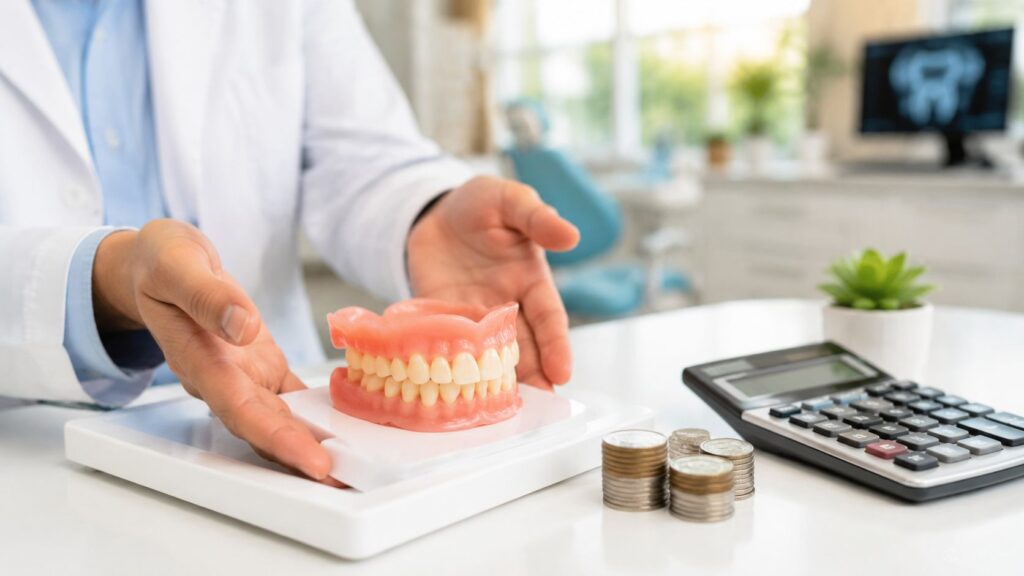
Dentures can cost anywhere from about $452 for low-cost full dentures to about $6,514 for premium full dentures, while traditional full dentures average about $1,968 and implant-supported permanent full dentures average about $3,976. In real life, that means the answer to how much dentures cost in Cornelius depends on whether you need a simple removable option, a more customized full or partial denture, or added implant support for stability.
If you're reading this, there's a good chance you're missing teeth, dealing with a denture that no longer fits well, or trying to plan ahead before a small dental problem turns into a bigger one. Worries often go beyond the smile's appearance, extending to concerns about eating in public, speaking clearly, and the manageability of the price.
That uncertainty is common. Denture treatment isn't one product sitting on a shelf with one fixed price. It's a custom treatment, and your cost depends on what you're replacing, how your mouth is healing, what materials make sense for you, and whether you want a removable or implant-retained solution.
For patients in Cornelius, NC, the most helpful starting point is understanding the categories first. Once you know what type of denture you're considering, the pricing begins to make more sense. That's where a lot of confusion usually clears up.
Restoring Your Smile and Confidence in Cornelius NC
A patient in Cornelius might spend months doing little workarounds that nobody else notices. They chew on one side. They avoid certain foods. They smile with their lips closed in photos. They tell themselves they'll deal with it later, usually because they're worried the cost will be overwhelming.
Missing teeth affect more than appearance. They can change the way you eat, the way you speak, and the way you feel when you're around other people. For some patients, the hardest part isn't the dental problem. It's not knowing what the solution will involve or whether it's even within reach.
That is why dentures are still an important part of modern restorative dentistry. They can replace missing teeth in a practical, functional way and help many people get back to daily life with less stress.
The real concern is usually two questions
Many individuals asking about dentures are really asking two things at once:
- Will I be able to smile and eat normally again: They want reassurance that treatment can restore day-to-day comfort and confidence.
- Can I understand the cost before I commit: They don't want surprises halfway through care.
Both questions matter. A denture that looks acceptable but doesn't fit well can become frustrating fast. On the other hand, focusing only on the lowest price can lead people toward an option that doesn't match how they eat, speak, or want to live.
A denture is not just a replacement for teeth. It's part of how you talk, chew, and feel comfortable being seen.
For some people, a removable full denture is the right fit. For others, a partial denture makes more sense because they still have healthy teeth that can be preserved. And for patients who want added security, implant-retained dentures may be worth discussing as part of a broader restorative plan.
A local decision feels easier when the process is clear
When patients in Cornelius and nearby Northern Virginia communities start asking how much do dentures cost, they usually don't need a sales pitch. They need straightforward information. They want to know what options exist, why one treatment costs more than another, and what to expect from the process.
That's the value of a consultation with a dentist who handles restorative care every day. Instead of guessing from national averages alone, you can look at your mouth, your goals, and your priorities. Some patients care most about affordability. Others care most about stability, appearance, or fewer daily hassles.
A good plan respects all of that. It starts with clarity, not pressure.
Understanding Your Denture Options and Their Costs
A patient in Cornelius might walk into our office missing several back teeth, while another has reached the point where an entire upper arch needs to be replaced. Both need "dentures," but they are not shopping for the same thing. Denture pricing works a lot like replacing a roof versus replacing a few shingles. The category matters first, then the materials, the fit, and the work needed underneath.
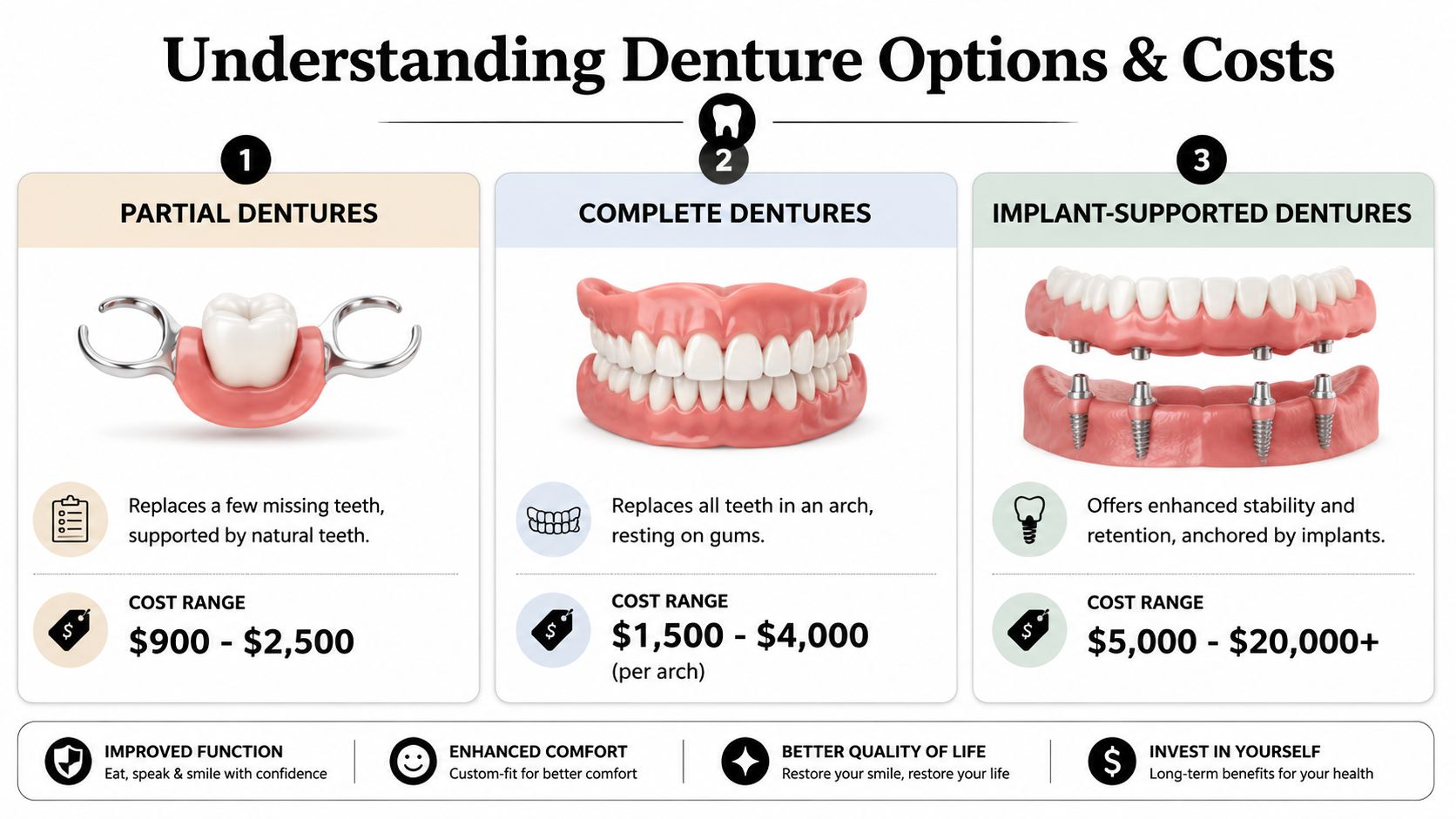
The first question is simple. Are you replacing all the teeth in one arch, or only some of them?
Full dentures
A full denture replaces all the teeth in the upper arch, the lower arch, or both. This is the option many people picture first.
According to Delta Dental's denture cost overview, a full upper denture may range from $1,220 to $2,540 and a full lower denture may range from $1,115 to $2,425. The same source reports a broader market estimate of about $1,800 for traditional full dentures, and notes that implant-supported dentures can exceed $10,000 without insurance.
Upper and lower dentures do not always cost the same. The upper arch often gets more natural suction because it covers more surface area. The lower arch has less surface to hold onto and must work around the tongue and stronger muscle movement. That difference can affect design, adjustments, and how much work goes into getting a stable result.
Partial dentures
A partial denture fills spaces when you still have healthy natural teeth worth keeping. It rests around those remaining teeth, which helps support the appliance and spread out biting pressure.
In the same Delta Dental pricing data noted above, partial upper dentures range from $1,435 to $2,785, and partial lower dentures range from $1,425 to $2,490.
Partials can make good sense for patients who want to restore chewing and appearance without removing teeth that can still serve them well. In practical terms, a partial is less like replacing the whole smile and more like filling in the missing pieces so the rest of the system can keep working.
Immediate dentures
An immediate denture is made before teeth are removed and placed soon after the extractions. Patients often choose this route because they do not want to spend the healing period without teeth.
That convenience comes with an important tradeoff. Your gums and bone change shape after extractions, especially in the first several months. A denture that fit on day one can loosen as healing progresses, which means relines, adjustments, or a future replacement may be part of the total cost.
Practical rule: If a denture quote does not mention extractions, healing changes, or follow-up adjustments, the estimate may be incomplete.
For many patients, immediate dentures are a temporary but very useful step. They keep you functional and presentable while your mouth settles into its long-term shape.
Implant-supported dentures
An implant-supported denture connects to dental implants for extra hold. Patients often notice the biggest difference when eating foods that would usually make a lower denture shift or lift.
This option costs more because it includes surgery, implant parts, and a denture designed to attach to those implants. For patients who want to understand the treatment approach in more detail, overdenture implants show how implants can support a removable denture and improve retention.
In our Cornelius area, this is often the option patients ask about after struggling with a loose lower denture. The higher fee usually reflects more than the denture itself. It reflects the added foundation that helps keep it in place.
A simple way to sort the options
| Option | Usually best for | Main tradeoff |
|---|---|---|
| Full denture | Missing all teeth in one arch | Lower cost than implant options, but less stability |
| Partial denture | Missing several teeth, still has healthy teeth | Practical and tooth-preserving, but still removable |
| Immediate denture | Needs teeth removed and wants teeth in place right away | Useful during healing, but fit often changes |
| Implant-supported denture | Wants more retention and security | Higher cost and more treatment steps |
If you are trying to estimate your own costs, start by identifying which category fits your mouth. That gives you a more realistic starting point than a single national average, and it makes the conversation with Dr. Skotzko much more useful because you can focus on the option that matches your needs.
Key Factors That Influence the Final Price of Dentures
Two people can both say they need dentures and still receive very different treatment plans. That isn't price inflation for the sake of it. It's the result of customization, preparation, and lab work.
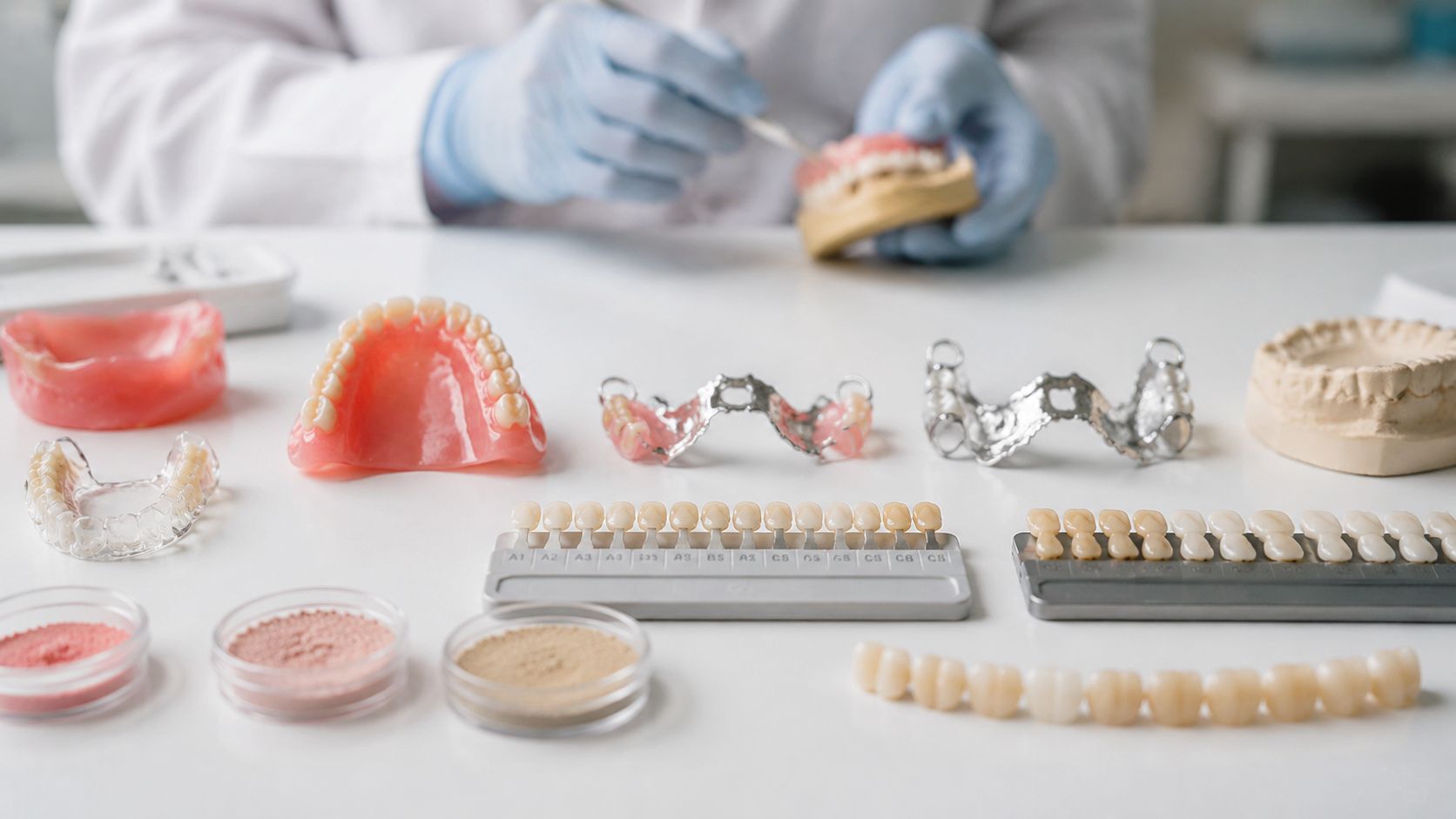
A strong benchmark comes from CareCredit's denture cost guide, which reports that traditional full dentures average about $1,968, with a range of $1,520 to $3,648. The same source reports that low-cost full dentures average $452, premium full dentures average $6,514, and implant-supported permanent full dentures average $3,976. That spread shows how much the final number can change when design and quality change.
Materials change both feel and appearance
Not all dentures are made to the same standard. Some are built as basic economy prosthetics. Others are designed with more detailed esthetics, more careful tooth arrangement, and better refinement in the base and bite.
Patients usually notice material differences in a few ways:
- Appearance: Higher-end options often look more natural in shape, color, and smile line.
- Comfort: Better customization can improve how the denture sits and functions.
- Durability: Some designs hold up better with everyday wear.
The cheapest option may work for a limited need, but it may not deliver the same fit or look that a customized prosthetic can provide. That's part of why the averages span from the low-cost category to the premium category so dramatically.
Preparation before the denture matters
Many patients don't pay for "just a denture." They pay for a treatment sequence that may include removing damaged teeth, managing unhealthy areas, smoothing tissue, or allowing time for healing before the final prosthetic is delivered.
That is one of the biggest reasons online comparisons can feel confusing. One quote may include the denture only. Another may reflect impressions, adjustments, try-ins, or preparatory care. A third may include implant placement as part of the plan.
If your mouth needs preliminary treatment before the denture is made, the denture itself may be only one part of the total investment.
This is also why an office exam matters. The price can't be fully understood until someone evaluates what has to happen before the final appliance can fit predictably.
Lab quality and craftsmanship are not small details
Dentures are part dental treatment and part custom fabrication. The lab work affects:
- How the bite comes together
- How natural the teeth look
- How securely the base fits
- How many adjustment visits may be needed
That behind-the-scenes work is easy to overlook because patients don't always see it. But they feel it every day once the denture is in use.
Why there isn't one local price for Cornelius
Patients often want a single number for Cornelius, NC. That's understandable, but dentures don't work like a standard retail product. A local estimate depends on your exam findings, your goals, and whether you're choosing a simple removable option or a more advanced restorative design.
The useful question isn't just "How much do dentures cost?" It's "What is included in my treatment plan, and why?" Once you ask that, the quote becomes easier to evaluate. You can compare quality, not just price.
Comparing Dentures to Other Tooth Replacement Solutions
Dentures aren't the only way to replace missing teeth. Depending on how many teeth are missing and what condition the nearby teeth and bone are in, a patient may also consider a bridge or dental implants.
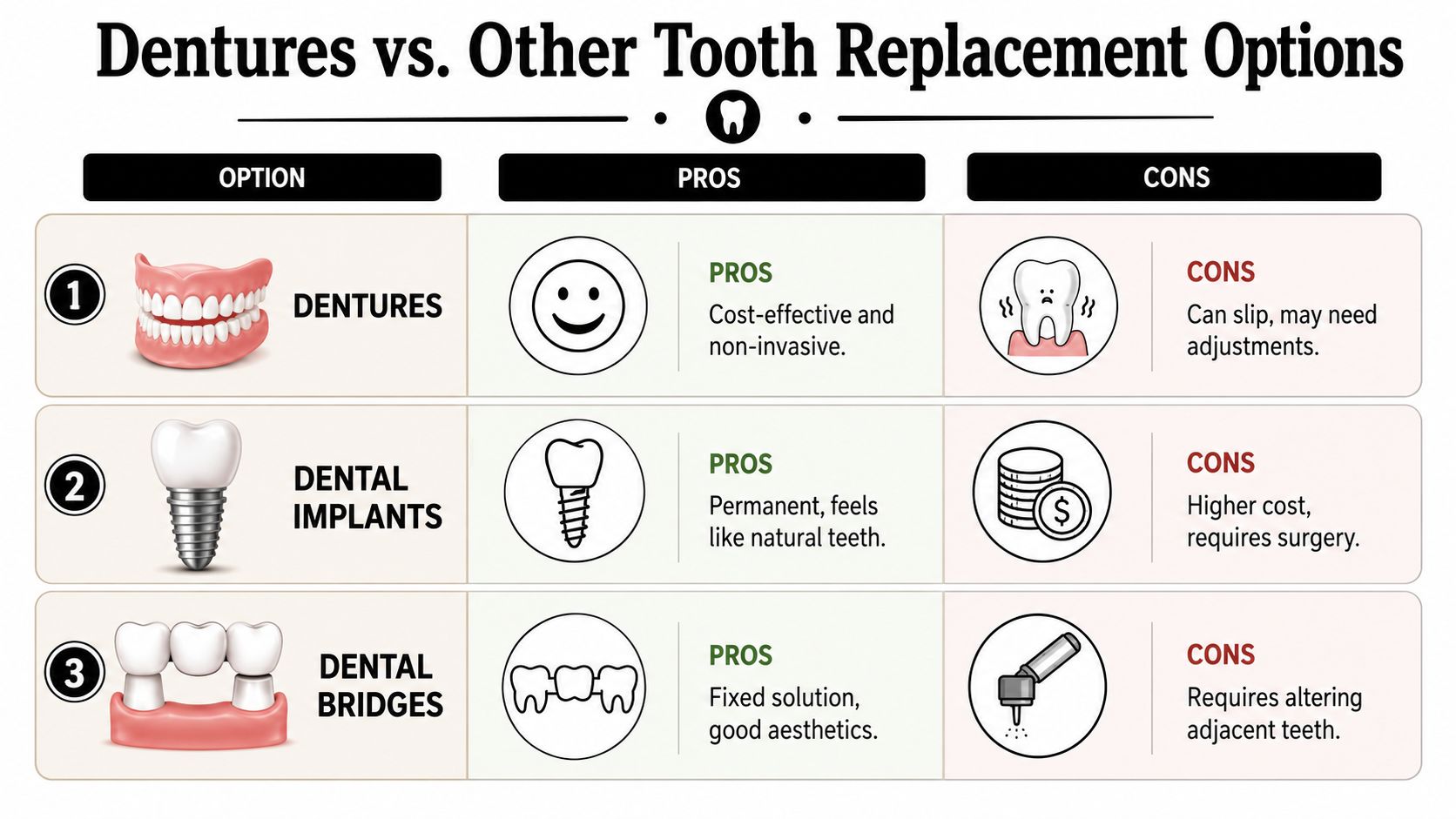
The right choice depends less on trends and more on daily life. How do you want to clean your teeth? How important is fixed stability? Are you trying to replace one tooth, several teeth, or an entire arch?
Dentures compared with bridges
A dental bridge is fixed in place and doesn't come out for cleaning the way a removable denture does. For the right patient, that can feel more natural in daily use.
But bridges and dentures solve different problems. A bridge is often more relevant when a smaller number of teeth are missing and the neighboring teeth can support it. A denture becomes more practical when tooth loss is more extensive or spread across the arch.
The tradeoff is convenience versus scope. Bridges are fixed, but they aren't usually the answer for every pattern of tooth loss.
Dentures compared with implants
Dental implants are often the most stable option because they anchor into bone. That can make chewing feel more secure and can support a very natural function. Some patients use implants to replace individual teeth. Others use implants to support a denture.
A removable denture usually has a lower upfront cost than a full implant-based solution. An implant-based solution may offer more retention and less movement. The best choice depends on priorities, anatomy, and budget.
If you're weighing that decision, this dental implant cost overview can help explain how implant treatment is priced compared with other restorative options.
Side-by-side priorities
| Treatment | Daily routine | Stability | Oral health considerations |
|---|---|---|---|
| Dentures | Remove and clean | Can move, especially lower dentures | Useful for broad tooth replacement |
| Bridges | Fixed cleaning routine | Stable when properly supported | Requires support from neighboring teeth |
| Implants | Brush and maintain like other fixed dentistry | Strong retention | Can support long-term function and retention |
The "best" tooth replacement is the one that matches your mouth, your habits, and what you can comfortably maintain.
Where cosmetic goals fit in
Patients don't usually separate restorative dentistry from cosmetic dentistry in real life. They care about both. They want to chew better, but they also want a smile that looks natural and age-appropriate.
That matters when comparing solutions. A partial denture may fill spaces effectively. A bridge may blend in well when replacing a smaller gap. Implant dentistry may offer the most fixed feel. The cosmetic result depends on planning, shape, tooth display, and fit, not just the category of treatment.
This is why the decision should be made with the full picture in mind. Cost matters, but convenience, confidence, maintenance, and long-term comfort matter too.
Navigating Insurance and Financing for Your Dentures
A lot of Cornelius patients reach this point with the same concern. They may understand the denture options, but the payment side still feels foggy.
That reaction is normal. Denture fees are often made up of several parts, much like a home repair estimate that includes materials, labor, and any work needed before the final job can be completed. Insurance may help with some of those pieces, but not always all of them.
Dental plans usually place dentures under major restorative care. That often means yearly maximums, waiting periods, replacement rules, and different coverage for the work that happens before the denture is delivered. An exam, extractions, relines, temporary dentures, or implant-related services may each be handled in their own way.
What to ask your insurance company
Before treatment begins, call your insurer and ask for plain-language answers. Writing them down can save a lot of confusion later.
Helpful questions include:
- Does my plan cover full dentures, partial dentures, or both? Some plans treat each option differently.
- Is there a waiting period for major restorative treatment? Coverage may not start right away.
- What is my annual maximum, and how much of it is still available? This affects what insurance may contribute.
- Are extractions, impressions, adjustments, relines, or temporary dentures covered separately? These details can change the total out-of-pocket cost.
- If implants are used for added denture support, are those services excluded or billed differently? Many plans separate implant care from removable dentures.
- Can the office send a pre-treatment estimate? That gives you a clearer preview of benefits before you commit.
Insurance language can be hard to follow. If any of it sounds unclear, the team at Skotzko Family Dental Clinic can help you understand what information to gather so the financial side feels more predictable.
Financing can spread out the cost
Financing does not reduce the fee. It changes the timing.
For many patients, that matters. A larger denture case can feel more manageable when the balance is broken into planned monthly payments instead of one lump sum, especially if treatment includes preparatory work first and the final denture later.
Common approaches include:
- Third-party financing. Outside healthcare lenders may offer monthly payment options for approved applicants.
- Phased treatment. Some patients begin with extractions or an immediate denture, then complete the final denture after healing.
- Using benefits first, then financing the remainder. This can lower the amount that needs to be paid over time.
A good financial plan should match the clinical plan. If your mouth needs treatment in stages, the payment plan should make sense in stages too.
Look closely at what each estimate includes
Two denture quotes can look far apart even when neither office is overcharging. The difference is often in what is included.
One estimate may cover only the denture itself. Another may include records, follow-up adjustments, higher-grade materials, temporary appliances, or more detailed customization for appearance and fit. That is why the lowest number on the page is not always the better value.
Local pricing in Cornelius can also differ from broad national averages because care is personal. Your gum condition, whether teeth need to be removed, the type of denture, and the number of visits all shape the final figure. Reviewing the estimate line by line helps you see the actual cost, not just the headline price.
If you are comparing options, ask a simple question: "What does this fee include from start to finish?" That one question often clears up the biggest misunderstandings.
Your Denture Journey at Skotzko Family Dental
The denture process feels less intimidating when you know what the appointments are for. Most patients relax once they understand that treatment happens in stages and that each stage is there to improve fit, appearance, and comfort.

The consultation is where the plan becomes personal
The first visit usually starts with a conversation. Which teeth are missing? Which teeth are still healthy? Is the main concern chewing, appearance, looseness in an old denture, or all of the above?
From there, the exam helps answer the questions that online research can't answer. Is a partial possible? Is a full denture more realistic? Would implant retention improve stability enough to be worth discussing? This is also when patients can talk through anxiety, timing, and budget concerns in a practical way.
A personalized plan matters because dentures aren't one-size-fits-all. Even two patients missing the same number of teeth may need very different approaches.
Records, impressions, and try-ins
After the treatment plan is set, the next phase is about precision. Impressions or digital records help capture the shape of the mouth. Jaw relationship records help determine how the upper and lower arches meet. Try-in visits help refine tooth position, smile line, and bite before the final prosthetic is delivered.
Those visits are important. They reduce guesswork. They also give patients a chance to speak up before the denture is finalized.
Here is where people often feel relieved. They realize the result isn't being rushed. It's being built step by step.
To get a feel for the office and approach, this short video gives useful context before a first appointment:
Delivery and follow-up are part of the work
The day a denture is delivered is not always the end of the process. New dentures often need small adjustments as your mouth and muscles adapt. That's normal.
Patients may notice a few early changes:
- Speech adjustment: Certain words can feel different at first.
- Chewing practice: Softer foods are usually easier in the beginning.
- Pressure areas: Small sore spots may need correction.
A careful follow-up process matters because comfort is not automatic on day one. It improves as the fit is refined and the patient gets used to the appliance.
That same long-term mindset also applies to related care. Some patients who come in for dentures also ask about cosmetic dentistry, Invisalign, or other restorative options because they want a broader plan for their smile, not just a single fix.
Long-Term Care and Costs for a Lasting Smile
A denture isn't a one-time purchase you forget about. It's an ongoing part of your oral health, and good maintenance protects both comfort and value.
Over time, your mouth changes. Gums and the underlying ridge can shift, which may affect fit. That is why some patients need relines, adjustments, or repairs as the years go on. Those visits help keep the denture more stable and reduce irritation.
Daily habits protect the investment
The patients who do best with dentures usually keep their routine simple and consistent:
- Clean them every day: A clean denture is more comfortable and helps protect the tissues underneath.
- Handle them carefully: Most repairs happen after a drop in the sink or on a hard floor.
- Keep regular dental visits: Even if you're missing teeth, your gums, jaw, and remaining teeth still need care.
- Report looseness early: A small fit problem is easier to address than a long period of rubbing or instability.
Think in terms of value, not just the starting fee
A well-made denture that fits properly and is maintained regularly usually serves a patient better than a bargain option that creates repeated frustration. The lowest initial price isn't always the lowest long-term cost if comfort, function, and repairs become ongoing problems.
Patients usually feel better about the cost when they understand the full lifespan of the appliance, not just the day it's delivered.
That perspective helps. Dentures are part of restoring meals, conversation, confidence, and routine. Long-term care keeps all of that working.
Frequently Asked Questions About Dentures
Is getting dentures painful?
Most patients are surprised that the process is more manageable than they expected. If extractions or other preparatory treatment are needed, you may have soreness during healing. The denture-making visits themselves are usually focused on records, fit, and adjustment rather than pain.
How long will my new dentures last?
Dentures can last for years, but fit and wear change over time. The appliance may eventually need relining, repair, or replacement as your mouth changes and the materials age.
Can I eat normally with dentures?
Yes, but there is usually an adjustment period. Most patients do best by starting with easier foods, chewing slowly, and letting their muscles adapt. Implant-supported dentures often feel more secure for chewing than traditional removable dentures.
Will dentures look natural?
They can look very natural when the tooth shape, shade, smile line, and fit are planned carefully. The final appearance depends on customization, not just the fact that it's a denture.
If you're weighing your options and want a clearer answer for your own smile, schedule a consultation with Skotzko Family Dental Clinic. Patients in Cornelius, NC and nearby Northern Virginia communities can get a personalized exam, a realistic treatment discussion, and guidance on dentures, partials, and implant-supported solutions without guessing from generic online estimates.