
How to Maintain Oral Health: A Cornelius, NC Guide
May 29, 2026
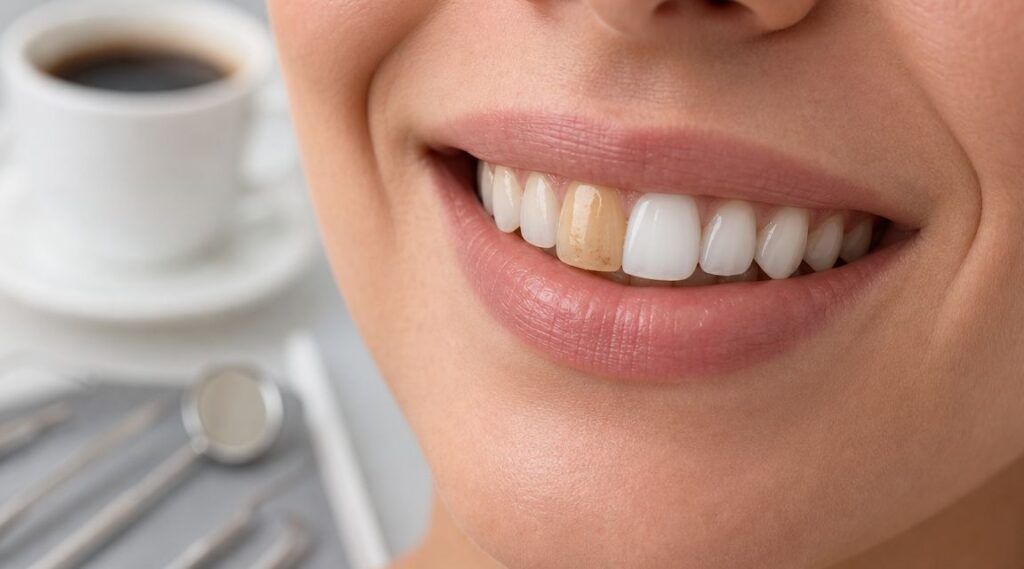
A lot of people start thinking about whiter teeth the same way. A photo is coming up. A reunion is on the calendar. You catch your reflection after your morning coffee and wonder when your smile started looking a little darker than it used to. Then the questions pile up fast. Should you use whitening strips? Is professional whitening worth it? Will your teeth get sensitive? And once your smile looks brighter, how do you keep it that way?
That confusion is normal. Whitening sounds simple, but keeping teeth white is usually where people get stuck. Individuals don't need more hype. They need a plan that makes sense for real life, especially if they drink coffee, have crowns or fillings, or are going through Invisalign treatment.
If you live in Cornelius, NC and you've been searching for a dentist near me who can explain this clearly, you're not alone. My goal here is to give you the same kind of practical guidance I'd give a patient in the chair. A white smile isn't about one product or one appointment. It's about daily habits, safe whitening, and maintenance that fits your mouth.
A Brighter Smile for Your Life in Cornelius NC
A brighter smile matters because it changes small moments. You smile more easily in conversation. You stop hiding your teeth in photos. You feel a little more comfortable at work, out with friends, or at a family event around Cornelius. For many people, that's a key reason whitening stays so popular.
That interest is widespread. A 2026 statistics roundup reports that 67% of U.S. adults have tried to whiten their teeth, and it also says the global teeth-whitening market was valued at $8.52 billion in 2024 in its teeth whitening statistics roundup. Whitening isn't a niche cosmetic extra anymore. For many adults, it's become part of routine smile care.
Why whitening feels confusing
The confusing part is that people often mix together three different goals:
- Getting teeth lighter
- Keeping new stains from building up
- Protecting enamel while doing both
Those aren't exactly the same thing. A person who drinks coffee every morning may mostly need stain control. Someone with older yellowing may want active whitening. Someone with sensitivity may need to slow down and focus on safety first.
Whitening works better when you stop thinking of it as a one-time fix and start treating it like maintenance.
The local question patients really ask
In the office, people rarely ask only, “How do I whiten my teeth?” More often, they ask questions like these:
| Common question | What it usually means |
|---|---|
| “Why did my teeth get darker again?” | Stains returned or the whitening result faded |
| “Can I keep drinking coffee?” | They want a realistic routine, not strict rules |
| “Why doesn't this crown match?” | Dental work doesn't whiten like natural enamel |
| “Should I whiten during Invisalign?” | They want even results without causing problems |
Those are practical questions, and they deserve practical answers. If you understand how stains form, how whitening products work, and where maintenance fits in, the process becomes much less frustrating.
A healthier way to think about a white smile
The best approach is steady, not extreme. You don't need to scrub harder, try every trend online, or chase a blinding shade that doesn't look natural for your face. You need a plan that supports both appearance and oral health.
That's especially true in a community like Cornelius, where people want dentistry that feels personal and straightforward. A bright smile should still be a healthy smile. When those two goals stay together, the results usually look better and last longer.
The Foundation of a Bright Smile Your Daily Habits
Many who look up how to keep teeth white are really asking a simpler question. “What should I do every day so my smile doesn't get dull again?” The answer starts at home, not in a whitening kit.
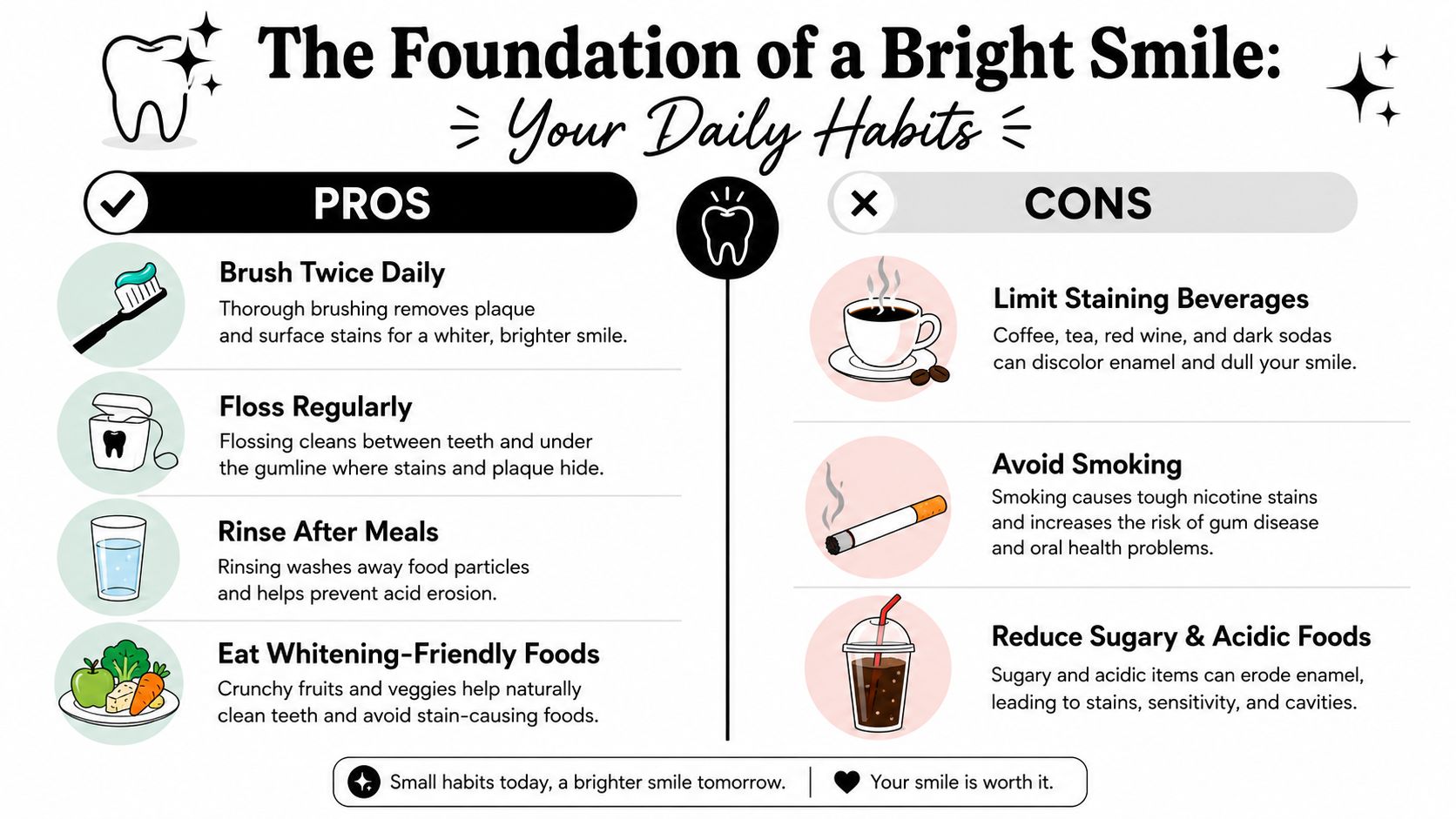
Dental guidance supports a simple long-term strategy. Brush 2–3 times daily, floss once daily, and rinse with water after dark beverages like coffee or red wine to reduce surface staining, as described in this guidance on teeth whitening results and maintenance.
To make that easier to picture, here's a quick visual summary of the habits that help most.
Clean the film off before it turns into stains
A toothbrush doesn't bleach teeth. What it does very well is remove the sticky film that holds onto pigments. If that film stays in place, coffee, tea, cola, red wine, and strongly colored foods have an easier time leaving surface discoloration behind.
A few habits matter more than people think:
- Brush consistently: Aim for morning and night, and for some people after lunch as well.
- Use light pressure: Scrubbing hard doesn't make teeth whiter. It can irritate gums and wear surfaces over time.
- Floss daily: Stains and plaque between teeth make the whole smile look darker, even if the front surfaces look fairly clean.
If you want a stronger prevention routine, regular preventive dental care in Cornelius can help remove buildup that home care misses and keep your whitening maintenance on track.
Control contact with staining foods and drinks
You don't have to give up everything that can stain teeth. Such a restriction is often unsustainable long term, and that's fine. What works better is reducing how long those pigments stay on the teeth.
Here are the simplest examples from everyday life around Lake Norman:
- Morning coffee on the go: Drink water after you finish.
- Red wine at dinner: Alternate with water.
- Iced tea or cola: Use a straw when it makes sense.
- Dark sauces: Don't let them sit on your teeth for hours without cleaning.
Practical rule: If it could stain a white shirt, it can probably stain teeth over time.
A lot of readers get confused here and assume one stained drink “ruins” whitening. It doesn't. Stains are usually cumulative. The goal is to keep one cup of coffee from turning into months of gradual darkening.
Add small habits that make a big difference
People often look for a special whitening secret, but simple habits usually do more than they expect.
Consider building these into your day:
Rinse with water after meals
This helps clear food particles, acids, and pigments before they linger.Keep a travel toothbrush if you're often out
That's useful after lunch, especially if you drink coffee during the workday.Use whitening toothpaste only as maintenance
It can help with surface stain control, but it shouldn't replace a fuller whitening plan.
A short video can help if you like visual guidance on daily whitening care and maintenance.
What daily habits can and cannot do
Daily habits are excellent for preventing new surface stains. They are less effective for deeper discoloration that's already built into the tooth structure. That's where whitening products or professional options may come in.
Still, home habits are the foundation. If your routine is weak, even a good whitening result won't stay bright for long. If your routine is solid, maintenance becomes much easier and much less frustrating.
Choosing Your Whitening Path Professional Options in Cornelius
Once your daily routine is in good shape, the next question is whether you want active whitening. Many individuals considering this often compare store products with professional treatment, seeking to understand the actual distinctions.
At the basic level, peroxide-based whitening works by changing the color of tooth structure, not just polishing the surface. A review of whitening research notes that twice-daily use of peroxide-based whitening products over a typical 14-day regimen can improve tooth color by 1 to 2 shades, and stronger professional systems can whiten more than over-the-counter options, with maintenance often needed over time, according to this review of tooth whitening methods.
Two common professional paths
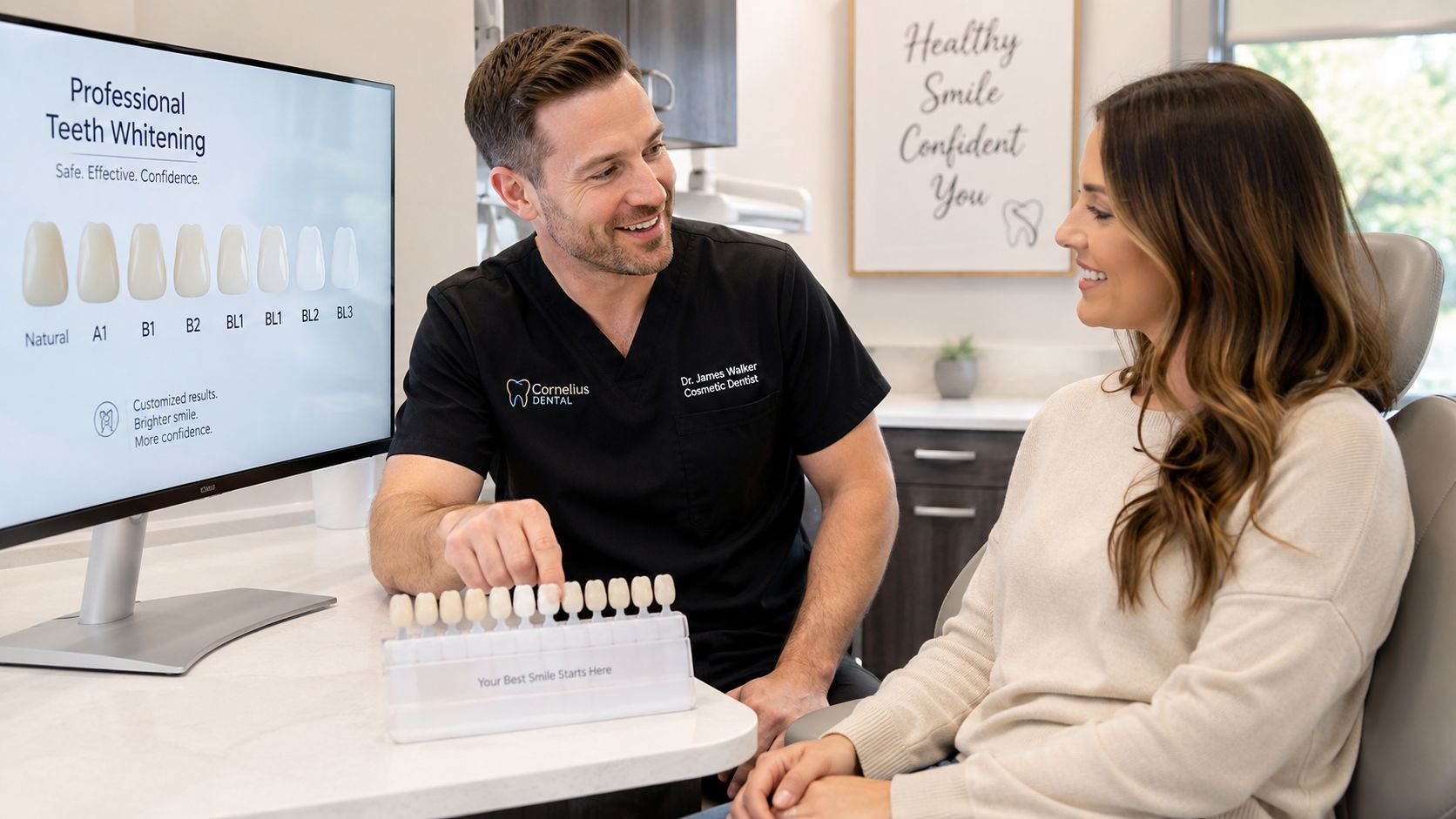
Most patients are deciding between in-office whitening and custom take-home whitening trays. Both can work well. The better choice depends on your goals, your schedule, and how sensitive your teeth tend to be.
Here's a side-by-side view:
| Option | Best for | Main advantage | Main consideration |
|---|---|---|---|
| In-office whitening | People who want a faster result | More powerful treatment under supervision | May not be the right fit for every level of sensitivity |
| Custom take-home trays | People who want gradual control | Flexible use at home with a dentist-guided plan | Requires consistency |
In-office whitening for faster change
In-office whitening is often the better fit when someone has an event coming up or wants a more noticeable change sooner. Because the treatment is done under dental supervision, it can be customized more carefully than a one-size-fits-all product from the store.
Patients also like the clarity. You're not guessing about how much gel to use, whether the trays fit, or whether the product is appropriate for your mouth. A dental exam can catch the reasons whitening might not work as expected, such as visible fillings on front teeth, untreated decay, or areas that may become sensitive.
Custom trays for gradual maintenance
Custom trays are often a strong option for people who want flexibility. They can be useful if you prefer whitening in smaller increments or want a maintenance tool after an initial brightening phase.
Because the trays are made to fit your teeth, the gel placement is usually more controlled than with generic strips. That can help with comfort and with more even coverage. For some patients, a dentist-guided at-home plan feels easier to manage than an in-office session.
Professional whitening is not just about getting teeth lighter. It's about choosing a method that matches your enamel, your restorations, and your goals.
What about store-bought strips and toothpastes
Over-the-counter strips can help some patients, especially when discoloration is mild. Whitening toothpaste is better viewed as a stain-control product than a full whitening solution. It helps maintain, not transform.
Many people get disappointed. They buy several products, use them inconsistently, and expect a dramatic result. If you're dealing with older stains, uneven shade, or dental work in the smile line, that trial-and-error approach often wastes time.
A more direct route is to discuss your options through a cosmetic dentistry consultation in Cornelius. That allows you to compare in-office whitening, take-home systems, and other cosmetic choices with your actual teeth in mind.
Who needs a more personalized plan
Some smiles need extra planning before whitening starts. That includes people who have:
- Crowns or veneers on front teeth
- Tooth-colored fillings that show when they smile
- Gum recession or sensitivity
- Dark spots that may not respond evenly
- Ongoing Invisalign or orthodontic treatment
In those cases, the best whitening path isn't always the strongest one. It's the one that gives you a result that looks natural and stays manageable afterward.
Whitening Safely and Managing Tooth Sensitivity
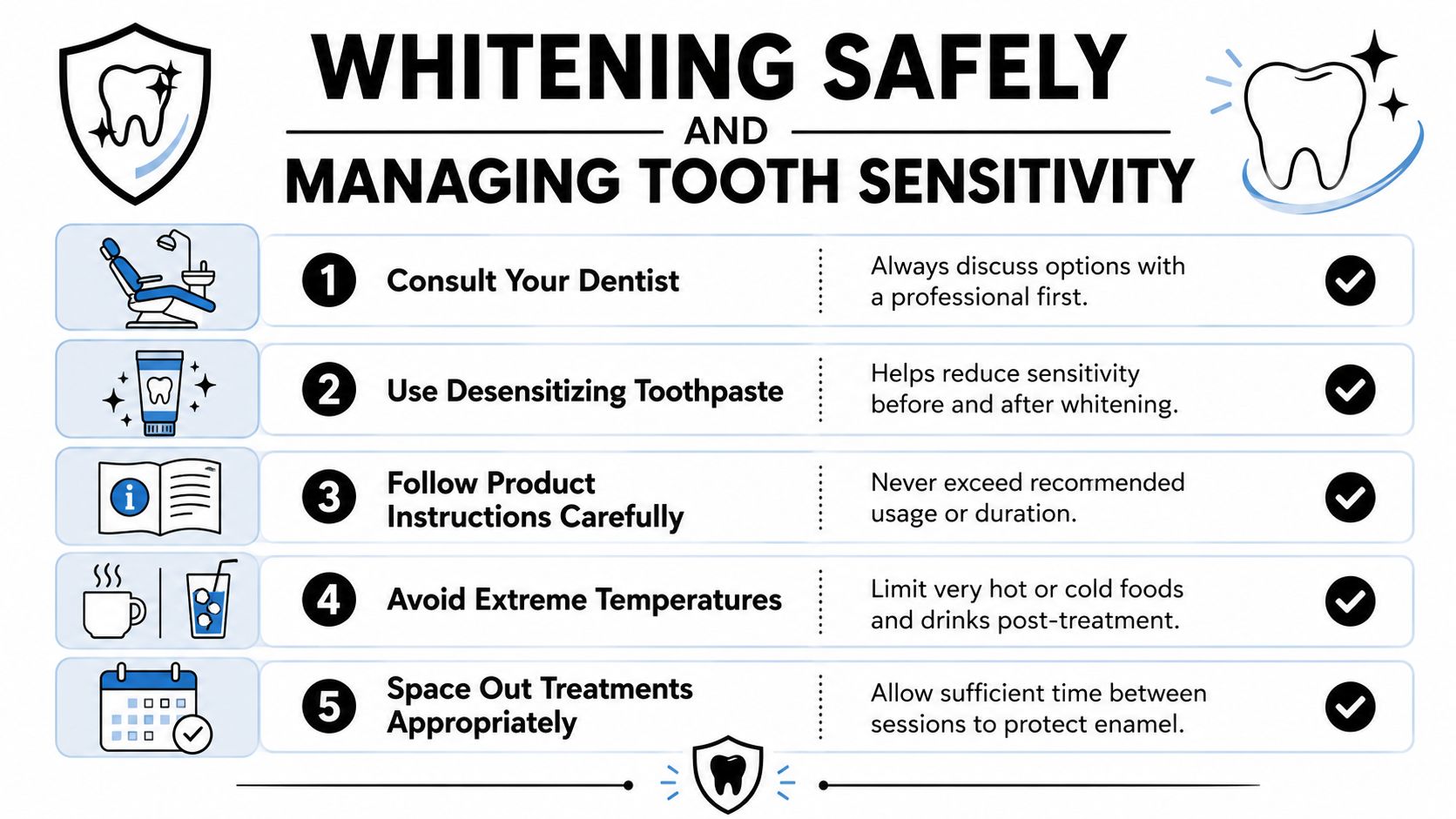
Tooth sensitivity is one of the biggest reasons people avoid whitening, and I understand why. If you've ever felt that quick cold “zing” from ice water or air, you don't want to make it worse. The good news is that whitening can often be done safely when you respect the limits of your teeth.
A key safety point is enamel protection. Guidance recommends waiting 30 to 60 minutes to brush after acidic foods or drinks because enamel can be temporarily softened, and overusing whitening products or using non-approved methods can increase sensitivity and wear risk, according to this overview of natural whitening and enamel safety.
Why sensitivity happens
Whitening products work by penetrating the tooth and changing color compounds inside it. During that process, some people notice temporary sensitivity. That doesn't always mean damage is happening. Often, it means the teeth are reacting to the whitening process.
What matters is how you respond. If you push through discomfort, use products more often than directed, or combine multiple whiteners at once, you raise the chance of problems. If you slow down and use products correctly, the process is usually much smoother.
Safety habits that matter most
A safer whitening routine usually looks like this:
- Follow directions exactly: More gel, longer wear, or extra sessions won't automatically produce a better result.
- Use a soft toothbrush: Aggressive brushing plus whitening can be too much for sensitive teeth.
- Pause after acidic drinks: If you had soda, citrus, or sports drinks, give enamel time before brushing.
- Choose approved products: Random DIY methods from social media can be abrasive or acidic in ways that harm teeth.
Keep in mind: Whitening should challenge stains, not your enamel.
DIY trends that often backfire
A lot of confusion comes from home remedies that sound “natural” and therefore safe. That's not always true. Acidic mixtures and rough scrubs can wear enamel down. Once enamel gets thinner or rougher, teeth may look darker or more uneven over time because the surface doesn't reflect light as well and the tooth becomes more vulnerable to staining.
People also get tripped up by the phrase “whitening toothpaste.” Some of these products are fine for occasional maintenance, but they aren't meant to be used like heavy-duty polish day after day in a way that leaves teeth feeling scraped.
If your teeth are already sensitive
If sensitivity is already part of your dental history, that doesn't automatically rule out whitening. It usually means your plan should be more conservative and more personalized.
Helpful adjustments can include:
| If this sounds like you | A safer response |
|---|---|
| Cold drinks already bother you | Start with an exam before whitening |
| You've had sensitivity with strips before | Consider a slower, guided option |
| Your gums are irritated | Improve gum health first |
| You want very white teeth quickly | Set a realistic pace instead of rushing |
That slower approach often leads to a better long-term result anyway. Teeth that feel comfortable are much easier to maintain than teeth that were overworked trying to get whiter too fast.
Advanced Maintenance for a Long-Lasting White Smile
Whitening takes a more personal turn. Many articles stop at “avoid coffee” and “brush twice a day,” but patients usually want answers for real-life situations. They want to know what happens if they have a crown on a front tooth, a filling that shows when they smile, or aligners they wear every day.
Those details matter because maintenance is not the same for every smile.
When you have crowns, veneers, or fillings
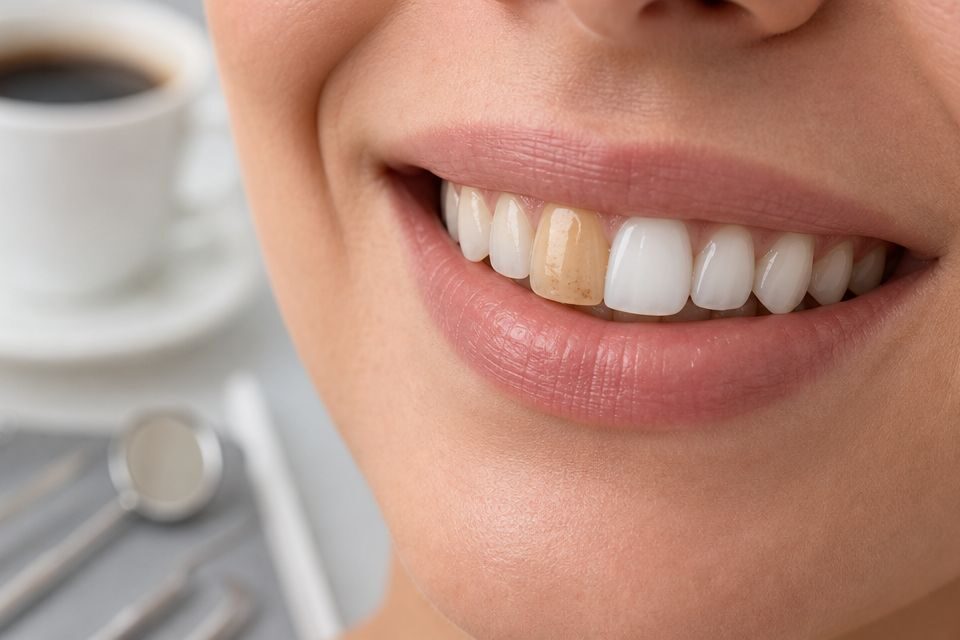
Natural teeth can respond to whitening. Crowns, veneers, and tooth-colored fillings do not whiten the same way natural enamel does. That's the source of a lot of frustration. A patient whitens the surrounding teeth and then notices older dental work looks darker, flatter, or mismatched.
Here's the practical takeaway:
- Whiten before replacing visible restorations when possible: That way new dental work can be matched to the brighter natural shade.
- Don't expect existing crowns or fillings to change color: Whitening the neighboring teeth may make them stand out more.
- Ask about sequence: Sometimes the right plan is to whiten first, then update a visible filling or crown if color mismatch becomes obvious.
If you already have dental work and wonder why one tooth isn't responding, that's usually not a failed whitening treatment. It's a materials issue.
A white smile looks best when the shade is consistent, not simply as light as possible.
During Invisalign or other orthodontic treatment
Whitening during orthodontic treatment can be tricky. Guidance for braces or aligners emphasizes careful hygiene, cleaning appliances well, and often delaying more intensive whitening until treatment is finished for a more uniform result, as noted in this orthodontic whitening guidance video.
That recommendation makes sense for a few reasons. Aligners can trap plaque if they aren't cleaned well. Brackets can create areas where whitening is less even. And if teeth are still moving, it may be smarter to focus on keeping them clean and stain-free first, then fine-tune color once alignment is complete.
A practical orthodontic maintenance routine
If you wear aligners or have braces, maintenance usually works best when you focus on cleanliness and consistency:
Brush after meals when possible
Food and plaque trapped under or around appliances can dull the smile quickly.Clean aligners gently and regularly
Dirty trays can make teeth look less bright even when the teeth themselves are fairly clean.Be cautious with abrasive products
If a toothpaste feels harsh, it may not be the right maintenance choice during treatment.Plan bigger whitening decisions at the right time
Many patients do best with maintenance during treatment and stronger whitening after alignment is done.
What long-term maintenance really looks like
One of the most useful mindset shifts is to stop viewing whitening as an event. It's more like haircut maintenance or skin care. You brighten, you protect the result, and you touch up when needed.
That doesn't mean constant treatment. It means paying attention to signs like these:
- Your smile still looks healthy, but surface stains are returning
- A recent cleaning improved brightness, but not enough
- Your natural teeth are lighter than an older filling or crown
- Invisalign is almost finished and you want to refine the final result
When patients have a personalized maintenance plan, they usually make better choices. They stop chasing random products and start timing whitening around cleanings, restorative work, and orthodontic milestones. That's how to keep teeth white in a way that looks natural and lasts.
Your Whitening Journey at Skotzko Family Dental
You catch your reflection before meeting friends in Cornelius and notice two things at once. Your natural teeth look a little darker than you want, and that older crown or filling does not match the same way it used to. That is usually the moment whitening starts to feel confusing.
A good consultation should feel straightforward. You should be able to explain what you are seeing, hear what is causing it, and leave with a plan that fits your mouth instead of a generic whitening script.
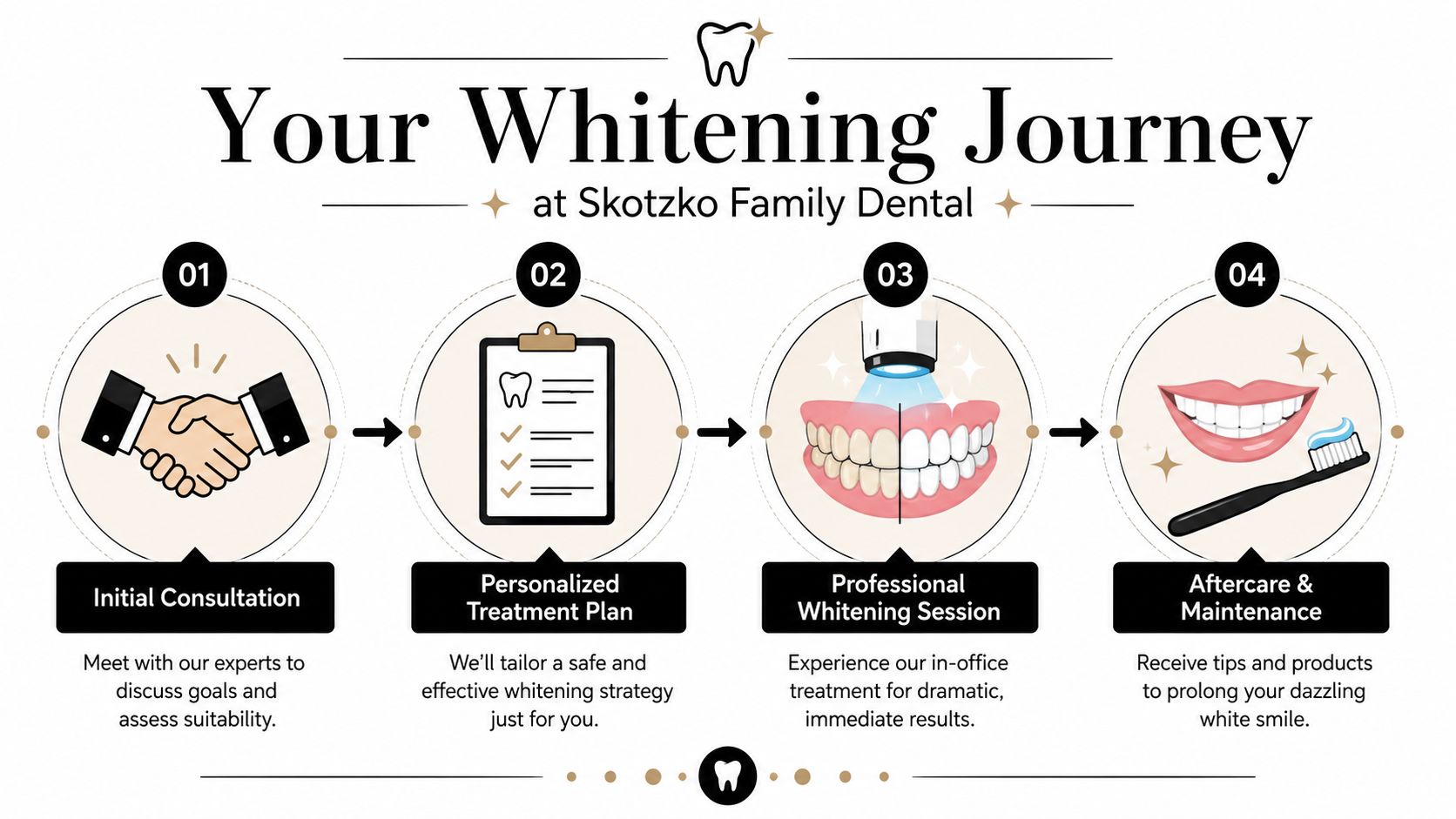
At Skotzko Family Dental Clinic, the first step is a close look at your teeth, gums, bite, and any visible dental work. Dr. Skotzko checks for the details that change the plan, such as fillings, crowns, gum recession, enamel wear, or a history of sensitivity. If you are in Invisalign treatment or considering other cosmetic updates, those pieces matter too because whitening works best when it is timed around the rest of your care.
What the first visit usually feels like
The visit usually starts with your goal, not the product.
Some patients want a lighter version of their current smile. Others want to freshen things up before photos, a wedding, or the end of Invisalign. Some are less worried about shade and more concerned that one tooth, one crown, or one filling stands out. Those goals can sound similar at home, but in the chair they often lead to different recommendations.
Then Dr. Skotzko examines what is creating the color you see. Surface stain behaves differently than deeper discoloration. Natural enamel responds differently than porcelain or composite. Whitening works like washing a white shirt. It can lift many stains from the fabric, but it does not change the color of a button that was sewn on years later. That is why crowns, veneers, and tooth-colored fillings need special planning.
Building a plan that matches your smile
At this stage, patients often feel relieved. The question changes from “How do I make my teeth white?” to “What will help my smile look balanced and healthy over time?”
Your plan may include in-office whitening, custom trays, delayed whitening until Invisalign is finished, or touch-up timing around a future filling or crown replacement. If one front tooth is darker because of past trauma or an old restoration, Dr. Skotzko can explain that early so you are not disappointed by a treatment that was never likely to fix that specific problem.
Clear explanations matter. Patients often hear guidance like:
- “Your natural teeth can lighten, but this crown will stay the same shade.”
- “You can maintain brightness during Invisalign, then refine the color when tooth movement is done.”
- “Because you have sensitivity, a slower tray-based approach may be more comfortable.”
That kind of planning saves frustration. It also helps you avoid spending money on whitening that makes nearby dental work look more obvious.
Good whitening care starts with the details of your mouth, your dental history, and your goals.
Aftercare is part of the treatment
A whitening visit is not only about getting teeth lighter that day. It is also about knowing what happens next.
You should leave with practical guidance on how to maintain the result, when to touch up, what to expect if you have crowns or fillings, and how to handle sensitivity if it shows up later. For many patients, that roadmap is the part that makes whitening feel less mysterious. Instead of guessing, you know what your smile can do, what your existing dental work can do, and how to keep everything looking natural as the years go on.
Partner with Your Cornelius Dentist for a Confident Smile
A bright smile usually isn't the result of one miracle product. It comes from a combination of smart home care, careful whitening, and good timing. That's why the best answer to how to keep teeth white is rarely just “use this treatment.” The better answer is, “Use the right treatment, then protect the result.”
For some people, that means improving daily stain control. For others, it means choosing professional whitening instead of guessing with store products. And for many patients, it means taking a more customized path because they have crowns, fillings, sensitivity, or Invisalign in the mix.
That's also why partnership matters. You know your habits, your schedule, and what kind of smile you want. Your dentist helps you match those goals with a safe plan that fits your mouth. When those two pieces come together, whitening feels a lot less confusing.
If you live in Cornelius, NC and nearby communities and you've been looking for a dentist near me who can help you make sense of whitening maintenance, don't hesitate to ask questions. A good plan should feel clear, realistic, and comfortable from the start.
Your smile doesn't have to be perfect to look healthy and attractive. It just needs the right care, the right maintenance, and the right expectations. That's what keeps results looking natural over time.
If you're ready to talk through whitening options, sensitivity concerns, Invisalign timing, or how to manage a smile with existing crowns or fillings, contact Skotzko Family Dental Clinic to schedule a consultation. Patients in Cornelius, NC and nearby communities can get a personalized plan for a healthy, confident smile.