
What Causes Tooth Discoloration: Expert Answers
May 27, 2026
How to Maintain Oral Health: A Cornelius, NC Guide
May 29, 2026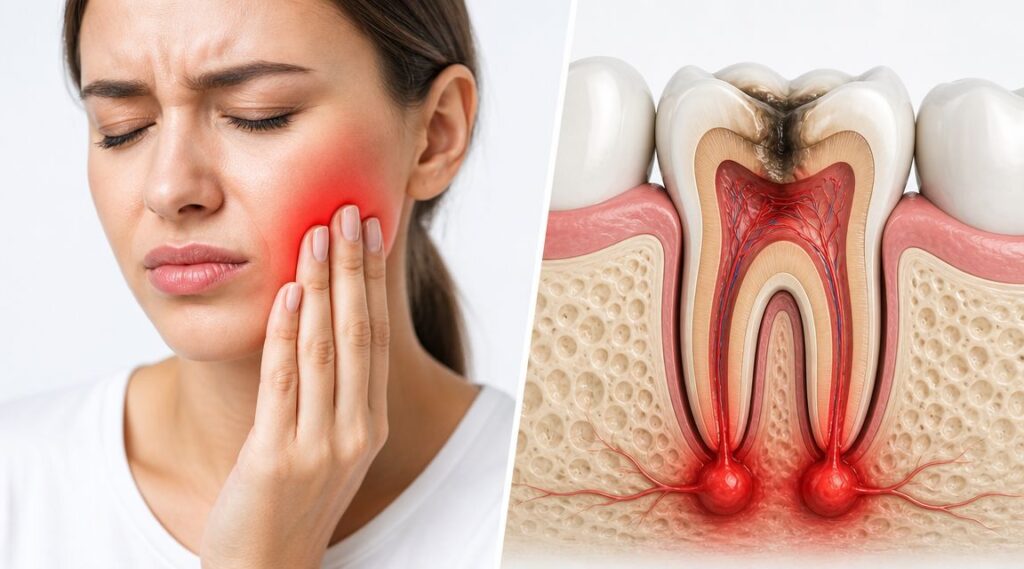
You wake up with a toothache that was annoying yesterday and hard to ignore today. By lunchtime, chewing feels sharp on one side, and by evening you're wondering whether it's just a cavity, a cracked tooth, or something more serious. That uncertainty is common, especially when the pain comes and goes or seems to ease for a few hours.
The problem is that a tooth infection doesn't always stay “just dental.” Mayo Clinic describes a tooth abscess as a pocket of pus caused by bacterial infection and warns that symptoms such as severe, constant throbbing pain, swelling, redness, fever, bad taste or odor, and trouble opening the mouth or swallowing can signal a more serious problem that needs prompt care or emergency evaluation if breathing or swallowing is affected (Mayo Clinic tooth abscess symptoms and causes). In plain terms, your body is sounding an alarm.
That's why learning the signs of tooth infection matters. Some signs point to a problem that needs a same-day dental visit. Others suggest you shouldn't wait at all and may need emergency care right away. Knowing the difference can help you get relief faster and avoid more complicated treatment later.
If you live in Cornelius, NC, or nearby communities like Huntersville and Davidson, it helps to have a local dental home you can call when symptoms change quickly. Dr. Skotzko Family and Cosmetic Dentistry treats urgent dental problems with a calm, patient-focused approach, while also helping people move from emergency relief into lasting restorative care when needed.
Below are the signs to watch for, along with a simple “When to Call” urgency level for each one.
1. Severe Tooth Pain or Throbbing Discomfort
Pain is usually the sign people notice first. It might feel like a deep ache, a sharp jolt when you bite, or a heartbeat-like throbbing that seems to pulse through your tooth and jaw. Infections often irritate the tissue inside the tooth, and pressure builds in a very small space, which is why the pain can feel intense and hard to pinpoint.
One common scenario is a back molar that hurts only when you chew. Another is pain that starts as a mild annoyance, then wakes you up at night and doesn't improve much with over-the-counter medication. Sometimes the discomfort seems to travel, so what starts in a tooth can feel like ear pain, temple pain, or soreness along the jaw.
What this pain can feel like
A true infection doesn't always present as one dramatic burst of pain. Some people feel a constant dull ache all day. Others get sudden stabs when drinking coffee, cold water, or something sweet.
That overlap is what makes this symptom tricky. Cavities, cracked teeth, grinding, and gum irritation can also hurt. But persistent pain that lingers, especially when paired with pressure sensitivity, is one of the most important signs of tooth infection.
Practical rule: If tooth pain keeps returning, interrupts sleep, or makes you avoid chewing on one side, it's time to call a dentist.
When to call
This is usually an urgent dental issue, especially if pain is getting worse rather than better. Call the office the same day if possible. Don't wait several days hoping it will settle down on its own.
At Dr. Skotzko Family and Cosmetic Dentistry, that visit may involve an exam, digital imaging, and a plan to remove the source of the infection and pressure. In many cases, a tooth can be saved with treatment such as a root canal in Cornelius at Dr. Skotzko Family and Cosmetic Dentistry, depending on how much of the tooth remains healthy.
A few steps can make you more comfortable while you wait for care:
- Chew on the other side: This reduces pressure on the sore tooth.
- Choose soft foods: Yogurt, eggs, soup, and smoothies are usually easier to tolerate.
- Use a cold compress on the outside of the face: Short intervals can help with pain and swelling.
- Track the pattern: Note whether pain is triggered by biting, heat, cold, or lying down.
If pain is severe and starts to come with swelling, fever, or trouble swallowing, the urgency goes up quickly.
2. Facial or Gum Swelling
Swelling changes the picture. A sore tooth may still be localized, but swelling suggests your body is actively reacting to an infection in the surrounding tissues. That can show up as puffiness in the gums, a tender lump near one tooth, or visible swelling in the cheek or jaw.
Mayo Clinic and Cleveland Clinic both describe swelling of the face, cheek, jaw, or neck as a red-flag symptom because it can progress and interfere with swallowing or breathing, which is why it isn't treated like routine tooth pain. In clinical descriptions of acute dental abscesses, pain plus swelling is a classic pattern, and fever, tenderness, and limited mouth opening can indicate spread into nearby tissues, as summarized in the earlier Mayo guidance.

Why swelling matters
Think of swelling as a sign that the problem may no longer be contained inside the tooth. A patient might notice one cheek looks fuller in the mirror, or the gum around a painful tooth looks red, raised, and shiny. Even if the area isn't dramatically swollen yet, visible puffiness deserves attention.
Swelling can also fool people because it sometimes comes and goes. You may feel more pressure in the morning, less in the afternoon, and then more again at night. That doesn't mean the infection is resolving.
When to call
This is a same-day dental call. If facial swelling is increasing, if your eye area is affected, or if swallowing becomes hard, it becomes an emergency.
At Dr. Skotzko Family and Cosmetic Dentistry, swelling is evaluated with the goal of finding where the infection started and whether the surrounding gum or bone support also needs attention. If infection and inflammation are tied to advanced periodontal issues, care may include treatment planning that connects with procedures such as osseous surgery for gum and bone support when appropriate.
To manage swelling before you're seen:
- Use cold packs early: Apply them to the outside of the face in short sessions.
- Keep your head raised: That may reduce pressure when resting.
- Drink water regularly: A dry mouth can make everything feel worse.
- Skip salty, crunchy foods: They can irritate swollen tissues.
Swelling on one side of the face is never something to “watch for a week” when a tooth is already hurting.
3. Pus or Abscess Formation
An abscess is one of the clearest signs that infection is active. You might see a small bump on the gum that looks like a pimple or boil. It may be tender, and the surrounding gum can look red and irritated.
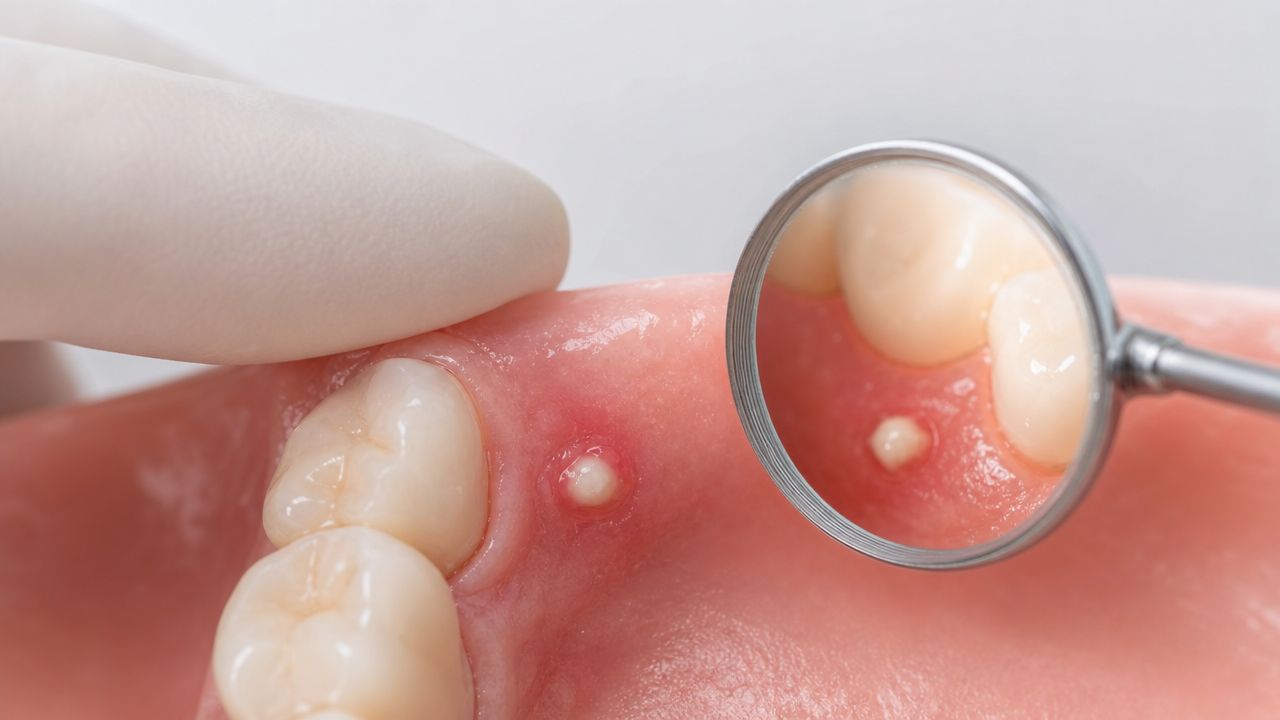
Sometimes the abscess drains on its own. People often describe a sudden release of pressure followed by a bad taste in the mouth and less pain for a while. That temporary relief is misleading. Consumer guidance often underexplains this point, but ongoing dental abscess information continues to stress that emergency symptoms such as rapid facial swelling, fever, confusion, difficulty swallowing, and breathing problems still matter even if drainage occurs and pain drops (ADA dental abscess overview).
What drainage does and does not mean
Drainage can reduce pressure. It does not mean the source of infection is gone. The bacteria may still be inside the tooth, under the gum, or deeper in nearby tissue.
A common example is someone who notices a small gum bump above a decayed tooth. It bursts, leaves a bitter or foul taste, and the tooth feels “better” for a day or two. Then the pain returns, or swelling starts. That's a strong sign you still need treatment.
When to call
This is an urgent same-day dental problem. If you see pus, a bump that looks like a pimple on the gum, or drainage with foul taste, call right away. Don't squeeze it, poke it, or try to drain it yourself.
Short-term comfort steps can help while you wait:
- Rinse gently with warm salt water: This may soothe the area.
- Avoid pressing on the bump: Extra pressure can increase irritation.
- Take prescribed medication exactly as directed: If a dentist or physician has already started treatment, follow the instructions closely.
- Stick with softer foods: Crunchy foods can aggravate the site.
If you want to better understand how a dental abscess develops and why it shouldn't be ignored, this short video gives a useful overview:
At Dr. Skotzko Family and Cosmetic Dentistry, the focus isn't just on draining an abscess or calming symptoms. It's on treating the underlying cause so the problem doesn't return.
4. Bad Breath or Foul Taste
A common real-life pattern is this: you brush, floss, rinse, and still get a bad taste from the same spot in your mouth. It may seem minor at first, especially if there is no major swelling yet. But a persistent bitter, metallic, or foul taste that seems tied to one tooth or one area of the gums can be a warning sign that bacteria are trapped below the surface.
That matters because infection odor often comes from a source you cannot clean away with normal home care. Food on the tongue or between teeth usually improves after brushing. An infected tooth can behave more like a closed container with pressure building inside. The smell or taste keeps returning because the source is still there.
Patients often describe it in very specific ways. “It tastes bad near this back tooth.” “My breath seems off on one side even right after brushing.” “I notice it when I chew.” Those details help a dentist separate everyday bad breath from a problem that may involve the tooth, gum tissue, or an area under the gumline.
Why this symptom gets overlooked
Bad breath has many harmless explanations, including dry mouth, coffee, certain foods, and sleeping with your mouth open. That is why this sign can be easy to dismiss.
The clue is persistence and location.
If the taste keeps coming back from one area, or if it shows up with tenderness, sensitivity, or a gum change, it deserves a closer look. In some patients, this is one of the earlier clues that infection is present before facial swelling or fever develops.
When to call
This is usually a prompt dental appointment within a day or two. Call sooner if the bad taste or odor appears with tooth pain, swelling, drainage, or a tooth that hurts when you bite. Those combinations raise the urgency because they suggest the problem may be active, not just annoying.
While you wait for your visit:
- Brush and floss gently: Keep the area clean without scrubbing it hard.
- Drink water often: Dry mouth can make odor and taste seem stronger.
- Pay attention to patterns: Notice whether the taste starts with chewing, pressing near a tooth, or waking up.
- Use mouthwash only as a temporary measure: It may cover the symptom without fixing the source.
At Skotzko Family Dental in Cornelius, NC, this kind of symptom is evaluated in context, not in isolation. If the cause is trapped infection, the next step may be treatment to remove the source and save the tooth when possible. If the tooth cannot be saved, the office can also discuss replacement options such as implants so the problem is handled fully, not just covered up.
5. Fever or General Illness Symptoms
Once a tooth problem starts to affect how you feel overall, the concern rises fast. Fever, chills, fatigue, feeling run down, or swollen glands in the neck can suggest the infection is moving beyond a small, local problem.
One independent source notes that about 1 in 2,600 Americans visits a hospital for a tooth infection, which helps explain why dentists take these symptoms seriously. That same discussion emphasizes that untreated infections can spread to the jaw, neck, and bloodstream, and that symptoms such as fever, malaise, swollen lymph nodes, trismus, and difficulty breathing may signal broader involvement.
What “general illness” looks like
Sometimes it's obvious. You have a throbbing tooth and you feel feverish, achy, and tired. Sometimes it's subtler. You may have low energy, tenderness under the jaw, or a sense that you're getting sick, except the main pain is in one tooth.
A realistic example is a person who develops tooth pain on Friday, then by Saturday feels worn out and notices soreness under the jawline. Another is someone who has swelling and a fever and assumes it's a sinus problem or a cold.
Watch for the combination: Tooth pain plus fever is much more concerning than tooth pain alone.
When to call
This is an urgent call right away, and sometimes it's a medical emergency. If you have fever with tooth pain or swelling, contact the dental office immediately. If you also feel weak, confused, or suddenly worse, don't wait.
At Dr. Skotzko Family and Cosmetic Dentistry, patients with infection symptoms are guided based on severity. If the team believes symptoms suggest spread beyond what should wait, they can direct you toward the safest next step.
While waiting for care:
- Rest if you can: Your body is already under stress.
- Sip fluids regularly: Staying hydrated matters when you're ill.
- Monitor changes: Note whether swelling, pain, or fatigue is worsening.
- Seek emergency medical care if breathing or swallowing changes: That's no longer routine dental discomfort.
6. Difficulty Swallowing or Jaw Stiffness
This is one of the most important red-flag signs of tooth infection. If your mouth won't open normally, your jaw feels locked or stiff, or swallowing hurts, the infection may be affecting deeper tissues around the jaw and throat.
Clinical descriptions of more advanced dental abscesses include trismus, which means limited mouth opening. That's why many dental and medical sources treat trouble swallowing, severe jaw stiffness, and airway-related symptoms as emergencies rather than issues to monitor at home.
How this can show up
You may notice that opening wide to brush the back teeth suddenly hurts. Or you try to eat and realize your jaw doesn't move the way it normally does. In more serious cases, swallowing saliva is painful, and the throat or neck can feel tight.
This symptom can overlap with TMJ flare-ups, muscle tension, and even ear-related pain. The difference is context. If jaw stiffness appears along with a painful tooth, swelling, fever, or a bad taste, infection jumps much higher on the list.
When to call
This is often an emergency. Call the dental office immediately for guidance. If swallowing is very difficult, if your voice changes, or if breathing feels restricted, seek emergency medical care right away.
A practical example is someone with an infected lower molar who notices they can no longer open wide enough to bite a sandwich. Another is a person with facial swelling who starts avoiding swallowing because it hurts. Those aren't symptoms to sleep on.
What you can do while arranging care:
- Choose liquids or very soft foods: Don't force chewing.
- Stay hydrated in small sips if swallowing is still possible: Dehydration can make you feel worse quickly.
- Avoid lying flat: Keeping the head raised may feel easier.
- Use warmth only if swelling has already settled and your dentist has advised home comfort care: Heat isn't appropriate for every stage.
If you're deciding whether to wait until morning, this is the type of symptom where caution is the better choice.
7. Discolored, Darkened, or Dead-Appearing Tooth
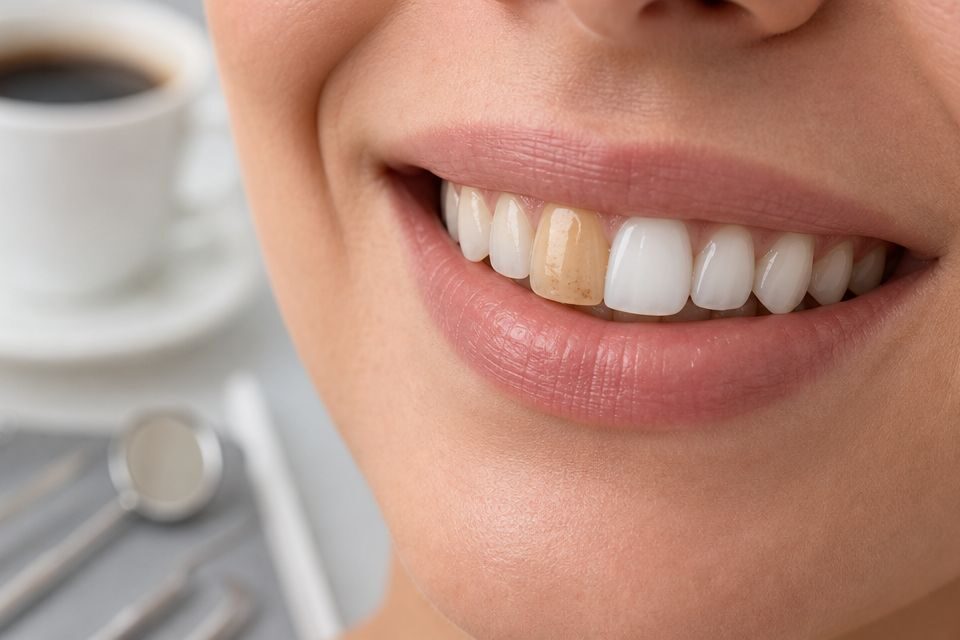
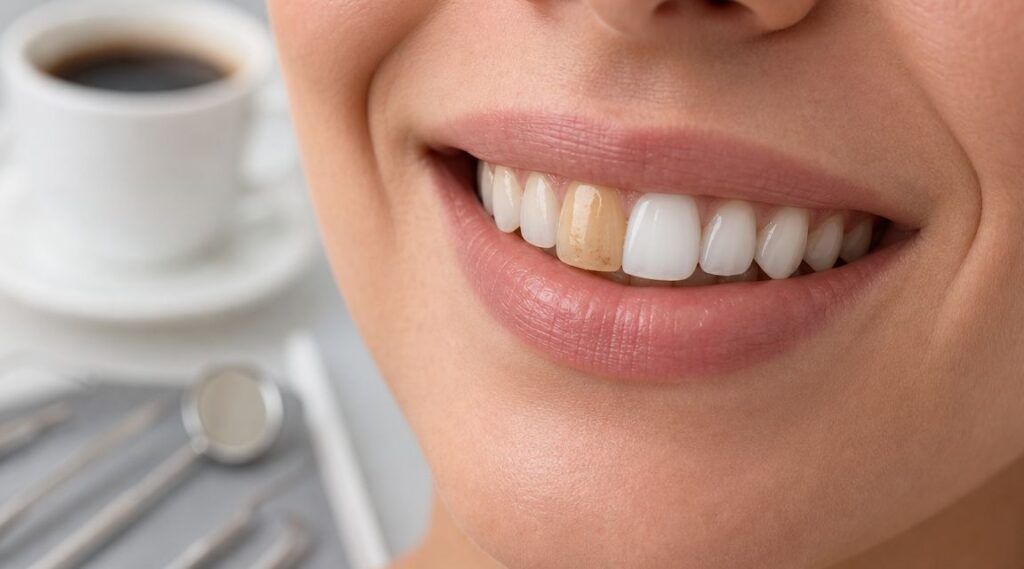
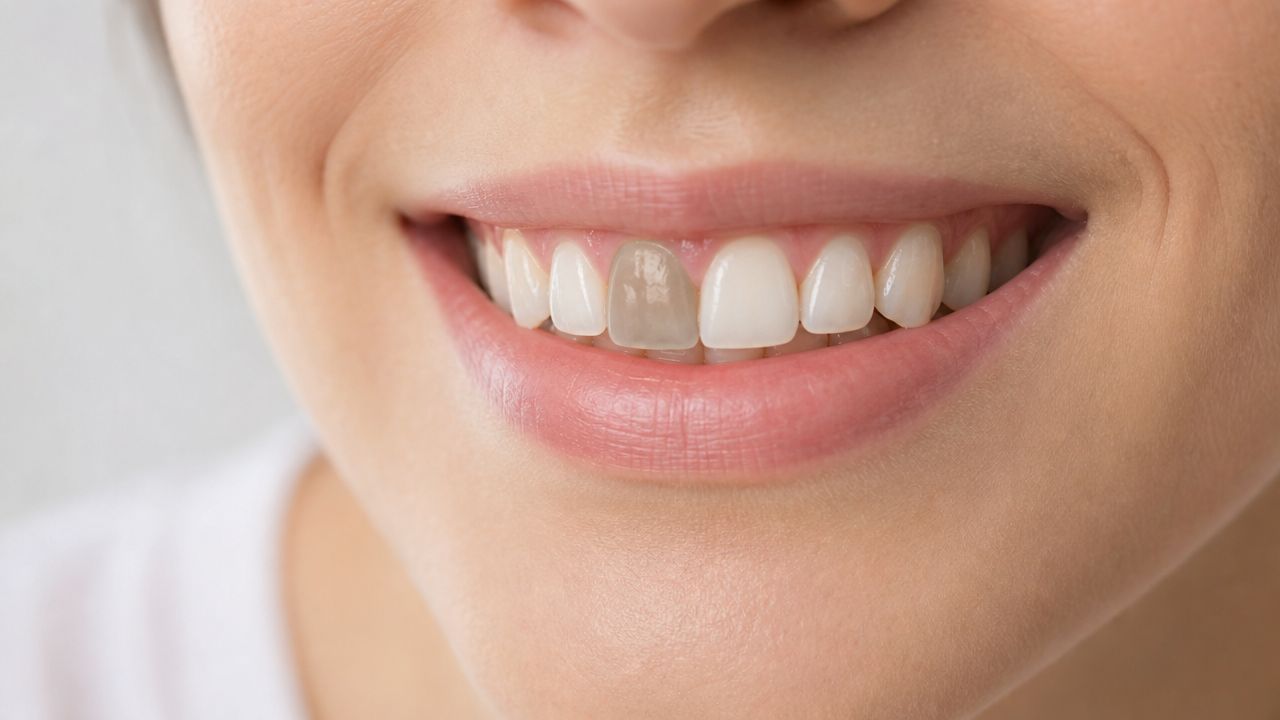
Not every infected tooth is dramatic. Sometimes the clearest sign is visual. One tooth slowly turns gray, brown, or darker than the teeth around it. That color change can mean the pulp inside the tooth has been injured or has died, which can be associated with infection.
This sign is often overlooked because people think it's just staining. Coffee, tea, and tobacco usually affect many teeth gradually. An internal problem usually affects one tooth differently from the rest.
What to look for in the mirror
A common pattern is a single front tooth that looks slightly gray in bright light. Another is a back tooth that seems darker and also feels “off” when you bite. Whitening products usually don't solve this kind of discoloration because the change starts inside the tooth, not on the enamel surface.
One underserved area in patient education is helping people tell atypical infection signs from other causes of pain or tooth changes. Symptom lists often emphasize severe pain and swelling, but they offer less guidance when the main clue is jaw pain, ear pain, sensitivity, or subtle tooth changes without major swelling, as noted in this discussion of the content gap around early or less obvious spread-related symptoms.
When to call
This is usually a prompt dental appointment, but not always an emergency by itself. The urgency increases if the tooth is also painful, tender to pressure, swollen nearby, or associated with a bad taste.
At Dr. Skotzko Family and Cosmetic Dentistry, the next step is figuring out whether the tooth can be preserved and restored or whether another treatment is better for long-term health and appearance. That matters because discoloration may be the visible clue to a deeper problem that has been developing unnoticed.
Helpful steps before your visit include:
- Compare the tooth to the teeth beside it: Single-tooth darkening is more suspicious than general staining.
- Take a photo in good lighting: That can help track change over time.
- Skip whitening strips or bleaching gels for now: They won't fix internal damage.
- Keep the area clean: Gentle brushing and flossing still matter.
7-Point Comparison: Tooth Infection Signs
| Symptom | Typical Features | Urgency / Treatment Complexity | Resource Requirements | Expected Outcomes & Risks | When to Seek Care |
|---|---|---|---|---|---|
| Severe tooth pain / throbbing discomfort | Localized or radiating sharp/aching pain; worse with pressure or temperature; often nocturnal | High urgency; may require endodontic therapy or extraction and pain control | Dental exam & X‑ray, analgesics, possible root canal/extraction, possible antibiotics | Prompt care relieves pain and prevents spread; delay → abscess or systemic spread | Immediately, urgent dental appointment for unrelieved or severe pain |
| Facial or gum swelling | Localized puffiness; redness; may extend to cheek/jaw; can limit mouth opening | High urgency; may need drainage or surgical intervention if advancing | Urgent dental evaluation, imaging, ice/heat protocol, antibiotics, possible incision/drainage | Often resolves with treatment; severe delay risks deeper infection or airway compromise | Immediately, seek urgent evaluation for new or worsening facial swelling |
| Pus or abscess formation | Gum bump or pustule, pus drainage, foul taste, fluctuant swelling | High urgency; usually requires procedural dental treatment (drainage/root canal/extraction) | Dental surgery or endodontics, antibiotics, follow‑up care; imaging | Treatment eliminates infection; untreated → bone loss, sinus or bloodstream spread | Urgently, do not self‑drain; schedule immediate dental care |
| Bad breath or foul taste | Persistent halitosis or metallic/bitter taste not improved by hygiene | Moderate urgency; diagnostic evaluation to identify source | Dental exam, oral hygiene optimization, possible imaging and targeted treatment | Early diagnosis can prevent progression; symptom alone may not indicate severity | Promptly, schedule exam if persistent despite good oral care |
| Fever or general illness symptoms | Fever ≥101°F, chills, fatigue, swollen lymph nodes, malaise | Very high urgency; indicates systemic spread and may require medical-dental coordination | Urgent/ER assessment if high fever, antibiotics, imaging, dental intervention | Requires prompt treatment to prevent sepsis or serious complications | Immediately, seek urgent care; go to ER for >103°F or severe systemic signs |
| Difficulty swallowing or jaw stiffness | Painful swallowing, trismus, restricted mouth opening, referred ear pain | Very high urgency; may indicate deep tissue or neck space infection | Emergency dental/medical evaluation, imaging, IV antibiotics, possible surgical drainage | High risk of airway compromise and systemic spread if untreated | Emergency, immediate care; call 911 if airway or severe swallowing impairment |
| Discolored / dead‑appearing tooth | Tooth darkens to gray/brown/black, may be painless initially | Moderate urgency; suggests necrotic pulp often needing endodontic or extraction | Dental exam and X‑ray, root canal therapy or extraction, restorative/cosmetic options | Early treatment can save tooth; delay → abscess or loss and restorative needs | Prompt appointment, evaluate color change rather than assume staining |
Your Partner for Urgent and Routine Dental Care in Cornelius
You wake up with a sore tooth and tell yourself to give it a day. By lunchtime, the ache is sharper, chewing feels risky, and one side of your face seems a little different in the mirror. That kind of change is often the moment to stop guessing and call.
The signs in this article are more than a checklist. They are signals of urgency. A bad taste may call for a prompt exam. Swelling or throbbing pain may need a same-day visit. Trouble swallowing, breathing changes, fast-moving swelling, or feeling seriously ill can point to an emergency that needs immediate care.
That urgency scale matters because tooth infections do not always stay contained. An infection in a tooth works like pressure building inside a closed space. Sometimes it starts with pain. Sometimes the first clue is swelling, a gum bump, or a tooth that turns darker than the others. The symptom can vary, but the goal stays the same. Find the source, control the infection, and protect the tooth and surrounding tissue if possible.
At Dr. Skotzko Family and Cosmetic Dentistry, that process starts with a careful exam based on what you are feeling, not a one-size-fits-all response. A patient with severe pain may need an urgent appointment and imaging the same day. A patient with a darkened tooth may need testing to see whether the nerve has died. Someone with swelling may need prompt treatment to reduce pressure and plan the next step, whether that is root canal treatment, gum care, or removal of a tooth that cannot be saved.
Relief is only part of the job.
The other part is restoring health so the problem does not keep returning. If infection began under an old filling, from a crack, from deep decay, or from gum disease, the underlying cause needs attention too. That may include a crown after endodontic treatment, periodontal care, or replacing a missing or unsalvageable tooth with an implant or another restoration that fits your needs.
For families in Cornelius, this local access matters. You do not have to sort through symptoms on your own and wonder whether you are overreacting. The office is set up to help patients with both urgent problems and follow-up care, so the plan can move from diagnosis to treatment to repair in one familiar setting.
Patients often feel anxious because dental pain is unpredictable. The reassuring part is that clear explanations are part of the visit. You should leave knowing what is happening, how urgent it is, what your treatment options are, and what to watch for next.
If something feels off, call. Persistent pain, a pimple-like bump on the gums, one-sided swelling, a foul taste, or a tooth that suddenly looks gray or brown is reason enough to be seen.
Dr. Skotzko Family and Cosmetic Dentistry has cared for Cornelius-area families since 1998. Whether you need help today for infection symptoms or a longer-term plan to restore comfort, chewing, and appearance, the team is ready to help you take the next step.
If you're noticing signs of tooth infection, don't wait for symptoms to get worse. Contact Skotzko Family Dental Clinic to schedule an appointment in Cornelius, NC, and get trusted care for urgent pain, swelling, restorative treatment, and long-term smile health.