Urgent: Signs of Tooth Infection You Need to Know in 2026
May 28, 2026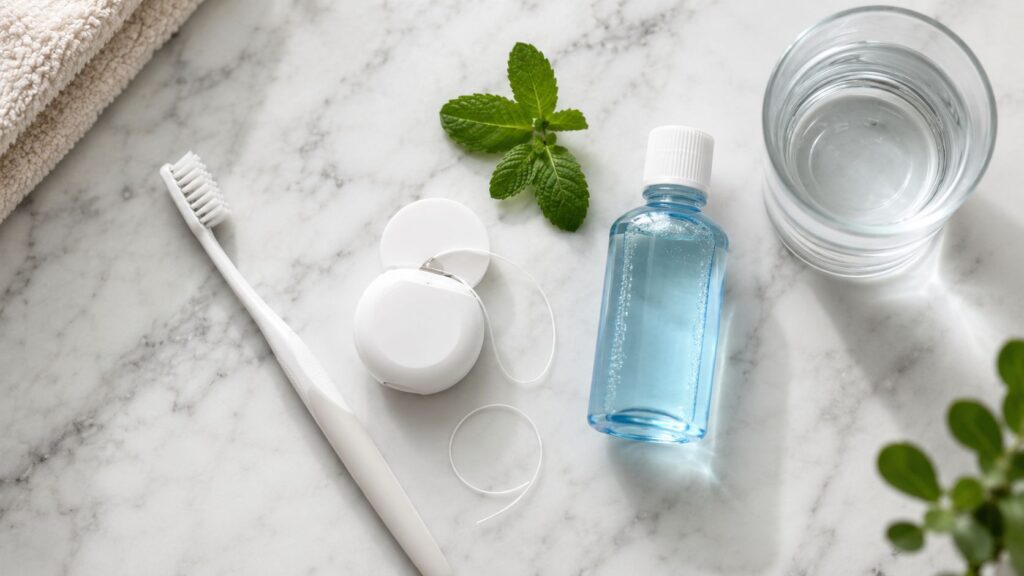
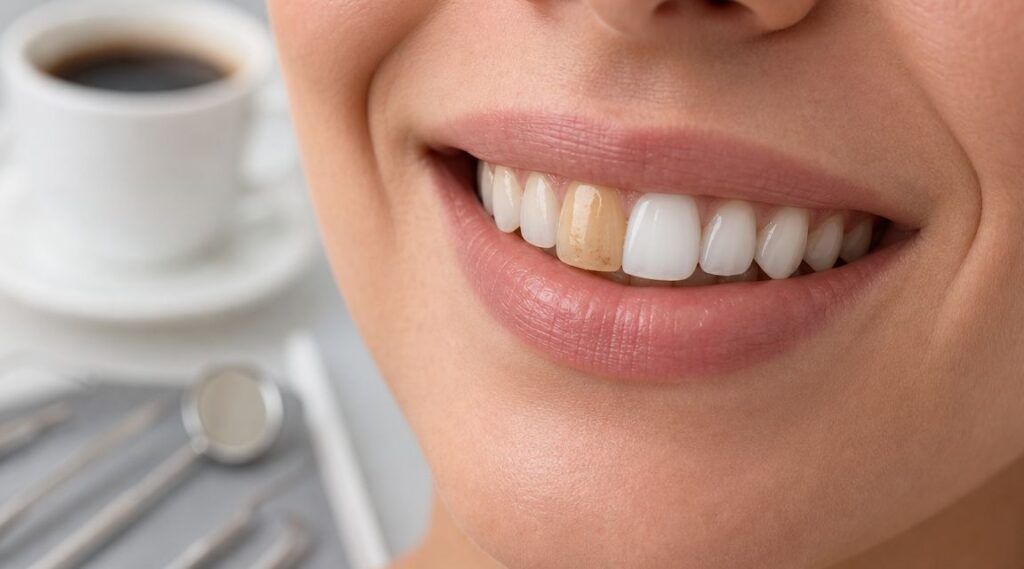
Searching for how to maintain oral health typically doesn't begin because everything feels perfect. It usually happens on an ordinary day. You notice bleeding when you spit after brushing. Your child says a tooth feels “funny.” You catch your reflection before work, church, or dinner by the lake and wonder if your smile looks as healthy as you want it to.
That moment matters. A healthy mouth supports comfort, confidence, and the simple routines that make daily life easier, from eating breakfast without sensitivity to speaking clearly in a meeting or smiling in family photos.
Your Guide to Lifelong Oral Health in Cornelius NC
In a community like Cornelius, NC, people want dental advice that fits real life. Parents are helping kids brush before school. Adults are juggling work, errands, and aging dental work. Grandparents are trying to keep natural teeth healthy for as long as possible. Oral health isn't one habit. It's a set of small decisions repeated over time.

Why prevention matters every day
A lot of people think of dental problems as something that suddenly appears. In reality, many issues build slowly. Plaque sits at the gumline. Food gets trapped between teeth. Dry mouth makes things worse. A small weak spot turns into a cavity, or a little inflammation turns into gum trouble.
That's why daily prevention matters so much. The CDC reports that untreated dental caries affected 13.2% of children and 25.9% of adults in the United States, and the World Health Organization notes that oral diseases affect nearly 3.7 billion people worldwide, which is why basic daily care carries so much weight for long-term health (CDC dental facts).
Practical rule: Oral health is usually maintained the same way it's lost. A little at a time.
What good oral health really means
People often reduce oral health to “no cavities,” but that's only part of it. A healthy mouth also means gums that don't bleed easily, teeth that feel comfortable when you chew, fresh breath, restorations that are staying clean, and changes that are caught early instead of late.
It also means knowing when home care is enough and when you need help. If your gums bleed often, a tooth feels rough, or you keep getting food caught in one spot, those aren't things to ignore. They're signs your mouth is asking for attention.
A local partner makes the process easier
For families in Cornelius and nearby communities, it helps to have a dental office that can guide you through the whole picture. Dr. Skotzko sees oral health the way family dentists should. Not as a lecture, but as an ongoing partnership that changes as you grow, age, and need different kinds of care.
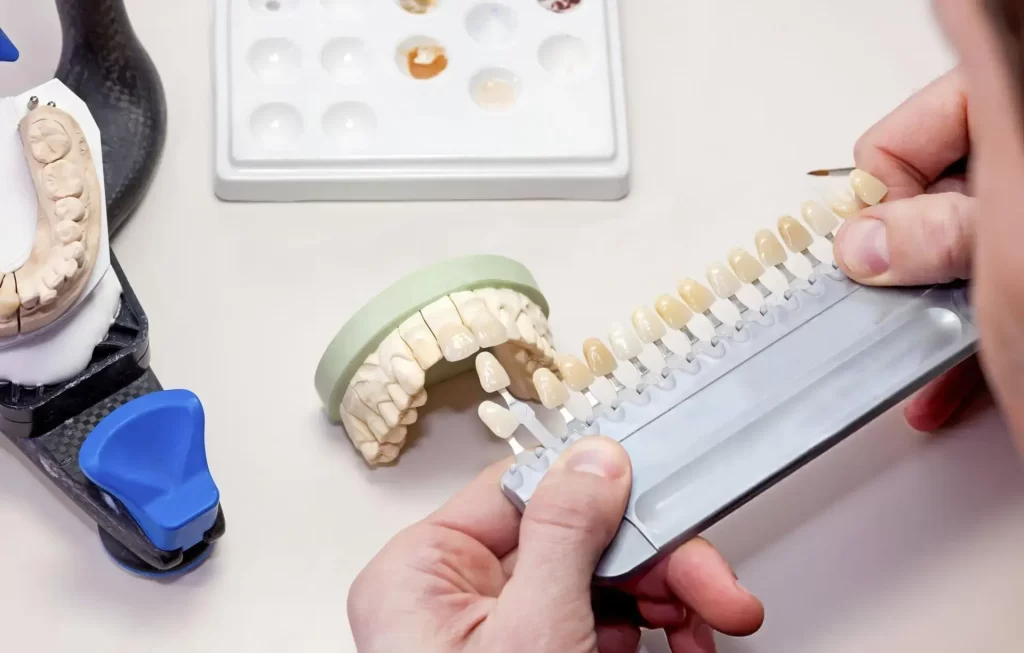
Some patients need help refining brushing technique. Others need support around crowns, veneers, Invisalign, or missing teeth. Some need reassurance that they can get back on track.
That's the good news. You can.
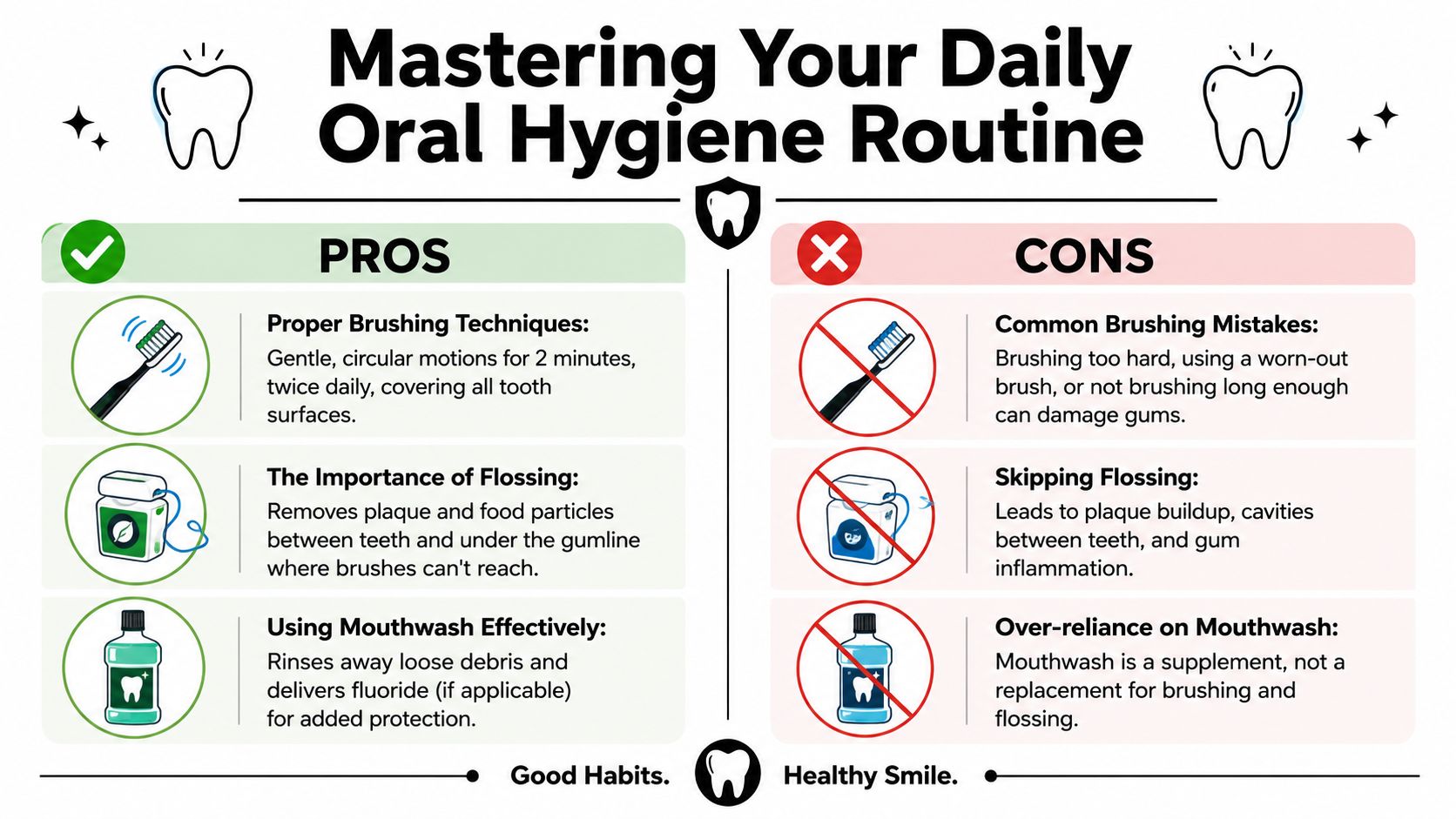
Mastering Your Daily Oral Hygiene Routine
Most home care problems come down to one simple issue. People are trying, but their technique leaves spots behind. Brushing harder doesn't solve that. Better placement does.
A strong routine should be simple enough to repeat when you're tired and thorough enough to protect your teeth and gums day after day.
Start with brushing the right way
Use a soft-bristled toothbrush and fluoride toothpaste. The World Health Organization identifies brushing twice daily with fluoride toothpaste in the 1,000 to 1,500 ppm range as an essential prevention measure, and the NIH has described fluoridated water and dental sealants as major public-health advances that reduced tooth loss and gum disease over time (NIH history of oral health prevention).
If you've ever wondered how to maintain oral health without overcomplicating it, brushing well twice a day is still the foundation.
Use this sequence:
- Angle the bristles toward the gumline. Hold the brush at roughly a 45-degree angle where the tooth meets the gum.
- Use small, gentle motions. Circular or short sweeping movements work better than aggressive scrubbing.
- Clean every surface. Brush the outside, inside, and chewing surfaces.
- Slow down. Give the process a full two minutes.
- Brush your tongue. It helps reduce odor-causing buildup.
A common mistake is thinking “clean” should feel forceful. It shouldn't. If the bristles are flattening out quickly or your gums feel sore after brushing, you're probably using too much pressure.
If your toothbrush looks worn out fast, your gums may be paying the price.
Flossing is about shape, not speed
Many people say they floss, but what they really mean is they pop the floss straight down and back out. That misses the root surface under the contact point.
Try the C-shape method:
- Guide gently between teeth. Don't snap the floss into the gums.
- Curve the floss around one tooth. Hug the side of the tooth in a C shape.
- Slide below the gumline carefully. Move up and down to wipe the surface clean.
- Repeat on the neighboring tooth. Each space has two tooth surfaces.
If traditional floss is frustrating, that doesn't mean you should give up on cleaning between your teeth. Many people do better with floss picks, interdental brushes, or water flossers, especially around bridges, orthodontics, or tighter hand mobility.
Choose tools you'll actually use
The “best” tool is often the one you can use correctly and consistently. Some households do well with a manual brush. Others benefit from an electric brush because it helps with timing and motion control.
Here's a simple comparison:
| Tool | Good fit for | Watch out for |
|---|---|---|
| Soft manual toothbrush | People with good technique and a steady routine | Scrubbing too hard |
| Electric toothbrush | People who rush, press too hard, or want help with consistency | Moving too fast from tooth to tooth |
| String floss | Tight contacts and precise cleaning | Snapping into gums |
| Floss picks | Quick use and easier handling | Short strokes that miss the tooth surface |
| Interdental brushes | Wider spaces, gum recession, bridges | Using the wrong size |
| Water flosser | Braces, implants, dexterity issues | Treating it as a complete substitute in every case |
For patients comparing products and professional prevention options, the preventive care information from Dr. Skotzko's office gives a useful overview of routine care in a family dentistry setting.
A short visual guide can also help if you learn best by watching.
Mouthwash can help, but it doesn't replace cleaning
Mouthwash has a role, especially if your dentist recommends a fluoride rinse or a therapeutic rinse for a specific concern. But it can't scrub plaque off the tooth surface. Think of it as support, not the main job.
A reliable daily routine usually looks like this:
- Morning care: Brush thoroughly and clean your tongue.
- During the day: Drink water after meals if you can't brush.
- Evening care: Brush again and clean between teeth before bed.
- Keep it visible: Store floss and your brush where you'll see them.
That's what makes a routine stick. Not perfection. Repetition.
How Your Diet and Lifestyle Affect Your Smile
Your toothbrush does a lot, but it can't cancel out everything that happens the rest of the day. What you sip, snack on, chew, and repeat as a habit changes the environment in your mouth. Some choices feed harmful bacteria. Others dry the mouth, irritate the gums, or wear down enamel little by little.
That's why diet and lifestyle are part of any honest answer to how to maintain oral health.
Sugar, acid, and frequency matter most
The amount of sugar consumed is often a primary focus. That matters, but how often sugar or acid hits your teeth matters too. A dessert with dinner is different from sipping a sweet or acidic drink over hours. The second pattern gives your teeth less time to recover.
A few easy swaps can lower stress on your smile:
- Choose water more often: It helps rinse the mouth after meals and snacks.
- Pair sweets with meals: Frequent grazing gives plaque more opportunities to thrive.
- Trade sticky snacks for cleaner options: Foods that cling to grooves and between teeth tend to linger.
- Finish with something neutral: Water can be a practical choice after acidic drinks or snacks.
Crunchy vegetables can also help from a mechanical standpoint because they stimulate chewing and don't leave the same kind of residue as sticky snacks. They aren't a substitute for brushing, but they're friendlier to the mouth than constant processed snacking.
Tobacco and vaping can make maintenance harder
People often think first about staining, but that's only one part of the picture. Tobacco use can make it harder for gums to stay healthy, and it can mask warning signs because inflamed tissue doesn't always behave the way you expect. If you vape, it's still smart to talk openly with your dentist about dry mouth, tissue irritation, and changes you've noticed.
You don't need guilt. You need clear information and a plan.
The healthiest routine is the one that works in your real life, not the one that sounds perfect on paper.
Stress shows up in the mouth
Stress can affect oral health in ways people miss. Some patients clench during the day. Others grind at night and wake up with jaw soreness, headaches, or teeth that feel sensitive. When that pressure continues, teeth can wear down, small cracks can form, and chewing muscles can stay tight.
Common signs stress may be affecting your mouth include:
- Morning jaw tension
- Flattened or chipped edges on teeth
- Headaches around the temples
- A feeling that you're always clenching
- Soreness when chewing firmer foods
If any of that sounds familiar, mention it at your next visit. The solution might involve habit awareness, a nightguard, bite evaluation, or catching wear before it becomes damage.
When dental access is limited
Some people in and around the broader community don't have easy access to routine appointments all the time. Work schedules, transportation, caregiving demands, and cost concerns can all get in the way. In those situations, practical prevention matters even more.
If you can't get in right away, focus on the basics you can control:
| Situation | Practical step |
|---|---|
| Food stuck between teeth | Use floss, a floss pick, or an interdental cleaner carefully |
| Can't brush after a meal | Rinse with water |
| Gums feel irritated | Return to gentle brushing and consistent between-teeth cleaning |
| Mouth feels dry | Sip water regularly and avoid letting the mouth stay dry for long periods |
| Access to care is delayed | Watch for swelling, ongoing pain, or bleeding that doesn't improve |
That kind of contingency planning matters because some communities face real barriers to care, and maintenance advice should reflect that reality instead of assuming everyone can easily keep a standard checkup schedule (practical oral health tips for limited-access settings).
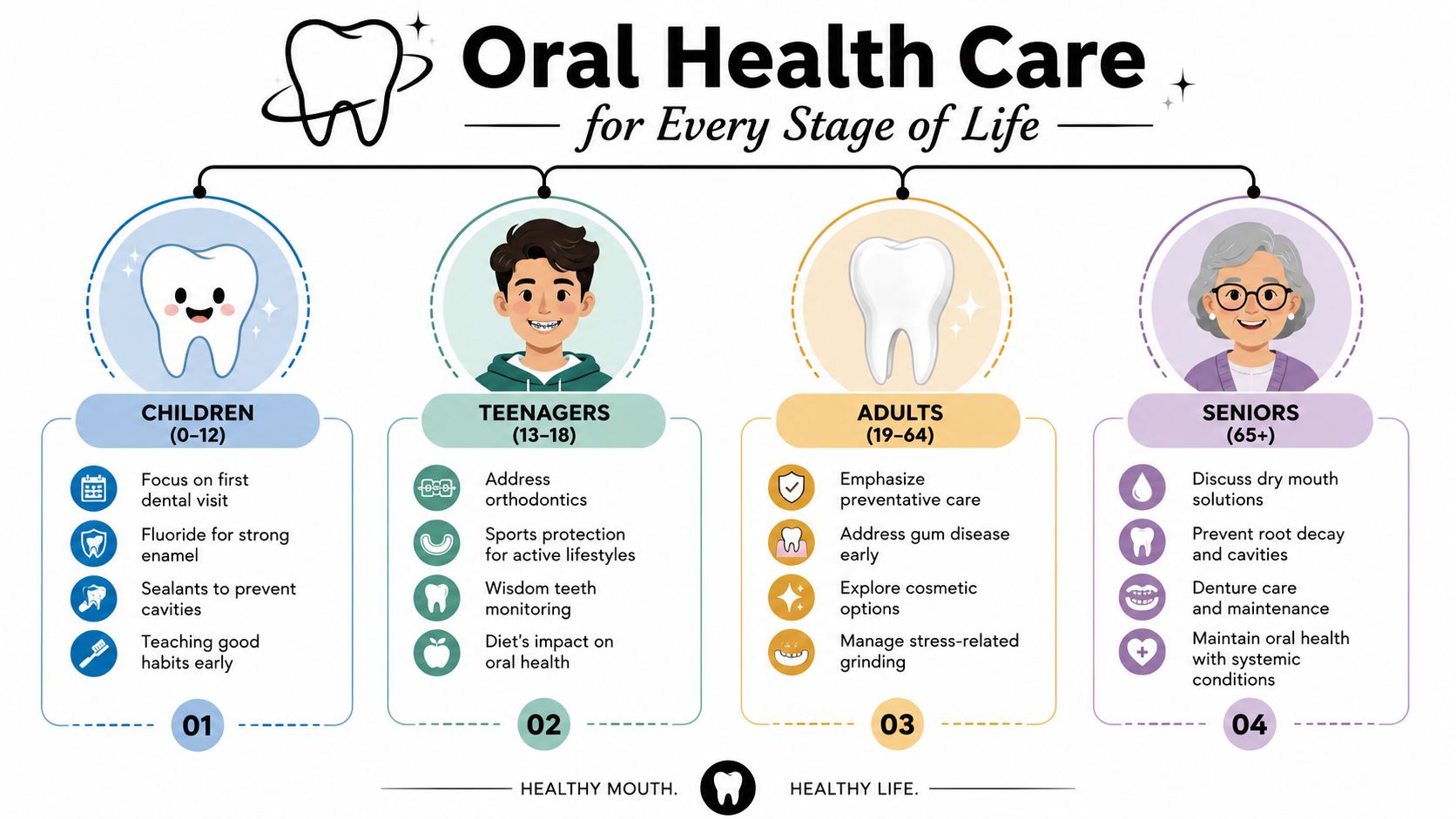
Oral Health Care for Every Stage of Life
A child's mouth, an adult's mouth, and a senior's mouth don't need the exact same care. The core habits stay familiar, but the goals change. That's what makes family dentistry so valuable. Good guidance should fit the person, not just the teeth.
Children need routine and coaching
For younger children, oral health is mostly about building habits before problems build. Parents often assume brushing is enough if it happens every day, but kids usually need hands-on help longer than expected. They miss the back teeth, rush the gumline, and often don't clean well between teeth once contacts tighten.
Helpful priorities for children include:
- Make brushing supervised: Children need coaching on where to place the brush, not just reminders to do it.
- Use fluoride toothpaste as directed by your dentist: Fluoride supports prevention when used appropriately.
- Watch the snack pattern: Constant sipping and grazing can keep the mouth under stress.
- Ask about sealants: They can protect chewing surfaces that are harder to clean.
Children also benefit from hearing the same message from both home and the dental chair. Consistency reduces confusion.
Teens and adults need strategy, not just reminders
Teenagers often have more independence but also more obstacles. Busy schedules, sports drinks, braces, aligners, late-night snacking, and skipped routines can all create trouble. Adults face their own version of the same issue. Life gets crowded, and oral care becomes rushed.
If you have braces or Invisalign, cleaning gets more technical. Food traps increase, and plaque can collect around attachments, wires, or along the gumline if brushing isn't very deliberate. The answer isn't “brush more randomly.” It's using the right tools and taking enough time.
For adults with crowns, bridges, veneers, or dental implants, the main point is this: restorations still need maintenance. The materials don't decay the way natural enamel does, but the surrounding gums and supporting structures still need careful cleaning. Bridges often need special flossing techniques. Implants still need plaque control. Cosmetic work looks better and lasts better when the tissue around it stays healthy.
Restorative and cosmetic dentistry can improve a smile beautifully, but daily maintenance is what protects the result.
Seniors often need adaptation
Many older adults are keeping their natural teeth much longer than past generations did. That's a real success story for preventive dentistry. It also means seniors may be caring for a mix of natural teeth, crowns, bridges, implants, partials, or dentures all at once.
Dry mouth is a frequent challenge. Some people also deal with gum recession, root exposure, reduced dexterity, or health conditions that make home care harder. In these situations, the goal shifts from “do more” to “make the routine easier to perform well.”
A few common adjustments help:
- Larger-handled brushes or powered brushes: Easier for some people to grip and guide.
- Interdental aids: Useful when floss is difficult to manage.
- Gentle but thorough gumline cleaning: Important when roots are more exposed.
- Specific denture and partial care instructions: These appliances need their own cleaning routine.
Gum disease needs ongoing professional oversight
People with more advanced periodontal issues often wonder why they can't just clean carefully at home and be done with it. The reason is that deeper pockets and complex tooth anatomy can be difficult to manage without professional monitoring. In a large adult periodontitis cohort, success in reaching a probing pocket depth endpoint was much higher at single-rooted front teeth (85%) than at molars (47%), which helps explain why difficult areas need continued evaluation and maintenance (periodontal maintenance findings).
Molars are harder terrain. They have grooves, furcations, and access challenges that make them less forgiving.
One family, different needs
Here's a simple way to understand this:
| Life stage | Main focus |
|---|---|
| Children | Habit building, fluoride, supervision, sealant discussions |
| Teens | Orthodontic cleaning, sports protection, consistent routines |
| Adults | Prevention, gum health, maintenance around restorations, stress awareness |
| Seniors | Dry mouth support, root protection, appliance care, easier home tools |
A family dental home matters because these needs can all exist under one roof. One child may need sealant guidance, one adult may want Invisalign, and another family member may be managing missing teeth or dentures. Good oral health isn't one-size-fits-all, and it shouldn't be treated that way.
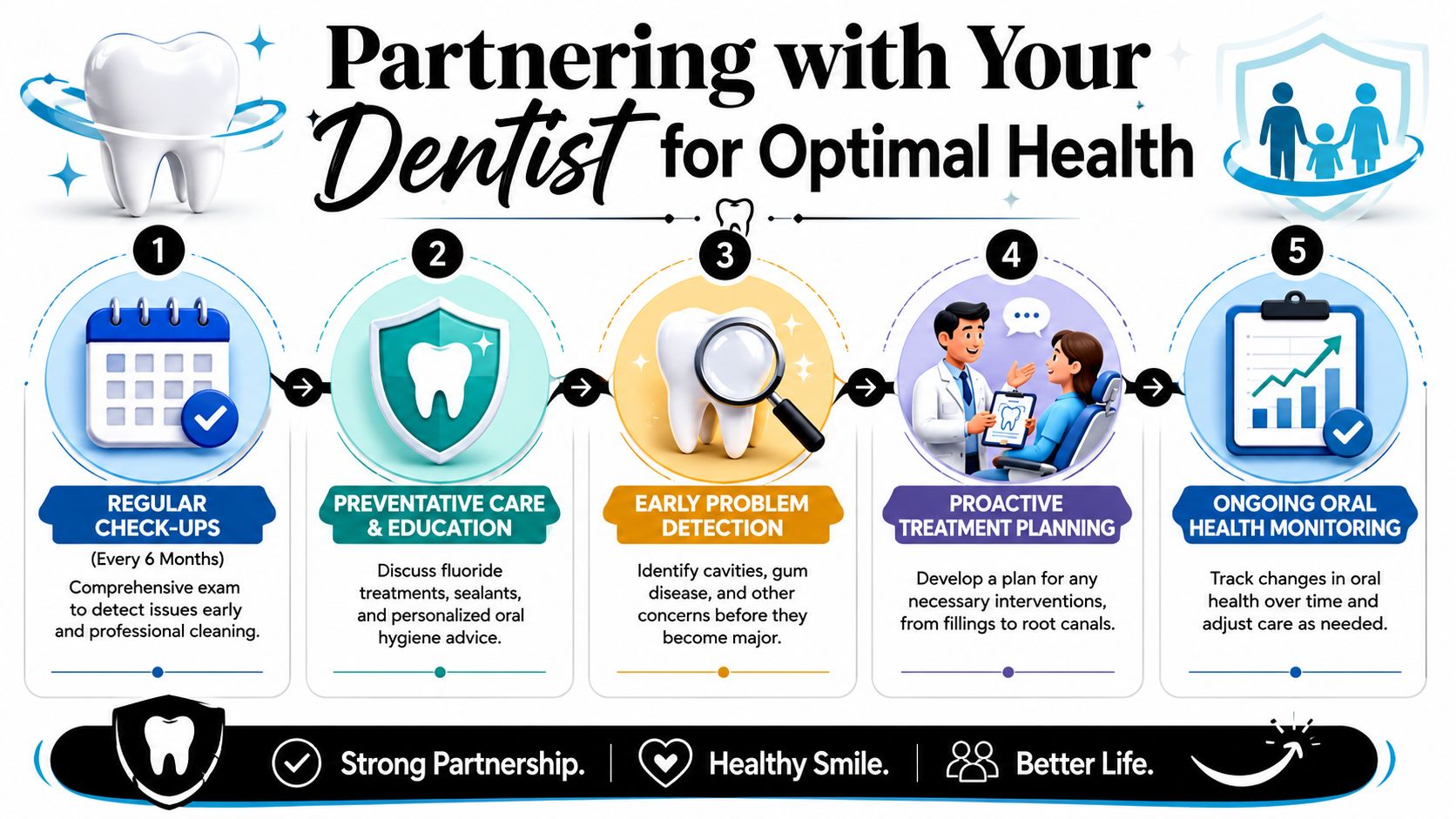
Partnering with Your Dentist for Optimal Health
At-home care is essential, but it has limits. Once plaque hardens into tartar, your toothbrush can't remove it. Once a gum pocket stays inflamed, brushing alone may not tell you how serious the problem is. Once a restoration starts failing at the margin, you may not notice until it becomes uncomfortable.
That's why dental visits aren't just for emergencies. They're part of maintenance.
What happens at a preventive visit
A good preventive appointment is both cleaning and evaluation. The cleaning removes hardened buildup that home tools can't handle. The exam looks for early signs of decay, gum inflammation, wear, bite issues, and changes in existing dental work.
Depending on your needs, a visit may also include diagnostic films, an oral cancer screening, and personalized coaching on what to improve at home. Some people need a better flossing method. Others need help selecting an electric brush head, a fluoride product, or a safer routine around sensitivity.
Why timing isn't the same for everyone
A lot of people grew up hearing that everyone should come in every six months, no matter what. That's a reasonable starting point for many patients, but it isn't the whole story. People with stable mouths may not need the same interval as someone with active gum inflammation, heavy buildup, complex restorative work, or a history of periodontal disease.
Expert guidance recommends individualized periodontal maintenance intervals from 3 to 24 months based on risk profile, which is why reevaluation matters so much after treatment and over time (guidance on risk-based periodontal maintenance).
Here are the kinds of factors that can influence recall timing:
- Home care consistency
- Bleeding or inflammation at the gums
- History of gum disease
- Crowns, bridges, implants, or orthodontic appliances
- Dry mouth or other medical factors
- How quickly plaque and tartar build up for you
Professional care catches what people miss
Patients often say, “Nothing hurts, so I thought everything was fine.” Sometimes that's true. Sometimes it isn't. Early problems are often quiet.
A dentist becomes a partner, not just a repair person. Regular monitoring can help catch:
- Cavities before they grow
- Gum changes before deeper damage develops
- Wear from clenching or grinding
- Restorations that are collecting plaque or leaking
- Changes in soft tissue that deserve attention
The goal of a checkup isn't to find fault. It's to find small issues while they're still easier to manage.
Prevention also happens beyond the chair
A modern view of oral health includes more than just traditional appointments. Public-health and workforce discussions increasingly emphasize minimally invasive care, school-based services, teledentistry, and preventive services in nontraditional settings because many people miss conventional care and still need earlier prevention and support (discussion of school sealant programs, teledentistry, and preventive access solutions).
That broader perspective matters even if you do have regular dental access. It reminds us that prevention works best when care is practical, reachable, and suited to the individual.
Schedule Your Visit at Skotzko Family Dental Clinic
A healthy smile usually doesn't come from one big fix. It comes from consistent habits, good guidance, and timely care when something changes. If you've been wondering whether your routine is enough, or if you've fallen behind and want a fresh start, this is a good time to take that next step.
Families in Cornelius, NC, and nearby communities often need one dental home that can handle the full picture. Routine exams and cleanings. Help with gum health. Fillings, crowns, and restorative care. Cosmetic dentistry options like whitening and veneers. Solutions for alignment, including Invisalign. Tooth replacement options such as dental implants, dentures, and partials.
If you'd like to know what to expect before booking, the office information for Dr. Skotzko's practice outlines the practice setting, services, and patient experience in Cornelius.
You don't need to wait for pain to make the decision for you. If your teeth feel sensitive, your gums bleed, you're due for a cleaning, or you want a plan for keeping your smile healthy at every age, professional guidance can make the path much clearer.
A healthy mouth supports more than appearances. It supports comfort, function, confidence, and peace of mind.
Ready for a dental home that supports your family's long-term oral health in Cornelius, NC? Schedule a visit with Skotzko Family Dental Clinic to get personalized guidance, preventive care, and treatment options that fit your needs.